


Overview
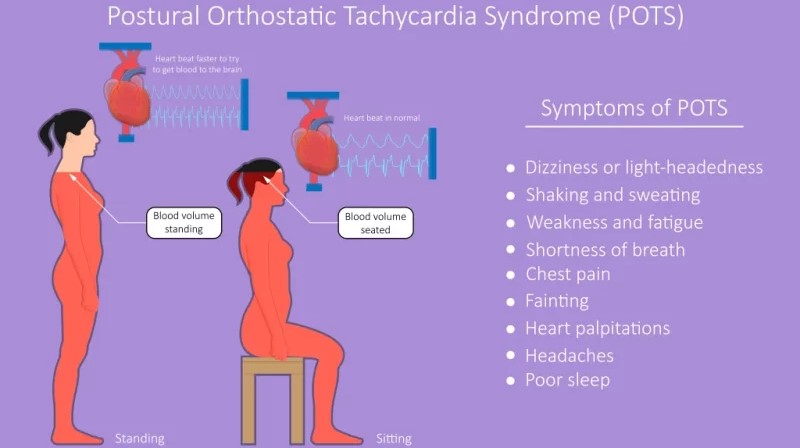
Postural Orthostatic Tachycardia Syndrome (POTS) is a condition that affects blood flow and autonomic nervous system regulation. It is characterized by a significant increase in heart rate when moving from a lying to a standing position, often accompanied by symptoms like dizziness, fatigue, and palpitations. POTS is more common in young women and can be triggered or worsened by viral illnesses, including COVID-19.
Causes
- Autonomic nervous system dysfunction
- Viral infections (e.g., post-COVID-19)
- Autoimmune conditions
- Genetic predisposition
- Physical deconditioning or trauma
- Hormonal fluctuations (e.g., in adolescence or menstruation)
Symptoms
- Rapid heartbeat when standing (increase of 30+ bpm or exceeding 120 bpm)
- Dizziness or lightheadedness
- Fatigue and exercise intolerance
- Nausea and gastrointestinal distress
- Brain fog and difficulty concentrating
- Fainting (in some cases)
Diagnosis
- Tilt table test or active stand test
- Monitoring heart rate and blood pressure changes upon standing
- Blood volume and autonomic nervous system testing
- Ruling out other conditions such as anemia or thyroid disorders
Treatment
- Increased fluid and salt intake
- Wearing compression garments
- Medications like beta-blockers, fludrocortisone, or midodrine
- Physical therapy and graded exercise
- Dietary adjustments to manage symptoms
- Addressing underlying causes if identified
Prognosis
- Many patients see improvement over time with lifestyle changes and treatment
- Some may experience long-term symptoms or relapses
- Early diagnosis and tailored treatment greatly improve quality of life
Prevention & Control
- Early management of viral infections and autonomic symptoms
- Awareness among clinicians to reduce diagnostic delays
- Education for patients and caregivers on lifestyle modifications
- Research into post-viral and autoimmune links with POTS
- Integration of care between cardiology, neurology, and primary care
Public Health Concern
POTS is increasingly recognized in connection with long COVID and other post-viral syndromes, making it a growing concern in both clinical practice and public health. Misdiagnosis or underdiagnosis remains a major barrier to effective care, highlighting the need for broader awareness and specialized treatment pathways.