


What Is a Gluteal Hematoma?
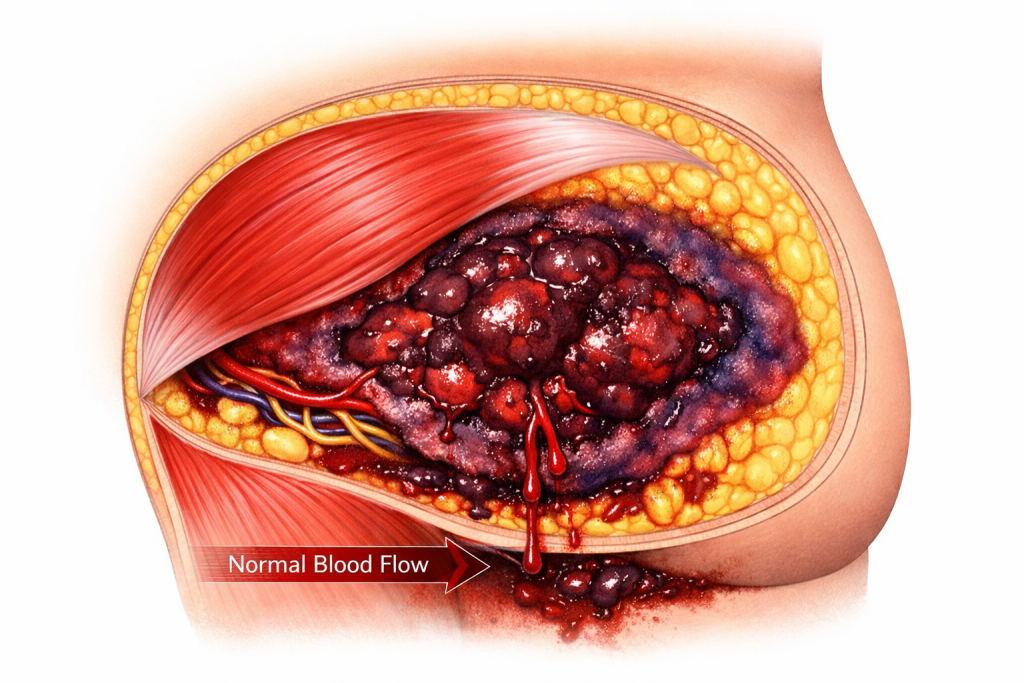
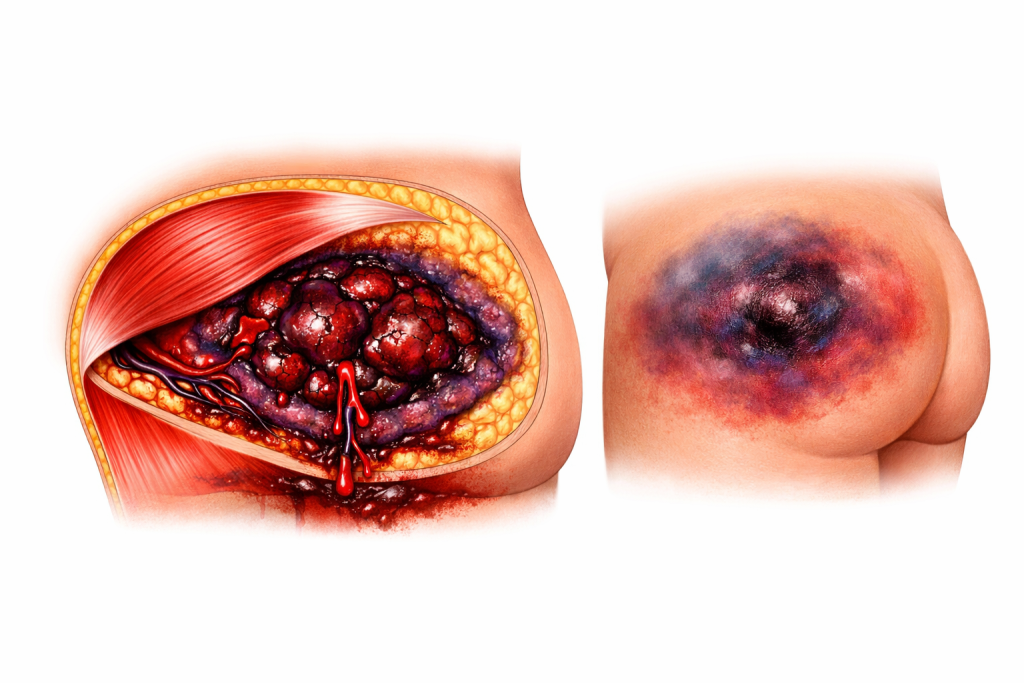
A gluteal hematoma is a localized collection of blood within the buttock muscles or surrounding tissue, typically caused by trauma or injury. It occurs when blood vessels are damaged and leak blood into the surrounding tissues, forming a swollen, painful lump. While many gluteal hematomas are mild and resolve on their own, larger or deeper ones may require medical attention.
What Causes a Gluteal Hematoma?
Common causes include:
- Blunt trauma (e.g., falls, sports injuries, car accidents)
- Intramuscular injections – especially if administered improperly
- Surgical procedures involving the hip or pelvis
- Anticoagulant or blood-thinning medications
- Coagulation disorders (e.g., hemophilia)
- Muscle strain or overuse injuries
What Are the Symptoms of a Gluteal Hematoma?
Symptoms can vary based on the size and depth of the hematoma:
- Swelling or lump in the buttock area
- Pain or tenderness at the site
- Bruising or discoloration of the skin
- Warmth over the affected area
- Stiffness or limited mobility
- Numbness or tingling (if the hematoma compresses nerves)
- Rarely, signs of infection (redness, fever, pus) if the hematoma becomes infected
What Are the Risks and Complications of a Gluteal Hematoma?
Most gluteal hematomas resolve without complications, but in some cases:
- Infection – if the hematoma becomes secondarily infected
- Compartment syndrome – pressure build-up that restricts blood flow (rare but serious)
- Chronic pain or scarring
- Nerve compression – especially the sciatic nerve, causing leg pain or weakness
- Calcification – the hematoma may harden over time
How Is a Gluteal Hematoma Diagnosed?
Diagnosis involves:
- Physical examination – checking the size, tenderness, and mobility
- Ultrasound – to confirm fluid collection and assess size
- MRI or CT scan – used for deeper or complex hematomas
- Blood tests – to check for clotting issues or anemia (if there is significant blood loss)
What Are the Treatment Options for a Gluteal Hematoma?
Treatment depends on the size, cause, and symptoms:
Conservative Management:
- Rest and elevation – avoid further pressure or trauma to the area
- Cold compresses – to reduce swelling in the first 24–48 hours
- Pain relief – with over-the-counter medications like acetaminophen
- Warm compresses – after 48 hours to promote healing
Medical Interventions:
- Aspiration or drainage – if the hematoma is large or causing nerve compression
- Antibiotics – if infection is suspected
- Surgical intervention – rarely needed but may be required for very large or infected hematomas
- Physical therapy – to restore strength and movement after healing
Can a Gluteal Hematoma Be Prevented?
While not all cases are preventable, steps can be taken to reduce risk:
- Use proper technique for intramuscular injections
- Take care to avoid falls or trauma
- Monitor patients on blood thinners for signs of internal bleeding
- Treat underlying bleeding disorders promptly
- Avoid overuse or excessive strain of gluteal muscles
How to Manage a Gluteal Hematoma for a Better Quality of Life?
For Individuals:
- Rest until pain and swelling subside
- Apply compresses and take medications as advised
- Avoid sitting on the affected side for long periods
- Follow up with your doctor if symptoms worsen or don’t improve
For Caregivers:
- Help with mobility and comfort at home
- Ensure follow-up appointments and monitor for signs of complications
- Assist with medication schedules if prescribed
