


What is Social Communication Disorder?
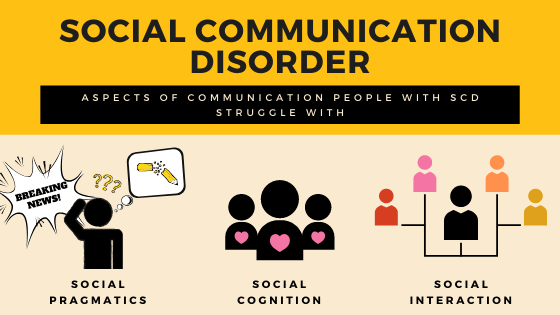
Social Communication Disorder (SCD) is a neurodevelopmental condition characterized by difficulties with the social use of verbal and nonverbal communication. Individuals with SCD struggle to use language appropriately in social contexts, impacting their ability to interact effectively with others.
SCD is different from autism spectrum disorder because it does not involve restricted or repetitive behaviors.

What Are the Symptoms of Social Communication Disorder?
Symptoms usually become noticeable in early childhood and affect communication in social settings.
Common Symptoms
- Difficulty following conversational rules, such as taking turns or staying on topic
- Trouble understanding nonliteral language, like idioms or jokes
- Challenges with using gestures, facial expressions, or tone of voice appropriately
- Problems adapting communication to different social situations
- Difficulty making friends or maintaining relationships due to communication issues
Where Do Symptoms Usually Appear?
- In social interactions at home, school, or community settings
What Causes Social Communication Disorder?
The exact cause is unknown but is believed to involve genetic and environmental factors that affect brain development related to language and social skills.
How is Social Communication Disorder Diagnosed?
Diagnosis is based on clinical evaluation of communication abilities and social interaction.
Common Diagnostic Methods
- Detailed developmental history and observation
- Standardized speech and language assessments
- Rule out other conditions like autism spectrum disorder or hearing impairment
How is Social Communication Disorder Treated?
Treatment focuses on improving communication skills and social interaction.
First-Line Treatments
- Speech and language therapy: Targeted to enhance social communication skills
- Social skills training: Teaching appropriate ways to interact and respond in social situations
- Support in educational settings: Individualized plans to assist communication challenges
Additional Supports
- Family counseling and education
- Behavioral therapy if needed
What Are the Complications of Social Communication Disorder?
Without intervention, SCD can lead to:
- Social isolation and difficulties forming friendships
- Challenges in academic achievement due to communication problems
- Low self-esteem and frustration
How Can Social Communication Disorder Be Prevented?
There is no known way to prevent SCD, but early identification and intervention improve outcomes.
Tips to Support Children at Risk
- Encourage social interaction and communication from an early age
- Seek evaluation if communication delays or difficulties arise
- Provide a supportive and patient environment for language development