What Is Esophageal Atresia?
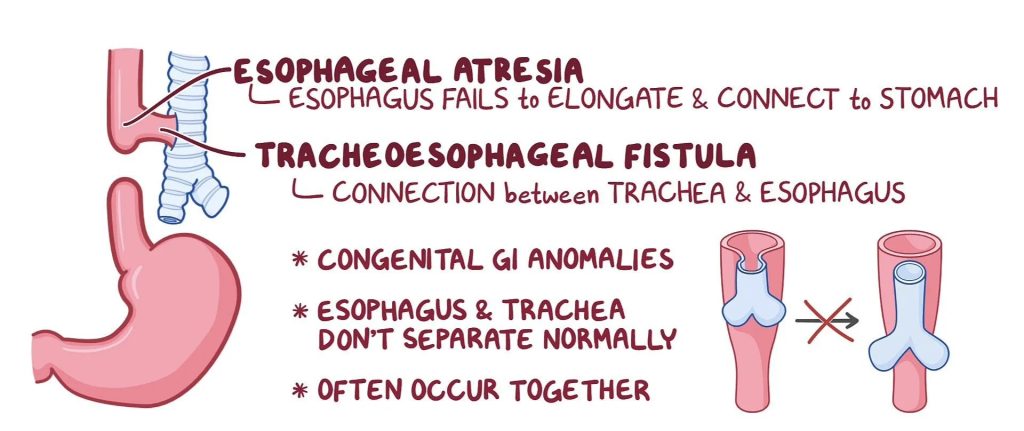
Esophageal Atresia is a rare congenital condition in which the esophagus (the tube that connects the mouth to the stomach) fails to develop properly. Instead of forming a continuous passage, the esophagus ends in a blind pouch or is completely disconnected from the stomach. This condition prevents food from reaching the stomach, leading to feeding difficulties and, in some cases, severe complications if left untreated.
What Causes Esophageal Atresia?
Esophageal atresia occurs during fetal development when the esophagus does not form correctly. The exact cause is not always known, but it is believed to be due to genetic and environmental factors. Esophageal atresia is typically diagnosed in the early stages of life. In some cases, it may occur alongside other abnormalities, such as tracheoesophageal fistula (TEF), where an abnormal connection forms between the esophagus and the windpipe (trachea).
What Are the Symptoms of Esophageal Atresia?
The symptoms of esophageal atresia usually present shortly after birth. Common signs include:
- Difficulty feeding – Babies may struggle to swallow or may choke on food or milk.
- Coughing or choking – Frequent coughing or choking during or after feeding is common.
- Foaming at the mouth – Excessive drooling or foaming at the mouth due to the inability to swallow.
- Abdominal distention – The stomach may become distended due to food or fluid buildup.
- Cyanosis – A bluish tint to the skin, especially around the lips and face, due to difficulty breathing or lack of oxygen.
- Gagging or vomiting – Babies may gag or vomit, especially when feeding, due to the obstruction in the esophagus.
How Is Esophageal Atresia Diagnosed?
Esophageal atresia is usually diagnosed shortly after birth. The following diagnostic steps are commonly taken:
- Physical examination – Doctors may notice signs of difficulty feeding and choking shortly after birth.
- X-ray – A chest X-ray may reveal the presence of a blind-ended esophagus.
- Feeding tube placement – If an attempt to insert a feeding tube into the stomach fails, it may indicate esophageal atresia.
- Endoscopy – A doctor may perform an endoscopic examination to visualize the esophagus and determine the severity of the condition.
How Is Esophageal Atresia Treated?
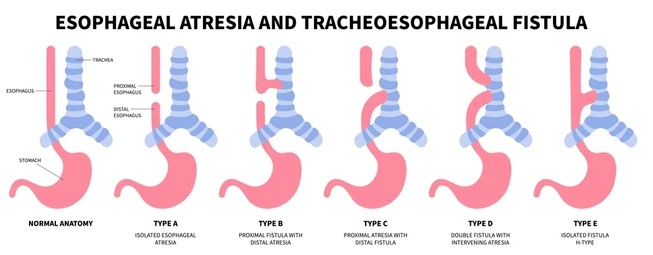
Treatment for esophageal atresia typically involves surgery to correct the defect. The exact type of surgery depends on the severity of the condition and whether it is associated with a tracheoesophageal fistula (TEF). Treatment options include:
- Surgical repair – The primary treatment for esophageal atresia is surgery to reconnect the esophagus or form a continuous passage from the mouth to the stomach. This is usually done within the first few days or weeks of life.
- Tracheoesophageal fistula repair – If a TEF is present, surgery is required to close the abnormal connection between the esophagus and the trachea.
- Feeding support – Infants with esophageal atresia may require a feeding tube to ensure they receive adequate nutrition before and after surgery.
- Ongoing monitoring – After surgery, the child will be closely monitored to ensure proper healing and function of the esophagus.
Can Esophageal Atresia Be Prevented?
Unfortunately, esophageal atresia cannot be prevented, as it is a congenital condition that occurs during fetal development. However, early detection and treatment significantly improve outcomes for affected infants. Pregnant women should receive regular prenatal care to monitor fetal health, as some congenital conditions may be detected through ultrasound or other prenatal testing.
What Is the Prognosis for Esophageal Atresia?
With prompt surgical treatment, most babies with esophageal atresia can go on to lead healthy lives. The prognosis depends on several factors, including the severity of the condition and whether other complications are present. Potential complications include:
- Reflux – Some children may experience gastroesophageal reflux (GERD) after surgery, where stomach contents leak into the esophagus.
- Swallowing difficulties – Some children may have trouble swallowing or may require ongoing feeding support.
- Esophageal strictures – Narrowing of the esophagus may occur after surgery, leading to difficulty swallowing.
- Respiratory issues – If a tracheoesophageal fistula was present, respiratory problems may persist.
What Support Is Available for Families?
Families of children with esophageal atresia can benefit from various support resources:
- Pediatric specialists – A team of pediatric surgeons, gastroenterologists, and feeding therapists will help manage the child’s care and recovery.
- Parent support groups – Joining support groups can provide emotional support and practical advice from families who have experienced similar challenges.
- Educational resources – Organizations such as the Esophageal Atresia and Tracheoesophageal Fistula Support Group offer information and resources for families.