


What is Punctate Inner Choroidopathy?
Punctate Inner Choroidopathy (PIC) is a rare inflammatory eye condition that affects the choroid, the blood vessel layer beneath the retina. It causes small white or yellow spots in the eye, mainly affecting young, nearsighted women.
What causes Punctate Inner Choroidopathy?
The exact cause of PIC is unknown, but it is thought to be related to an autoimmune or inflammatory response. It is not caused by infection, and genetics or environmental factors may play a role.
What are the symptoms of Punctate Inner Choroidopathy?
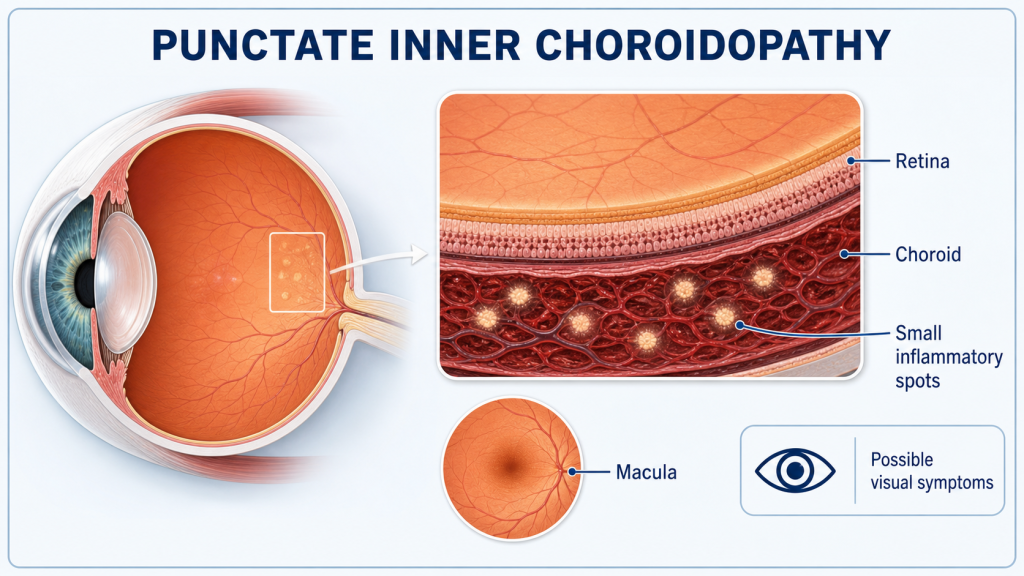
Symptoms often include:
- Blurred or reduced central vision
- Floaters (small moving spots in vision)
- Flashes of light
- Distorted vision or blind spots
- Mild eye discomfort (less common)
How is Punctate Inner Choroidopathy diagnosed?
Diagnosis involves:
- Detailed eye examination by an ophthalmologist
- Imaging tests such as fluorescein angiography (FA) and indocyanine green angiography (ICGA)
- Optical coherence tomography (OCT) to see detailed retina layers
- Visual field tests to check for blind spots
How is Punctate Inner Choroidopathy treated?
Treatment focuses on reducing inflammation and preventing complications:
- Corticosteroids (eye drops, oral, or injections)
- Immunosuppressive drugs for severe cases
- Anti-VEGF therapy if abnormal blood vessels develop
- Regular follow-ups to monitor disease progress
What is the outlook (prognosis) for someone with Punctate Inner Choroidopathy?
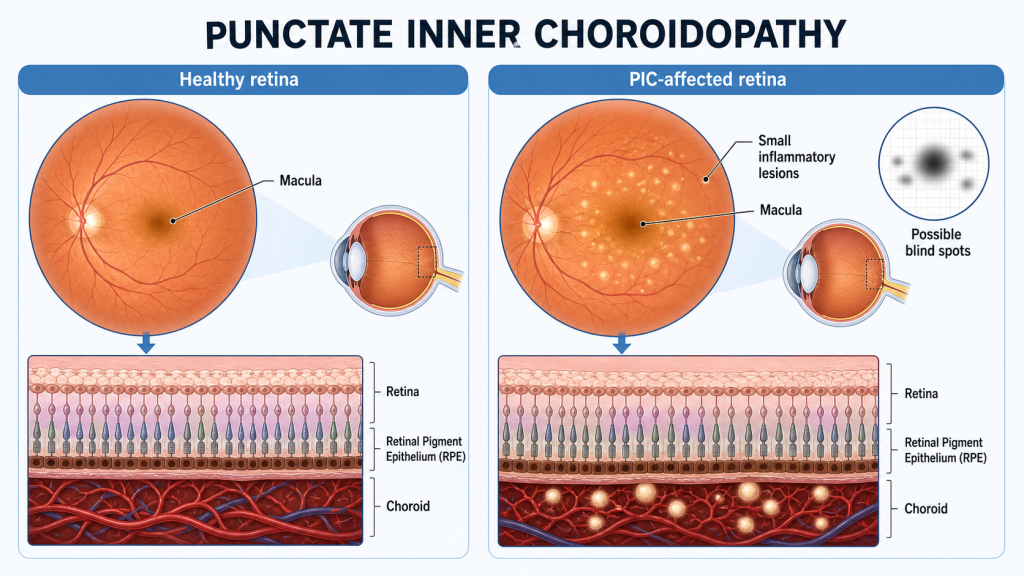
Many patients maintain good vision with proper treatment, but complications like abnormal blood vessel growth can cause permanent vision loss if untreated. Recurrence is possible, so ongoing care is important.
How can someone live with Punctate Inner Choroidopathy?
Patients should:
- Keep regular appointments with their eye doctor
- Report new or worsening symptoms immediately
- Protect their eyes from UV light by wearing sunglasses
- Follow treatment and lifestyle advice to minimize flare-ups
When should I see a doctor?
See a healthcare provider promptly if you experience:
- Sudden changes in vision
- New floaters or flashes of light
- Increasing blind spots or distortion
- Eye pain or redness
