What Is Viral Retinitis?
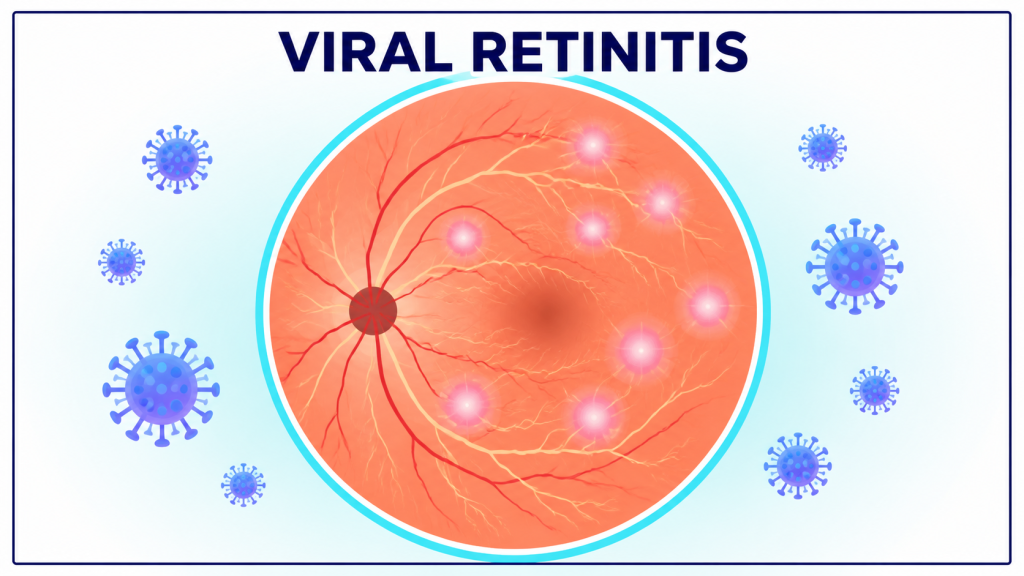
Viral retinitis is an inflammation of the retina—the light-sensitive tissue at the back of the eye—caused by viral infection. It can lead to vision loss or blindness if not treated promptly. The most common viruses responsible include cytomegalovirus (CMV), herpes simplex virus (HSV), varicella-zoster virus (VZV), and occasionally Epstein-Barr virus (EBV).
This condition primarily affects individuals with weakened immune systems, such as those with HIV/AIDS, cancer patients undergoing chemotherapy, or organ transplant recipients on immunosuppressants.
What Are the Symptoms of Viral Retinitis?

Viral retinitis can progress quickly and often affects only one eye initially, but may spread to both.
Common Symptoms Include:
- Blurred or decreased vision
- Floaters (spots or lines in vision)
- Flashes of light
- Eye pain or discomfort (less common)
- Blind spots or partial vision loss
- Redness or inflammation around the eye (in some cases)
If left untreated, it may result in retinal detachment or permanent blindness.
What Causes Viral Retinitis?
The condition results from direct infection of the retina by certain viruses, especially in individuals with compromised immune systems.
Common Viral Causes:
- Cytomegalovirus (CMV) → Most common in AIDS patients
- Herpes Simplex Virus (HSV) → Can cause acute retinal necrosis (ARN)
- Varicella-Zoster Virus (VZV) → Linked to shingles-related retinitis
- Epstein-Barr Virus (EBV) → Rare cause, usually in severely immunosuppressed individuals
Risk Factors:
- HIV/AIDS
- Use of immunosuppressive drugs
- Organ or bone marrow transplants
- Cancer treatments
- Advanced age with weakened immunity
How Is Viral Retinitis Diagnosed?
Early diagnosis is critical to preserving vision.
Diagnostic Tests Include:
- Ophthalmic Examination → Retina is examined using a dilated eye exam
- Optical Coherence Tomography (OCT) → Provides detailed retinal imaging
- Fluorescein Angiography → Highlights retinal blood flow
- Polymerase Chain Reaction (PCR) Testing → Detects viral DNA in eye fluid
- Blood Tests → Check for immune status and viral activity
How Is Viral Retinitis Treated?
1. Antiviral Medications
- Intravenous (IV) Antivirals → Ganciclovir, Foscarnet, or Cidofovir for CMV
- Oral Antivirals → Valganciclovir, Acyclovir, or Valacyclovir
- Intravitreal Injections → Direct delivery of antivirals into the eye for localized treatment
2. Immune System Support
- Initiating or optimizing antiretroviral therapy (ART) in HIV/AIDS patients
- Reducing immunosuppression if medically appropriate
3. Surgical Interventions
- Laser Therapy → May be used to prevent retinal detachment
- Vitrectomy → A surgical procedure for advanced disease or complications
Complications of Untreated Viral Retinitis
- Retinal Detachment
- Permanent Vision Loss
- Spread to the other eye
- Recurrence of infection
Living with or Recovering from Viral Retinitis
- Adhere to prescribed antiviral therapy strictly
- Attend regular eye exams to monitor disease progression
- Use visual aids if vision loss occurs
- Notify your doctor immediately if vision worsens or new symptoms develop