


What Is Systemic Juvenile Idiopathic Arthritis?
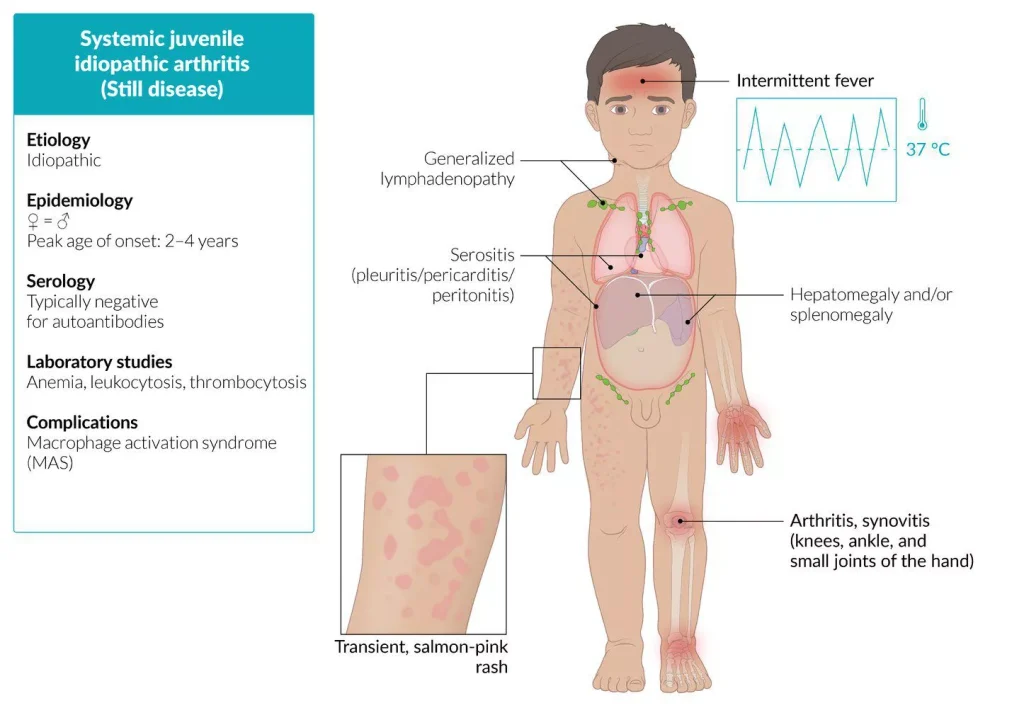
Systemic Juvenile Idiopathic Arthritis (SJIA) is a type of juvenile arthritis that affects children and involves inflammation in multiple joints as well as systemic symptoms like fever and rash. Unlike other forms of juvenile arthritis, SJIA affects the entire body and can cause serious complications if untreated.
What Are the Symptoms of Systemic Juvenile Idiopathic Arthritis?
Symptoms of SJIA may include:
- High, spiking fevers that often occur once or twice daily
- A salmon-pink rash that usually appears during fever spikes
- Swelling, pain, and stiffness in one or more joints
- Fatigue and general malaise
- Enlarged lymph nodes, liver, or spleen
- Inflammation of the lining around the heart or lungs (pericarditis or pleuritis)
What Causes Systemic Juvenile Idiopathic Arthritis?
The exact cause of SJIA is unknown but it is believed to involve:
- Autoimmune or autoinflammatory processes where the immune system attacks the body’s own tissues
- Genetic predisposition combined with environmental triggers
How Is Systemic Juvenile Idiopathic Arthritis Diagnosed?
Diagnosis is based on:
- Medical history and physical examination
- Blood tests showing inflammation (elevated ESR, CRP) and anemia
- Exclusion of infections or other diseases
- Imaging tests like X-rays or ultrasound to assess joint involvement
- There is no single test for SJIA; diagnosis is clinical
How Is Systemic Juvenile Idiopathic Arthritis Treated?
Treatment aims to reduce inflammation, relieve symptoms, and prevent joint damage:
- Nonsteroidal anti-inflammatory drugs (NSAIDs): To reduce pain and inflammation
- Corticosteroids: Used to control severe inflammation and systemic symptoms
- Disease-modifying antirheumatic drugs (DMARDs): Such as methotrexate to slow disease progression
- Biologic agents: Targeted therapies like IL-1 or IL-6 inhibitors that block specific inflammatory pathways
- Regular monitoring by a pediatric rheumatologist is essential
What Is the Prognosis for Systemic Juvenile Idiopathic Arthritis?
Prognosis varies; some children experience remission, while others may have chronic arthritis and complications. Early diagnosis and treatment improve outcomes. Possible complications include growth problems and joint deformities.
Living with Systemic Juvenile Idiopathic Arthritis
- Ongoing medical care and physical therapy can help maintain joint function
- Supportive care for emotional and social challenges is important for affected children and families
- Regular follow-ups help manage symptoms and adjust treatment