


What is Poison Ivy Dermatitis?
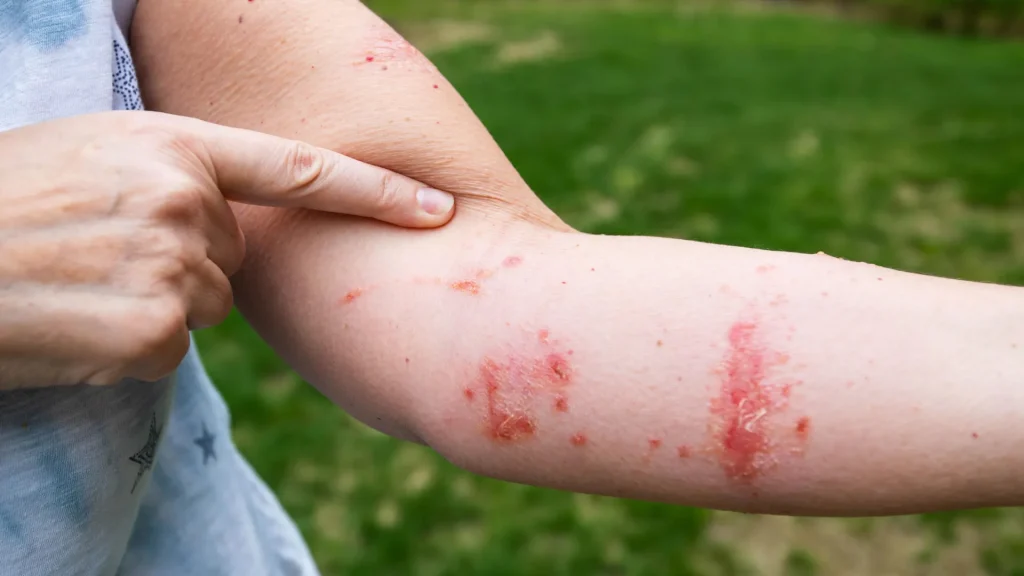
Poison Ivy Dermatitis is an allergic skin reaction caused by contact with the plant Toxicodendron radicans (commonly known as poison ivy). It results in an itchy, red rash that can blister and become swollen. The rash occurs when the skin comes into contact with urushiol, the oily resin found in poison ivy, poison oak, and poison sumac.
What causes Poison Ivy Dermatitis?
The reaction is caused by:
- Contact with urushiol oil, found in poison ivy, poison oak, and poison sumac plants.
- Urushiol binds to skin proteins, triggering an immune system response.
- The reaction can occur from direct contact, touching contaminated clothing or objects, or even inhaling smoke from burning these plants.
What are the symptoms?
Symptoms typically appear within 12 to 72 hours after exposure and may include:
- Redness and itching on the skin
- Swelling and inflammation
- Small blisters or bumps that may leak fluid
- Pain or burning sensation
- In severe cases, large blisters or areas of swelling
How is Poison Ivy Dermatitis diagnosed?
Diagnosis is usually made based on:
- History of recent exposure to poison ivy or related plants
- Characteristic appearance and pattern of the rash
- No specific lab tests are required, but severe cases may need medical evaluation
How is it treated?
Treatment focuses on relieving symptoms and preventing infection:
- Washing the affected area immediately with soap and water to remove urushiol
- Topical corticosteroids or calamine lotion to reduce itching and inflammation
- Oral antihistamines to relieve itching
- Oral corticosteroids in severe or widespread cases
- Keeping the area clean and avoiding scratching to prevent infection
- Cool compresses to soothe the skin
What is the prognosis?
Most cases of poison ivy dermatitis resolve within 1 to 3 weeks without scarring. Symptoms improve with treatment, but the rash can be uncomfortable and persistent during that time.
What complications can occur?
Possible complications include:
- Secondary bacterial skin infection from scratching
- Severe allergic reactions requiring medical attention (rare)
- Long-lasting skin discoloration in some cases
Who is most at risk?
- People who spend time outdoors in areas where poison ivy, poison oak, or poison sumac grow
- Gardeners, hikers, campers, landscapers, and outdoor workers
- Individuals with sensitive skin or prior allergic reactions to urushiol

Can Poison Ivy Dermatitis be prevented?
Yes, prevention tips include:
- Learning to identify and avoid poison ivy and related plants
- Wearing protective clothing (long sleeves, pants, gloves) when outdoors
- Washing skin and clothes promptly after potential exposure
- Using barrier creams designed to block urushiol
Are there support resources?
Yes. Support may include:
- Advice from healthcare providers on treatment and prevention
- Educational materials about plant identification and urushiol exposure
- Online forums or local support groups for people with severe or recurrent reactions