


What is Basal Cell Carcinoma?
Basal Cell Carcinoma (BCC) is the most common type of skin cancer. It arises from the basal cells, which are located in the deepest layer of the epidermis. BCC typically develops due to prolonged exposure to ultraviolet (UV) radiation from the sun or tanning beds.
Although BCC grows slowly and rarely spreads (metastasizes) to other parts of the body, it can cause significant damage to surrounding tissues if left untreated.
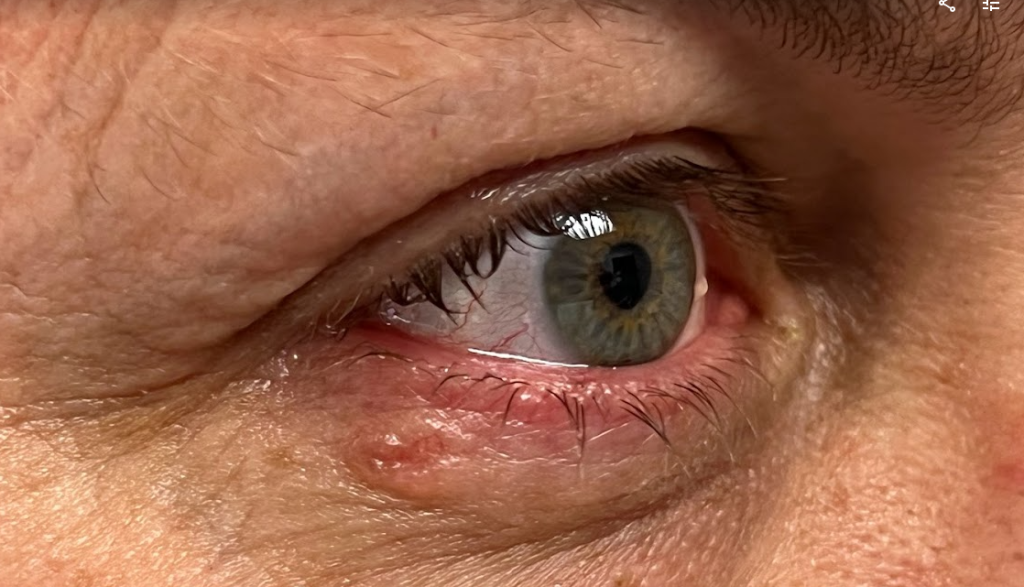
What Causes Basal Cell Carcinoma?
BCC is primarily caused by long-term exposure to UV radiation, which damages the DNA in skin cells. Other contributing factors include:
- Frequent sun exposure – Without adequate protection.
- Tanning bed use – Increases the risk significantly.
- Fair skin – Less melanin makes skin more vulnerable to UV damage.
- A history of sunburns – Especially in childhood or adolescence.
- Older age – Risk increases with age.
- Weakened immune system – Due to conditions like HIV or immunosuppressive medications.
- Exposure to radiation or toxic substances – Like arsenic.
What Are the Symptoms of Basal Cell Carcinoma?
BCC often appears on sun-exposed areas such as the face, ears, neck, scalp, shoulders, and back. Symptoms vary but commonly include:
Common Signs of BCC:
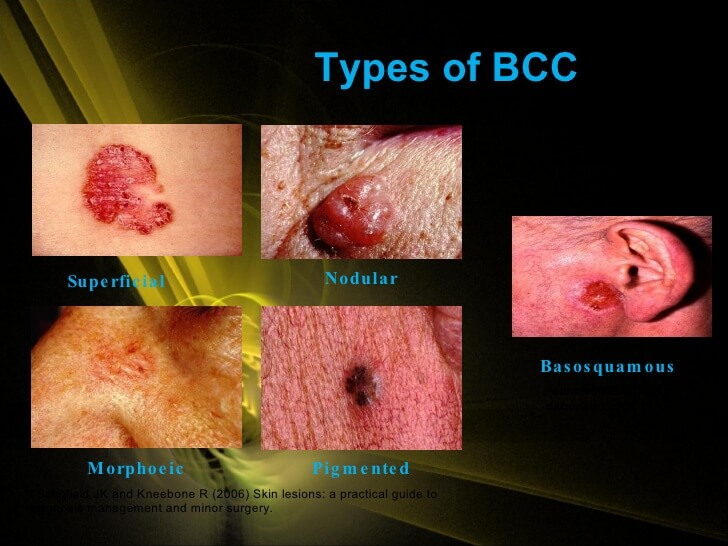
- A pearly or waxy bump – Flesh-colored, pink, or translucent with visible blood vessels.
- A flat, scaly patch – Light red or brown, resembling eczema.
- A sore that doesn’t heal – May bleed, scab, and return repeatedly.
- A shiny, slightly raised lesion – Can appear white, pink, red, or brown.
- A scar-like area – White or yellowish, with a firm, waxy texture.
Rare Symptoms:
- Itching or tenderness – Some BCC lesions may be painful.
- Bleeding or ulceration – In advanced cases.
How is Basal Cell Carcinoma Diagnosed?
A dermatologist diagnoses BCC through visual examination and confirmatory tests:
Diagnostic Methods:
- Physical Examination – Examines the lesion’s appearance and history.
- Dermatoscopy – Uses a magnifying tool to assess skin abnormalities.
- Skin Biopsy – A small sample is taken and analyzed under a microscope to confirm cancer.
What Are the Treatment Options for Basal Cell Carcinoma?
The treatment for BCC depends on the tumor’s size, depth, and location. Common treatment methods include:
Surgical Treatments:
- Excisional Surgery – The tumor and some surrounding tissue are removed.
- Mohs Surgery – Layer-by-layer removal for precise elimination while sparing healthy skin (ideal for high-risk areas like the face).
Non-Surgical Treatments:
- Cryotherapy (Freezing) – Liquid nitrogen destroys cancer cells.
- Curettage and Electrodessication – Scraping the lesion and using electric current to kill remaining cancer cells.
- Topical Medications – Such as Imiquimod or 5-Fluorouracil (for superficial BCCs).
- Radiation Therapy – Used when surgery isn’t an option, particularly for older adults or those with large lesions.
Advanced Treatments:
- Targeted Therapy – For aggressive or recurrent BCC (e.g., Vismodegib or Sonidegib).
- Photodynamic Therapy (PDT) – Uses light and photosensitizing agents to destroy cancer cells.
What Are the Possible Complications of Basal Cell Carcinoma?
Though BCC rarely spreads, untreated cases can lead to:
- Tissue destruction – Deep invasion into skin, muscles, and bones.
- Disfigurement – Especially on the face or ears.
- Recurrence – BCC can return, particularly in high-risk individuals.
- Metastasis (Rare Cases) – In very advanced cases, BCC can spread to other areas.
How Can Basal Cell Carcinoma Be Prevented?
To reduce the risk of BCC, follow these preventive measures:
Sun Protection Strategies:
- Use sunscreen (SPF 30+) – Apply daily and reapply every two hours.
- Wear protective clothing – Hats, sunglasses, and long sleeves.
- Avoid peak sun hours – Stay in the shade from 10 AM to 4 PM.
- Never use tanning beds – UV exposure from tanning beds increases skin cancer risk.
- Regular skin checks – Examine your skin monthly for new or changing spots.
- Visit a dermatologist annually – Especially if you have a history of skin cancer.
When Should You See a Doctor?
Seek medical attention if you notice:
- A persistent, non-healing sore.
- A growing or changing lesion.
- New or unusual skin growths.
- Any lesion that bleeds or crusts repeatedly.
Early detection and treatment of Basal Cell Carcinoma ensure the best outcomes. Protecting your skin from UV exposure is the most effective way to prevent this common form of skin cancer.
