


What is Congenital Hypothyroidism?
Congenital Hypothyroidism (CH) is a condition in which a baby is born with an underactive thyroid gland, which does not produce enough thyroid hormones. These hormones are essential for regulating metabolism, growth, and development. Without adequate thyroid hormones, the body’s organs and systems cannot function optimally, leading to various health problems.
Congenital Hypothyroidism is a rare but serious condition. If left untreated, it can lead to developmental delays, intellectual disabilities, and growth problems. However, with early diagnosis and appropriate treatment, babies with this condition can develop normally and lead healthy lives.
What Causes Congenital Hypothyroidism?
Congenital Hypothyroidism can occur for several reasons, most of which are related to abnormalities in the thyroid gland itself. The causes of this condition include:
- Thyroid dysgenesis: This is the most common cause, where the thyroid gland either doesn’t develop properly (agenesis) or is located in the wrong part of the neck (ectopy).
- Thyroid hormone synthesis defects: In this case, the thyroid gland is present and structurally normal but cannot produce thyroid hormones correctly.
- Pituitary gland problems: In rare cases, the pituitary gland, which controls the thyroid gland, may not release enough of the hormone that signals the thyroid to produce thyroid hormones.
- Genetic mutations: Some cases of congenital hypothyroidism are inherited, often as part of genetic syndromes.
What Are the Symptoms of Congenital Hypothyroidism?
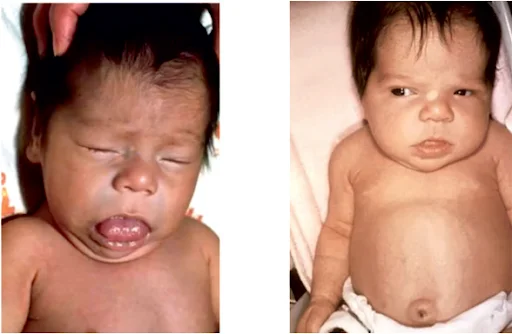
In newborns, Congenital Hypothyroidism may not cause any obvious symptoms right away, but untreated, it can lead to various problems. Common signs and symptoms in infants may include:
- Poor feeding: Babies with congenital hypothyroidism often have trouble feeding and may struggle to gain weight.
- Jaundice: A yellowish tint to the skin and eyes caused by a buildup of bilirubin in the bloodstream.
- Constipation: A common digestive issue that can be observed in infants with hypothyroidism.
- Lethargy or sluggishness: Babies may appear unusually sleepy or less active than expected.
- Hoarse cry: A rough or hoarse-sounding cry is often noted in infants with congenital hypothyroidism.
- Cold intolerance: Babies may feel colder than normal due to a slower metabolism.
- Swollen face: Puffiness or swelling around the eyes or face can occur.
- Delayed development: If left untreated, developmental milestones may be delayed, including motor skills, language skills, and overall growth.
In some cases, if the condition is mild, symptoms may not be immediately noticeable, and the disorder may only become apparent during routine screening tests.
How is Congenital Hypothyroidism Diagnosed?
Congenital Hypothyroidism is typically diagnosed through newborn screening, which is done shortly after birth in most countries. The process includes:
- Newborn screening test: The test measures the levels of thyroid hormones and TSH (thyroid-stimulating hormone) in the blood. High levels of TSH and low levels of thyroid hormones suggest congenital hypothyroidism. The test is usually done through a heel prick and is a routine part of newborn care.
- Confirmatory blood tests: If the screening test suggests congenital hypothyroidism, additional blood tests will confirm the diagnosis. These tests measure levels of thyroid hormones (T4) and TSH.
- Ultrasound: In some cases, an ultrasound of the neck can be done to check for the presence and location of the thyroid gland.
Early detection through newborn screening allows for prompt treatment, which can prevent developmental delays and other complications.
How is Congenital Hypothyroidism Treated?
The main treatment for Congenital Hypothyroidism is hormone replacement therapy, which involves taking synthetic thyroid hormones to replace the missing hormones. The treatment approach includes:
- Levothyroxine (L-thyroxine): This is the synthetic form of thyroid hormone. It is usually administered orally as a daily medication. The dose is carefully adjusted to ensure that the baby receives the correct amount of thyroid hormone to normalize growth and development.
- Monitoring and adjustment: Babies with congenital hypothyroidism need regular follow-up visits to monitor thyroid hormone levels, growth, and development. The dose of levothyroxine will be adjusted based on blood tests and the baby’s response to treatment.
- Lifelong management: In most cases, babies with congenital hypothyroidism will need to continue hormone replacement therapy throughout their lives, although the dosage may change as the child grows.
With early treatment, children with congenital hypothyroidism can develop normally, meet growth and developmental milestones, and lead healthy, active lives.
What is the Outlook for People with Congenital Hypothyroidism?
The outlook for children with congenital hypothyroidism is excellent when the condition is diagnosed early and treated appropriately. Most children who start treatment within the first few weeks of life:
- Grow normally: They achieve normal height and weight as they grow.
- Develop normally: With proper treatment, children can reach developmental milestones within a typical timeframe.
- Avoid complications: Early treatment helps prevent intellectual disabilities, growth delays, and other complications associated with untreated hypothyroidism.
If the condition is left untreated for too long, however, it can lead to irreversible damage, including intellectual disabilities and growth retardation. This is why early diagnosis and treatment are critical for a positive outcome.
Can Congenital Hypothyroidism Be Prevented?
Congenital Hypothyroidism is primarily a genetic condition and cannot be prevented. However, since the condition is usually detected early through newborn screening, prompt treatment can prevent the long-term effects of the disorder.
In some cases where congenital hypothyroidism is inherited, genetic counseling may be beneficial for families with a known history of thyroid problems. This can help assess the risk for future children.
Who is at Risk for Congenital Hypothyroidism?
Congenital Hypothyroidism occurs in infants regardless of gender, but certain factors may increase the risk:
- Family history: If a parent or sibling has hypothyroidism or a related thyroid disorder, there may be a higher risk of the condition in future children.
- Genetic factors: Certain genetic syndromes or mutations can increase the likelihood of congenital hypothyroidism.
- Premature birth: Premature infants may have a slightly higher risk of developing thyroid problems.
- Maternal thyroid conditions: Mothers with thyroid disorders may be at higher risk of having a child with congenital hypothyroidism.
