


What is Bacillus Cereus Food Poisoning?
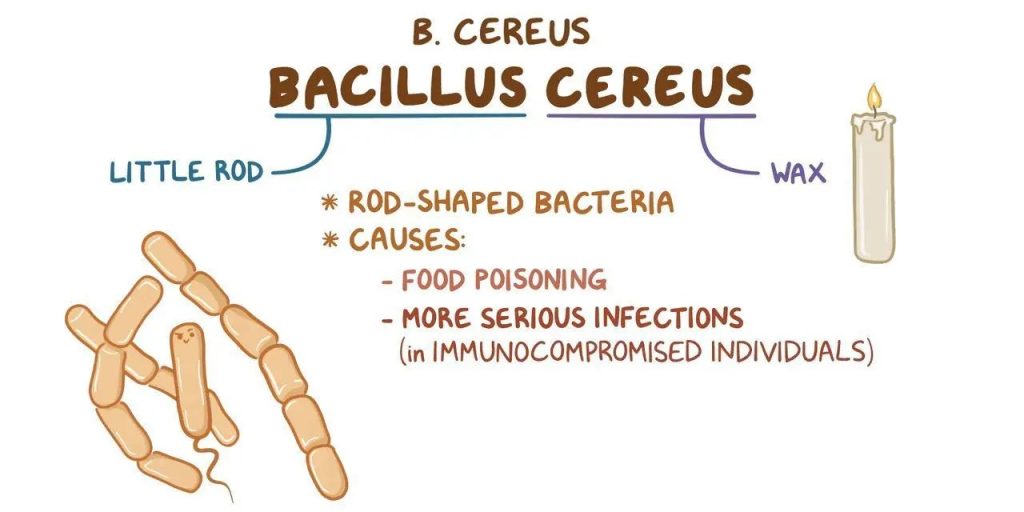
Bacillus cereus food poisoning is a bacterial infection caused by Bacillus cereus (B. cereus), a spore-forming bacterium found in soil, food, and the environment. This bacterium produces toxins that lead to foodborne illness, causing either vomiting or diarrhea, depending on the type of toxin involved.
B. cereus is commonly found in starchy foods like rice, pasta, and potatoes, as well as dairy, meat, and vegetables. Improper food storage allows the bacteria to multiply and produce toxins, leading to food poisoning.
What Causes Bacillus Cereus Food Poisoning?
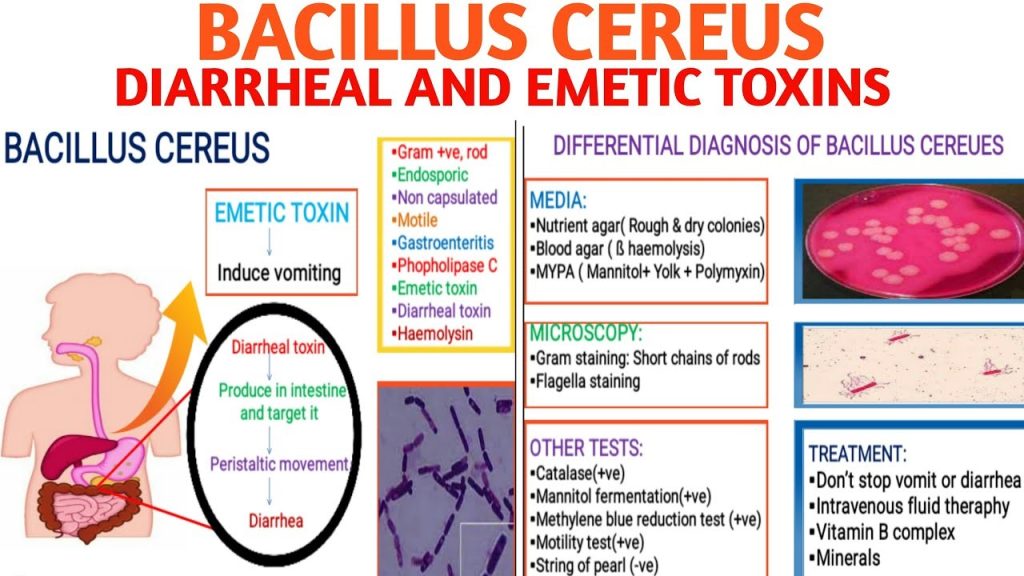
Bacillus cereus produces two types of toxins, each causing different symptoms:
1. Emetic (Vomiting) Toxin
- Source: Contaminated starchy foods (e.g., rice, pasta, potatoes).
- Toxin Type: Heat-stable toxin that survives cooking.
- Incubation Period: 30 minutes to 6 hours after consuming contaminated food.
- Symptoms: Nausea, vomiting, and abdominal cramps (similar to Staphylococcus aureus food poisoning).
2. Diarrheal Toxin
- Source: Contaminated meat, dairy, vegetables, and sauces.
- Toxin Type: Heat-sensitive toxin destroyed by cooking.
- Incubation Period: 6 to 15 hours after eating contaminated food.
- Symptoms: Watery diarrhea, abdominal pain, and mild nausea (similar to Clostridium perfringens food poisoning).
How Does Bacillus Cereus Spread?
- Improper Food Handling – Cooking food at low temperatures or letting it sit at room temperature for too long.
- Contaminated Raw Ingredients – Meat, dairy, and vegetables carrying spores.
- Unclean Kitchen Equipment – Cross-contamination from spores on surfaces and utensils.
- Reheating Cooked Food – Spores survive cooking and multiply when food is left out.
What Are the Symptoms of Bacillus Cereus Food Poisoning?
Symptoms depend on the type of toxin ingested.
Emetic (Vomiting) Syndrome:
- Nausea
- Vomiting
- Abdominal cramps
- Occasionally mild diarrhea
Diarrheal Syndrome:
- Watery diarrhea
- Abdominal pain & cramps
- Mild nausea
- No vomiting
Symptoms usually last 24 hours and resolve without treatment.
How is Bacillus Cereus Food Poisoning Diagnosed?
Clinical Examination:
- Review of food consumption history.
- Analysis of symptoms and timing of onset.
Laboratory Tests:
- Stool culture – Identifies B. cereus bacteria.
- Food sample testing – Detects bacterial toxins in contaminated food.
Lab testing is usually not necessary unless an outbreak occurs.
What is the Treatment for Bacillus Cereus Food Poisoning?
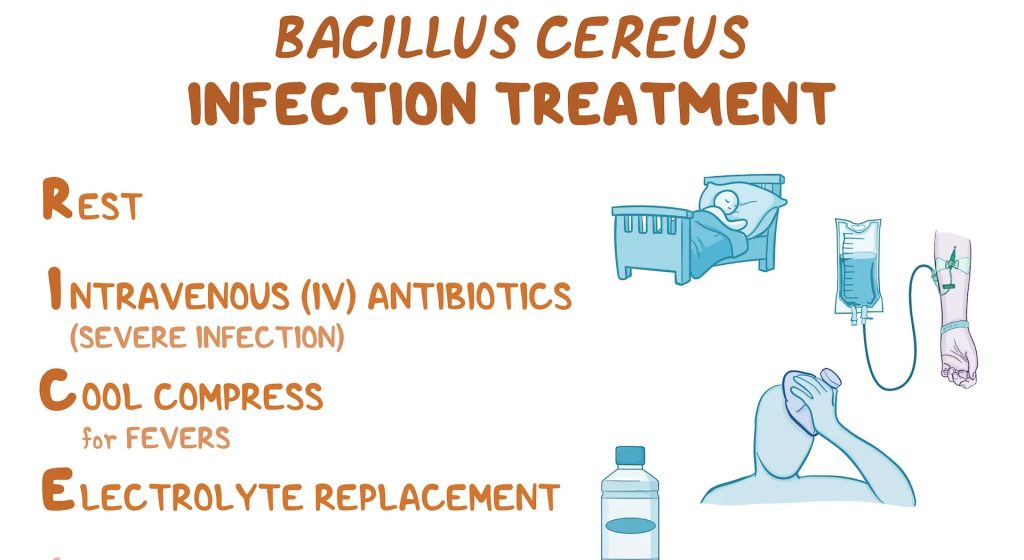
1. Hydration Therapy
- Oral rehydration solutions (ORS) – Prevents dehydration from diarrhea and vomiting.
- Intravenous (IV) fluids – For severe dehydration.
2. Symptom Management
- Rest – Allow the body to recover.
- Pain Relievers (Acetaminophen) – Helps with abdominal cramps.
- Avoid Anti-Diarrheal Medications (Loperamide) – Can trap toxins in the intestines, worsening symptoms.
3. Medical Treatment (Severe Cases)
- Antibiotics are NOT needed because symptoms are caused by toxins, not the bacteria itself.
Most cases resolve within 24 hours without medical treatment.
What Are the Complications of Bacillus Cereus Food Poisoning?
While most infections are mild, severe cases can lead to:
- Severe dehydration – Due to prolonged vomiting or diarrhea.
- Electrolyte imbalance – Can cause dizziness and weakness.
- Hospitalization – Rare, but necessary if dehydration becomes life-threatening.
Immunocompromised individuals, elderly adults, and young children are at higher risk of complications.
How Can Bacillus Cereus Food Poisoning Be Prevented?
To reduce the risk of infection:
Store Food Properly – Refrigerate cooked food below 40°F (4°C) and reheat above 165°F (74°C).
Cook Food Thoroughly – Avoid undercooking meat, rice, and vegetables.
Reheat Leftovers Correctly – Avoid warming food multiple times.
keep the Kitchen Clean – Wash hands, surfaces, and utensils properly. Avoid Leaving Cooked Food at Room Temperature – Spores multiply in warm environments.
When Should You See a Doctor?
Seek medical attention if you experience:
Severe dehydration (dry mouth, dizziness, low urine output).
Persistent vomiting (lasting more than 24 hours).
Severe abdominal pain that worsens over time.
Bloody diarrhea (rare but requires immediate care).
