


What is Pseudomembranous Colitis?
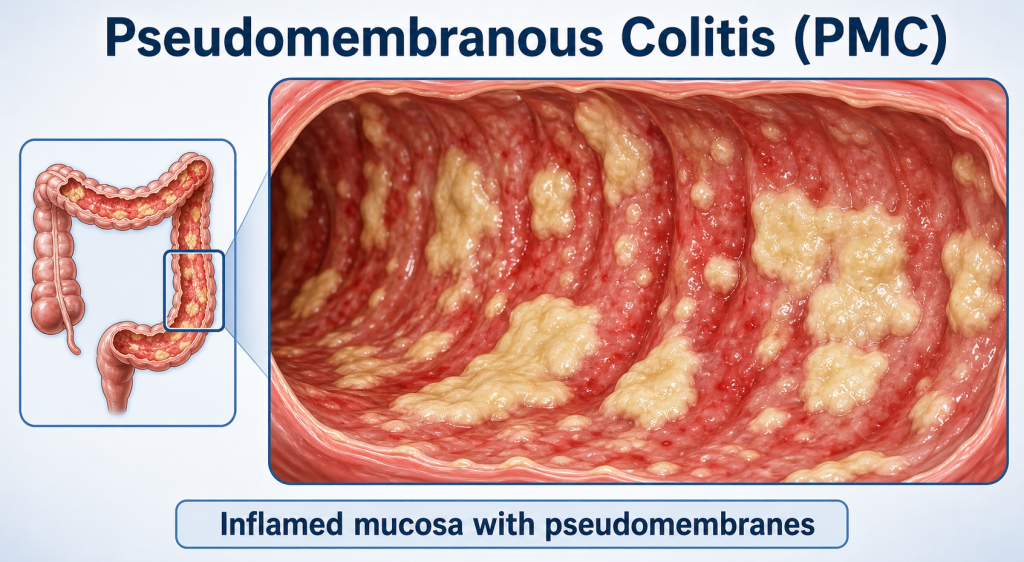
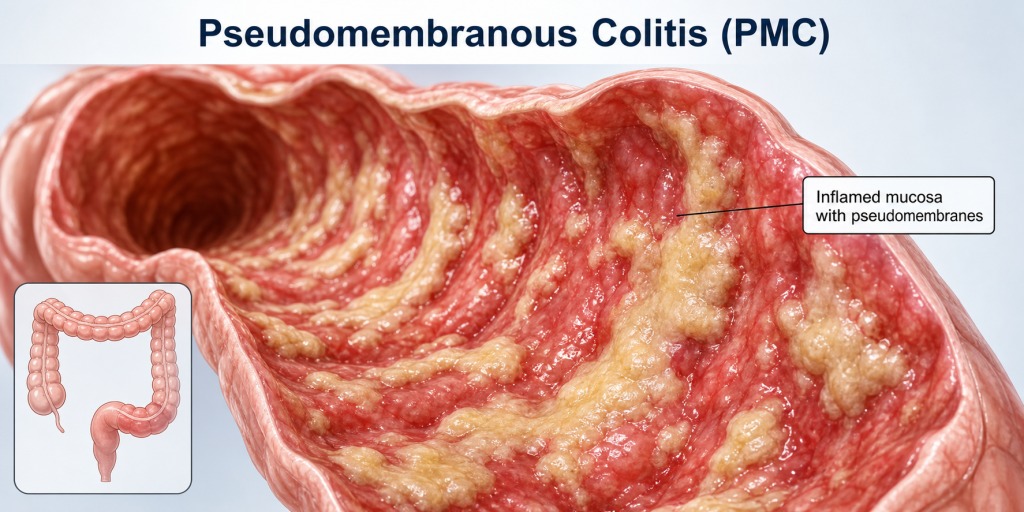
Pseudomembranous Colitis is an inflammatory condition of the colon characterized by the formation of pseudomembranes—yellow-white plaques on the mucosal surface. It is most commonly associated with an overgrowth of Clostridioides difficile (C. diff) bacteria, often following antibiotic use.
Causes and Risk Factors
- Antibiotic Use: Broad-spectrum antibiotics like clindamycin, cephalosporins, penicillins, and fluoroquinolones can disrupt normal gut flora, allowing C. diff to proliferate.
- Hospitalization or Long-Term Care: Increased exposure to C. diff spores in healthcare settings.
- Age: Individuals over 65 are at higher risk.
- Weakened Immune System: Conditions like cancer, HIV/AIDS, or immunosuppressive therapy.
- Previous C. diff Infection: History of infection increases recurrence risk.
Symptoms
- Watery diarrhea (often more than three times a day)
- Abdominal cramps and tenderness
- Fever
- Nausea
- Loss of appetite
- Dehydration
- In severe cases, presence of blood or pus in stool
Diagnosis
- Stool Tests: Detect toxins produced by C. diff.
- Blood Tests: Check for elevated white blood cell count.
- Colonoscopy or Sigmoidoscopy: Visualize pseudomembranes on the colon lining.
- Imaging: CT scans or abdominal X-rays to assess complications like toxic megacolon.
Treatment
- Discontinuation of Offending Antibiotics: Stopping the antibiotic that triggered the condition.
- Targeted Antibiotic Therapy: Medications such as vancomycin, fidaxomicin, or metronidazole to treat C. diff infection.
- Supportive Care: Hydration and electrolyte management.
- Fecal Microbiota Transplantation (FMT): Considered for recurrent cases to restore healthy gut flora.
- Surgery: In severe cases with complications like perforation or toxic megacolon, surgical intervention may be necessary.
Complications
- Dehydration: Due to excessive diarrhea.
- Toxic Megacolon: Severe colon distension leading to potential rupture.
- Perforation of the Colon: Can lead to peritonitis.
- Sepsis: A life-threatening response to infection.
Prevention
- Judicious Antibiotic Use: Only when necessary and with appropriate selection.
- Infection Control in Healthcare Settings: Hand hygiene, use of personal protective equipment, and environmental cleaning.
- Isolation Precautions: For infected individuals to prevent spread.
