What is Lipoblastoma?
Lipoblastoma is a rare, benign (non-cancerous) tumor that arises from the adipose (fat) tissue, usually in children. It typically affects infants and young children, often before the age of 3. Lipoblastomas are composed of immature fat cells and are most commonly found in the soft tissues of the body, such as the arms, legs, and trunk. Despite being benign, they can grow and cause complications depending on their size and location.
Types of Lipoblastoma?
There are two main types of lipoblastomas based on their location:
- Classic Lipoblastoma: This type is most commonly found in the limbs or trunk and is usually more confined to a specific area. It generally appears as a well-defined mass in the soft tissue.
- Lipoblastomatosis: This variant is more diffuse and can involve multiple regions of the body. Lipoblastomatosis may be harder to completely remove surgically and may recur after treatment.
Causes of Lipoblastoma?
The exact cause of lipoblastoma is not fully understood, but it is thought to be related to abnormal growth of fat cells during early childhood development. While most cases are sporadic (occurring by chance), certain genetic factors may predispose individuals to develop this tumor. However, there are no well-established hereditary patterns for this condition, and most cases occur without a family history of similar tumors.
Symptoms of Lipoblastoma?
The symptoms of lipoblastoma largely depend on the tumor’s size, location, and growth pattern. Common symptoms include:
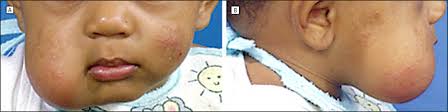
- Visible Mass or Swelling: The tumor usually appears as a soft, painless lump or swelling under the skin.
- Pain or Discomfort: While most lipoblastomas are painless, larger tumors or those pressing on nearby structures may cause pain or discomfort.
- Restricted Movement: If the tumor is located near joints, it can restrict movement or cause difficulty using the affected limb.
- Changes in Appearance: In some cases, the growth of the tumor can alter the shape of the affected area of the body.

Diagnosis of Lipoblastoma?
The diagnosis of lipoblastoma involves a combination of clinical examination, imaging studies, and biopsy:
- Medical History and Physical Examination: The healthcare provider will perform a physical exam to assess the size, consistency, and location of the lump. A detailed medical history, including any symptoms and family history, will also be discussed.
- Imaging Tests: An ultrasound, MRI, or CT scan may be performed to determine the size, location, and characteristics of the tumor. Imaging can help distinguish lipoblastoma from other types of tumors, such as liposarcoma (a malignant tumor of fat cells).
- Biopsy: In some cases, a biopsy (removal of a small sample of tissue) may be performed to confirm the diagnosis. The sample will be examined under a microscope to identify the characteristic immature fat cells found in lipoblastomas.
Treatment and Management of Lipoblastoma?
The primary treatment for lipoblastoma is surgical removal of the tumor. Since lipoblastomas are benign, complete excision of the tumor usually leads to a good prognosis. However, the management approach may include:
- Surgical Excision: Complete surgical removal of the tumor is typically the first-line treatment. The goal is to remove the entire mass to prevent recurrence.
- Follow-up Care: After surgery, regular follow-up appointments are essential to monitor for any signs of tumor recurrence. Imaging tests may be used to ensure the tumor has been entirely removed.
- Possible Radiation: In rare cases where the tumor is inoperable or recurs, radiation therapy may be considered, though this is not typically required for lipoblastoma.
- Observation: In some cases, if the tumor is small and not causing significant symptoms, doctors may choose to monitor the growth over time, although surgical removal remains the primary treatment option.
Possible Complications of Lipoblastoma?
While lipoblastomas are benign, there are potential complications that may arise:
- Recurrence: In cases where the tumor is not completely removed, or if it is of the lipoblastomatosis type, there may be a risk of recurrence.
- Damage to Surrounding Structures: If the tumor is located near vital organs, nerves, or joints, its removal may result in damage to surrounding tissues, leading to functional impairments.
- Psychosocial Impact: As with any visible tumor, a child with a lipoblastoma may experience emotional or psychological distress, especially if the tumor affects their appearance.
Prevention of Lipoblastoma?
There are no known preventative measures for lipoblastoma, as the exact cause remains largely unknown. However, early detection and prompt treatment can help prevent complications associated with this tumor. Regular check-ups and monitoring for children with unusual lumps or growths can ensure timely intervention if needed.
When to See a Doctor?
Parents or caregivers should seek medical attention if they notice:
- Unusual Lump or Swelling: Any unexplained swelling or lump in a child, especially if it grows rapidly, should be evaluated by a healthcare provider.
- Pain or Restricted Movement: If a child experiences pain, discomfort, or difficulty moving a body part due to a lump, medical evaluation is necessary.
- Changes in Appearance: If a child’s appearance changes due to a growing mass or swelling, a healthcare provider should assess the situation promptly.