What is Oestrus Vulvovaginosis?
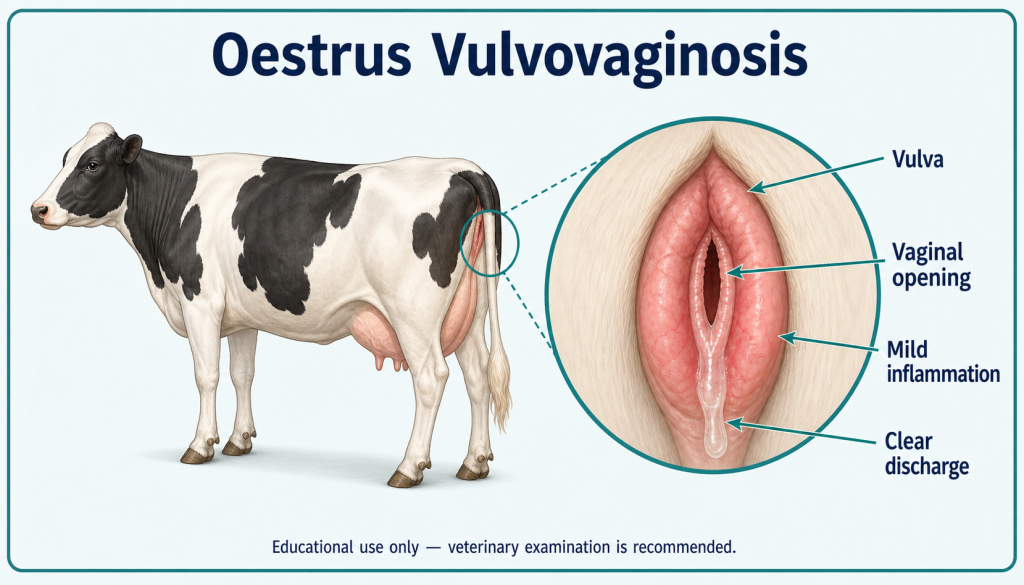
Oestrus vulvovaginosis is a condition characterized by inflammation and infection of both the vulva and vagina in female animals, particularly during the estrous cycle (heat). This condition occurs due to hormonal changes that happen when an animal is in estrus, often leading to swelling, redness, and discharge from the vaginal and vulvar regions. The inflammation can result from hormonal imbalances, infections, or physical irritation.
What causes Oestrus Vulvovaginosis?
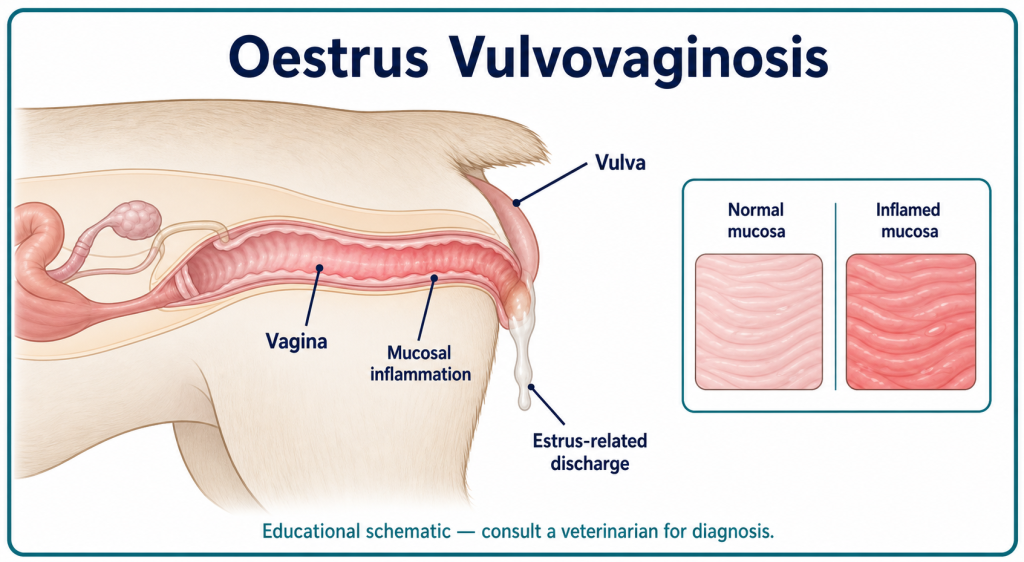
Oestrus vulvovaginosis is primarily caused by hormonal changes during the estrous cycle, but several factors can contribute to the development of the condition:
- Hormonal Fluctuations: During estrus, an increase in estrogen levels causes the vaginal and vulvar tissues to become more sensitive, which can lead to inflammation.
- Bacterial or Fungal Infections: The hormonal changes during estrus make the vaginal environment more prone to infections caused by bacteria or fungi.
- Poor Hygiene: Inadequate hygiene and the accumulation of discharge around the vulva can promote bacterial growth, increasing the risk of infection.
- Urinary Tract Infections (UTIs): UTIs can extend to the vulva and vaginal area, leading to inflammation and infection.
- Physical Irritation: Physical irritation or trauma, such as from mating or external objects, can lead to vulvovaginosis.
- Underlying Health Issues: Animals with immune system disorders or chronic diseases like diabetes may be more susceptible to infections and inflammation during estrus.
What are the symptoms of Oestrus Vulvovaginosis?
The symptoms of oestrus vulvovaginosis are typically associated with inflammation of the vulva and vagina, and they may include:
- Vaginal and Vulvar Discharge: There is often an increase in discharge, which can vary in color from clear to bloody or pus-like, depending on the severity of the infection.
- Swelling and Redness of the Vulva: The vulva becomes swollen, inflamed, and may appear red due to the hormonal changes during estrus.
- Excessive Licking: Animals with oestrus vulvovaginosis may lick their genital area more frequently in an attempt to soothe discomfort.
- Pain or Discomfort: The animal may show signs of discomfort, such as avoiding certain activities, difficulty walking, or reluctance to engage in mating behavior.
- Changes in Behavior: Some animals may become irritable or exhibit changes in their normal behavior due to the discomfort associated with the condition.
- Frequent Urination: In some cases, the inflammation may cause pain during urination, leading to more frequent urination attempts.
How is Oestrus Vulvovaginosis diagnosed?
Oestrus vulvovaginosis is diagnosed based on clinical signs, the animal’s medical history, and specific diagnostic tests. Key diagnostic methods include:
- Physical Examination: A veterinarian will examine the vulva and vaginal area for signs of inflammation, swelling, redness, and discharge.
- Vaginal Smear or Culture: A sample of the discharge may be collected and examined under a microscope to identify the presence of bacteria, fungi, or other pathogens. A culture test may be performed to determine the specific microorganism causing the infection.
- Urinalysis: If a urinary tract infection is suspected, a urine sample may be taken and analyzed to check for signs of infection.
- Hormonal Testing: Blood tests may be used to measure hormone levels, such as estrogen or progesterone, to determine if there are any hormonal imbalances contributing to the condition.
What are the treatment options for Oestrus Vulvovaginosis?
Treatment for oestrus vulvovaginosis depends on the underlying cause of the condition. Common treatment options include:
- Antibiotics or Antifungals: If a bacterial or fungal infection is detected, the veterinarian may prescribe antibiotics or antifungal medications to treat the infection and reduce inflammation.
- Anti-inflammatory Medications: Non-steroidal anti-inflammatory drugs (NSAIDs) may be used to reduce swelling and relieve discomfort.
- Topical Treatments: In some cases, topical creams or ointments may be applied to the vulva or vaginal area to help soothe irritation and promote healing.
- Vaginal Irrigations: A veterinarian may recommend gentle irrigation or cleaning of the vaginal area using antiseptic solutions to remove discharge and bacteria.
- Pain Relief: If the animal is in significant discomfort, additional pain management, such as sedatives or other analgesics, may be recommended.
- Improved Hygiene: Maintaining proper hygiene is essential in preventing further irritation and infection. Regular cleaning and drying of the genital area can help alleviate symptoms.
- Sterilization or Hormonal Treatment: In cases where oestrus vulvovaginosis is recurrent or severe, the veterinarian may discuss the option of spaying the animal or using hormonal treatments to regulate the estrous cycle.
What is the prognosis for Oestrus Vulvovaginosis?
The prognosis for oestrus vulvovaginosis is generally good if treated promptly. Most animals recover fully with appropriate treatment, including antibiotics, pain management, and hygiene improvements. However, if left untreated, the condition can lead to more severe complications, such as chronic infections, infertility, or damage to the reproductive organs.
Can Oestrus Vulvovaginosis be prevented?
While it may not be entirely preventable, there are several measures that can reduce the risk of developing oestrus vulvovaginosis:
- Maintain Good Hygiene: Regular cleaning of the genital area can prevent the buildup of discharge and reduce the risk of bacterial infections.
- Monitor Estrus Cycles: Keep track of the animal’s estrus cycle and look for early signs of discomfort or abnormal discharge to address the condition promptly.
- Ensure Proper Nutrition: A balanced diet can support the immune system, helping to prevent infections and reduce inflammation.
- Routine Veterinary Checkups: Regular veterinary visits can help detect any early signs of vulvovaginosis or other reproductive health issues before they worsen.
How can pet owners and farmers cope with Oestrus Vulvovaginosis?
Managing oestrus vulvovaginosis involves working with a veterinarian to ensure proper treatment and ongoing care. Some tips for coping include:
- Follow the prescribed treatment plan, including antibiotics, anti-inflammatory medications, and hygiene practices.
- Observe the animal closely for changes in behavior, discharge, or signs of discomfort, and contact a veterinarian if symptoms persist or worsen.
- Keep the environment clean to minimize bacterial exposure and reduce the risk of recurrence.
- Consider spaying or other reproductive management options if vulvovaginosis is recurrent or severe, as this can prevent future estrus-related complications.