What Is Beta-Thalassemia?
• A genetic blood disorder affecting hemoglobin production
• Caused by mutations in the HBB gene
• Leads to reduced or absent beta-globin chains
• Inherited in an autosomal recessive pattern
Types of Beta-Thalassemia
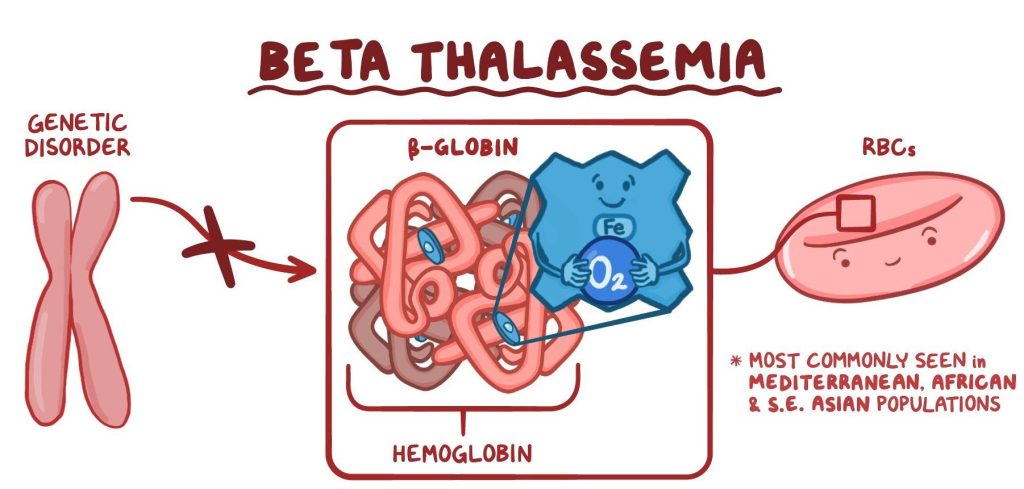
• Beta-thalassemia minor (trait) – One mutated gene, usually mild or no symptoms
• Beta-thalassemia intermedia – Two mutated genes, moderate symptoms
• Beta-thalassemia major (Cooley’s anemia) – Two severe mutations, serious symptoms from early childhood
What Are the Symptoms?
• Fatigue and weakness
• Pale or yellowish skin (jaundice)
• Delayed growth and development in children
• Bone deformities, especially in the face
• Enlarged spleen (splenomegaly)
• Dark urine
• Shortness of breath
• Frequent infections
What Causes It?
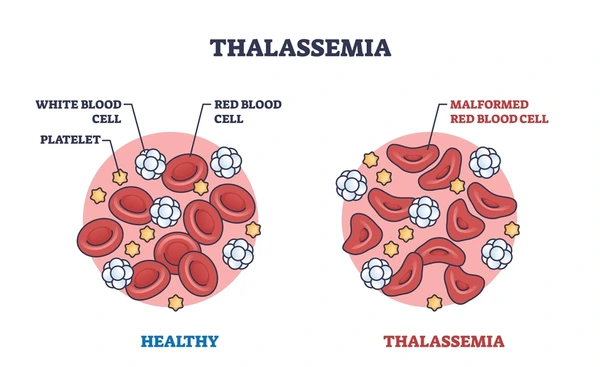
• Genetic mutation in the HBB gene
• Inherited from both parents
• Common in Mediterranean, Middle Eastern, African, and South Asian populations
How Is It Diagnosed?
• Complete blood count (CBC)
• Hemoglobin electrophoresis
• Genetic testing
• Iron studies (to rule out iron-deficiency anemia)
• Family history review
How Is It Treated?
• Regular blood transfusions – For severe forms to maintain normal hemoglobin levels
• Iron chelation therapy – Removes excess iron from repeated transfusions
• Folic acid supplements – Supports red blood cell production
• Bone marrow or stem cell transplant – Only potential cure
• Splenectomy – In cases of enlarged or overactive spleen
• Gene therapy (experimental) – Potential future treatment
What Are the Complications?
• Iron overload – Can damage heart, liver, and endocrine glands
• Bone deformities and osteoporosis
• Heart problems – Congestive heart failure or arrhythmias
• Delayed puberty and fertility issues
• Growth problems
• Increased risk of infections
How to Manage It?
• Follow a transfusion schedule
• Monitor iron levels and use chelation if needed
• Eat a balanced diet low in iron-rich foods
• Avoid iron supplements unless prescribed
• Routine check-ups with a hematologist
• Genetic counseling for family planning
When to Seek Medical Help?
• Unusual fatigue or pallor
• Signs of iron overload – abdominal pain, joint pain, or heart symptoms
• Fever or infection
• Slow growth or developmental delays
• Symptoms of spleen enlargement – pain or feeling full quickly