What Are Vector-borne Diseases?
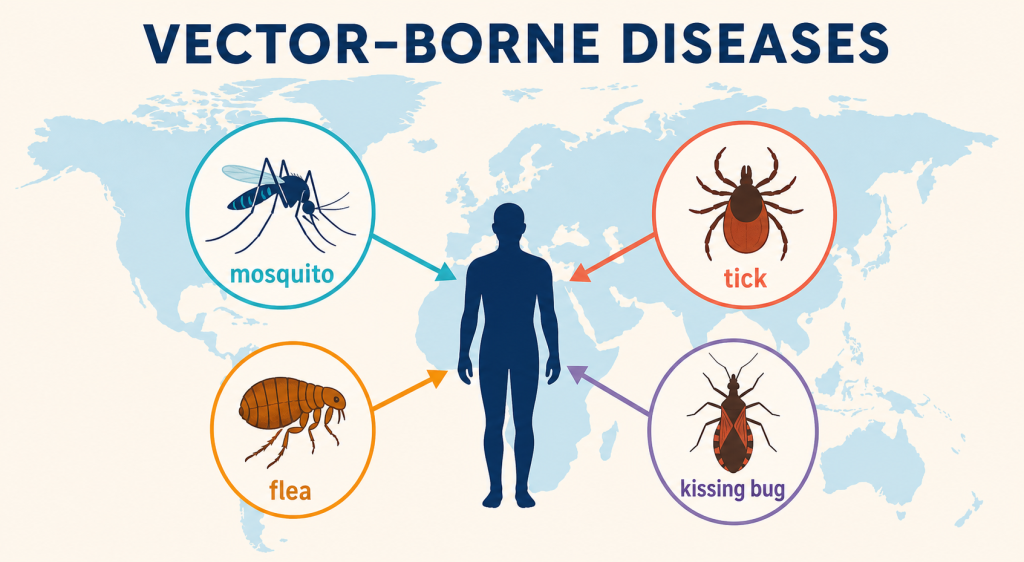
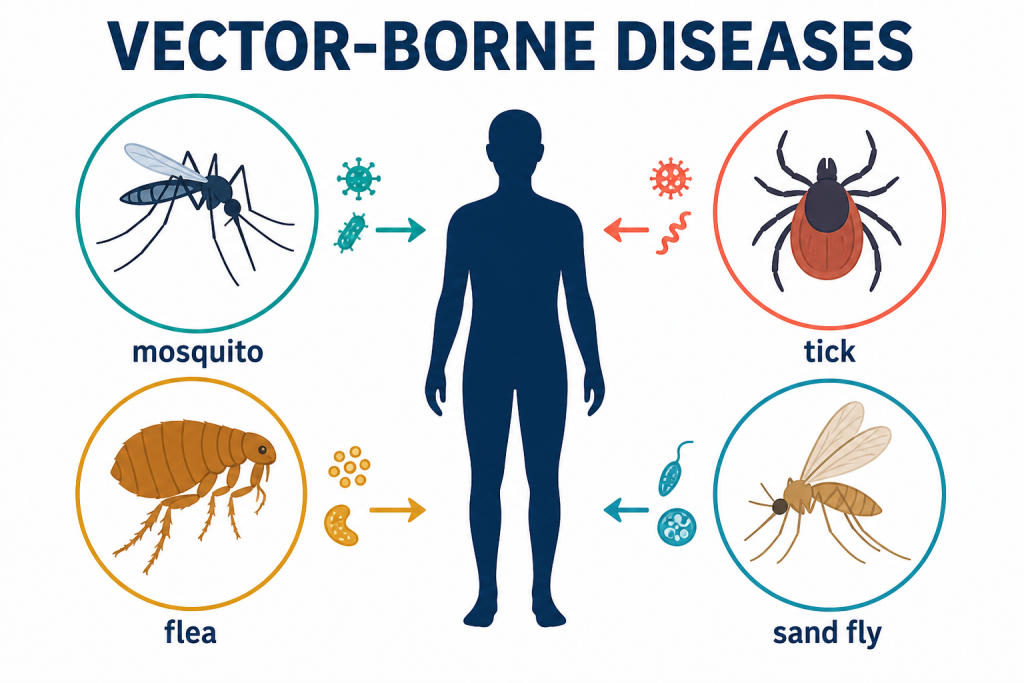
Vector-borne diseases are illnesses transmitted to humans through the bites of infected vectors such as mosquitoes, ticks, fleas, and flies. These vectors carry viruses, bacteria, or parasites from one host to another. Many of these diseases are common in tropical and subtropical regions but can also occur in other parts of the world.
What Are the Common Vector-borne Diseases?
Examples of major vector-borne diseases include
Malaria
Caused by Plasmodium parasites and transmitted by Anopheles mosquitoes.
Dengue Fever
A viral infection spread by Aedes mosquitoes, causing high fever, rash, and severe joint pain.
Zika Virus
Transmitted by Aedes mosquitoes, it can cause birth defects in pregnant women.
Chikungunya
Also spread by Aedes mosquitoes, it leads to fever and severe joint pain.
Yellow Fever
A viral disease that can cause liver damage and jaundice, preventable by vaccine.
Lyme Disease
Caused by bacteria transmitted by black-legged ticks.
Rocky Mountain Spotted Fever
A serious bacterial infection spread by ticks.
Leishmaniasis
A parasitic disease spread by sandflies, causing skin sores or organ damage.
Plague
Transmitted by fleas from rodents, can cause severe illness or death if untreated.
What Are the Symptoms of Vector-borne Diseases?
Symptoms vary depending on the disease but may include
Fever
Chills or sweats
Headache
Muscle and joint pain
Fatigue
Rash
Nausea or vomiting
Swollen lymph nodes
Neurological symptoms in severe cases
What Causes Vector-borne Diseases?
These diseases are caused by pathogens such as viruses, bacteria, or parasites carried by vectors. Key contributing factors include
Climate change and increased rainfall
Poor sanitation or standing water
Deforestation and changes in land use
Lack of mosquito or tick control programs
Global travel and trade
How Are Vector-borne Diseases Diagnosed?
Diagnosis typically involves
Medical history and symptom review
Travel history to endemic areas
Blood tests to detect pathogens or antibodies
Microscopic examination for parasites (e.g., malaria)
PCR and other molecular diagnostic tools
How Are Vector-borne Diseases Treated?
Treatment depends on the specific disease and may include
Antimalarial drugs (e.g., chloroquine, artemisinin-based therapy)
Antibiotics for bacterial infections (e.g., doxycycline for Lyme disease)
Antiviral medications (limited use depending on the virus)
Supportive care including hydration, rest, and fever management
Hospitalization for severe cases with organ involvement
How to Prevent Vector-borne Diseases
Use insect repellent with DEET or picaridin
Wear long sleeves and pants in high-risk areas
Sleep under insecticide-treated bed nets
Eliminate standing water to reduce mosquito breeding
Vaccination (e.g., for yellow fever)
Prompt tick removal after outdoor activities
Travel precautions if visiting endemic areas
When to Seek Medical Help
See a doctor if you experience
Persistent high fever
Rash with fever
Joint or muscle pain after travel
Neurological symptoms like confusion or seizures
Any signs of severe illness following insect bites