


What is Primary Immunodeficiency?
Primary Immunodeficiency (PID) refers to a group of rare, inherited disorders where part of the body’s immune system is missing or does not function properly. This leads to increased susceptibility to infections, autoimmune diseases, and sometimes malignancies.
What causes Primary Immunodeficiency?
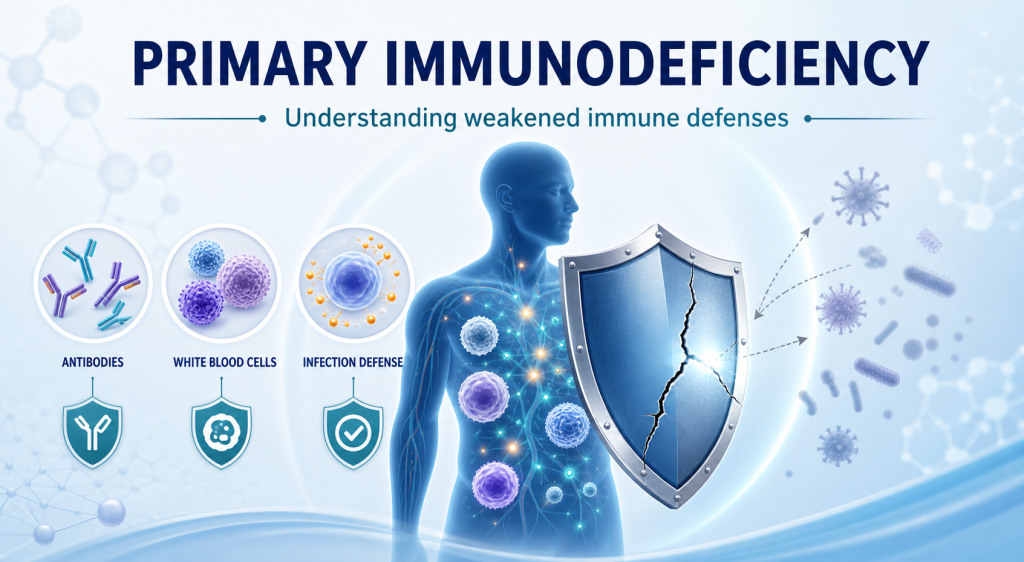
Primary immunodeficiencies are caused by genetic mutations that affect the development or function of immune cells such as B cells, T cells, or phagocytes. These genetic defects are usually inherited but can also occur spontaneously.
Common types include:
- Common Variable Immunodeficiency (CVID)
- Severe Combined Immunodeficiency (SCID)
- X-linked Agammaglobulinemia
- Chronic Granulomatous Disease
- Wiskott-Aldrich Syndrome
What are the symptoms of Primary Immunodeficiency?
Symptoms vary depending on the specific type of PID but commonly include:
- Recurrent, severe, or unusual infections (ear infections, pneumonia, sinus infections, skin infections)
- Poor response to standard treatments for infections
- Delayed growth or development in children
- Autoimmune disorders (e.g., anemia, arthritis)
- Chronic diarrhea or gastrointestinal problems
- Enlarged lymph nodes, spleen, or liver
How is Primary Immunodeficiency diagnosed?
Diagnosis involves:
- Detailed medical and family history focusing on infection patterns
- Physical examination
- Blood tests including complete blood count, immunoglobulin levels, and lymphocyte subsets
- Specialized tests such as genetic testing and functional assays of immune cells
- Imaging studies if needed to evaluate complications
What are the treatment options for Primary Immunodeficiency?
Treatment depends on the type and severity:
- Immunoglobulin replacement therapy to boost antibody levels
- Antibiotics or antifungals to prevent or treat infections
- Bone marrow or stem cell transplantation in severe cases like SCID
- Gene therapy in experimental settings for some types
- Management of autoimmune or inflammatory complications
- Supportive care including good nutrition and vaccination strategies (avoiding live vaccines in some cases)
What is the prognosis for Primary Immunodeficiency?
Prognosis varies widely. Early diagnosis and treatment can improve quality of life and reduce infections. Some severe forms require aggressive treatment and may have a guarded prognosis without intervention.
How can Primary Immunodeficiency be prevented or managed long-term?
Long-term management includes:
- Regular follow-up with immunologists
- Preventive antibiotics and immunoglobulin therapy as prescribed
- Prompt treatment of infections
- Avoiding exposure to infections and live vaccines if contraindicated
- Genetic counseling for affected families
When should I see a doctor?
Seek medical advice if:
- You or your child experiences frequent, severe, or unusual infections
- Infections do not respond well to standard treatments
- There is a family history of immunodeficiency or recurrent infections
- You notice persistent health issues like chronic diarrhea or autoimmune symptoms
