


What is a Vaginal Cyst?
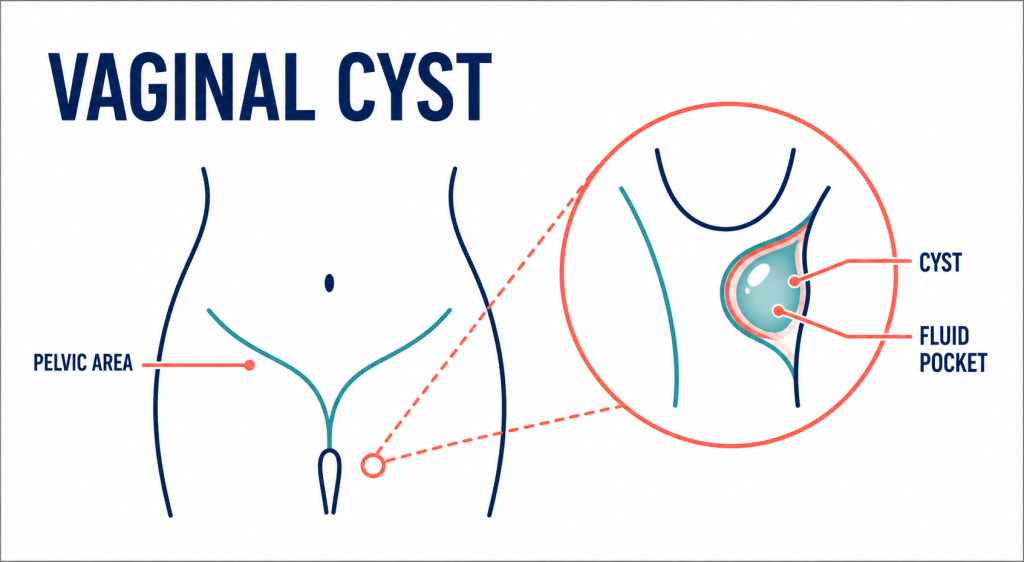
A vaginal cyst is a fluid-filled sac that develops on or under the vaginal lining. These cysts are usually benign (non-cancerous) and often painless. Vaginal cysts can vary in size and may sometimes cause discomfort or other symptoms if they grow large or become infected.
Vaginal cysts are common and can occur in women of all ages, often discovered during routine pelvic exams or when symptoms prompt further investigation.
What Are the Symptoms of a Vaginal Cyst?
Many vaginal cysts cause no symptoms and go unnoticed. However, some women may experience:
Common Symptoms:

- A small lump or swelling in the vaginal area
- Discomfort or pain during intercourse
- Pressure or fullness in the vagina
- Difficulty inserting tampons or discomfort during pelvic exams
- In rare cases, infection leading to redness, swelling, and tenderness
- Vaginal discharge or bleeding if the cyst ruptures or becomes irritated
If a cyst becomes large or infected, symptoms may become more noticeable and require medical attention.
Types of Vaginal Cysts?
Several types of cysts can form in the vaginal area, including:
- Gartner’s Duct Cyst: Develops from remnants of embryonic ducts and is usually found on the front vaginal wall.
- Bartholin’s Cyst: Forms when the Bartholin’s glands (located near the vaginal opening) become blocked, sometimes causing painful swelling.
- Müllerian Cyst: Arises from embryonic tissues and is often found on the vaginal walls.
- Inclusion Cyst: Caused by trapped vaginal lining cells, often after injury or surgery.
What Causes Vaginal Cysts?
Vaginal cysts form when fluid or other material becomes trapped in small pockets under the vaginal lining. Causes include:
- Blockage of glands (such as Bartholin’s glands)
- Developmental remnants from embryonic tissue
- Injury or trauma to vaginal tissues (including childbirth or surgery)
- Infection or inflammation that leads to gland blockage
Most cysts are benign and do not pose serious health risks.
How is a Vaginal Cyst Diagnosed?
Diagnosis usually involves a physical pelvic exam. Additional tests may be done if needed:
- Pelvic Examination: To feel for lumps or swelling.
- Ultrasound: To confirm the cyst’s size and location.
- MRI or CT Scan: Rarely needed, but used if the cyst is large or unusual.
- Biopsy: If the cyst looks suspicious or to rule out malignancy.
How is a Vaginal Cyst Treated?
Most vaginal cysts do not require treatment unless they cause symptoms or complications.
1. Observation
- Small, painless cysts may simply be monitored over time without intervention.
2. Medications
- Antibiotics if the cyst becomes infected.
3. Drainage or Removal
- Aspiration: Draining the cyst with a needle to relieve discomfort (may recur).
- Surgical Removal: Recommended for large, painful, recurrent, or suspicious cysts.
- Marsupialization: A surgical procedure to create a permanent opening for cyst drainage, commonly used for Bartholin’s cysts.
Complications of Vaginal Cysts?
- Infection leading to abscess formation.
- Pain and discomfort during sexual activity.
- Recurrence after drainage.
- Rarely, obstruction causing urinary or bowel symptoms if large.
Living with a Vaginal Cyst: Tips and Care?
- Maintain good hygiene to reduce infection risk.
- Avoid irritants such as harsh soaps or douches.
- Use lubrication during intercourse if there is discomfort.
- See a healthcare provider if you notice swelling, pain, or unusual discharge.
- Follow-up appointments may be needed to monitor cysts or post-treatment healing.
