


What is Uterine Cancer?
Uterine cancer, also called endometrial cancer, is a type of cancer that begins in the lining of the uterus (endometrium). It is one of the most common gynecologic cancers, primarily affecting postmenopausal women but can occur at any age.
What Causes Uterine Cancer?
The exact cause is not fully understood, but several risk factors increase the likelihood:
- Excess estrogen exposure without progesterone balance
- Obesity – Higher body fat increases estrogen levels
- Age – Most common after menopause
- Hormonal therapy – Using estrogen alone without progesterone
- Family history – Genetic syndromes like Lynch syndrome
- Diabetes and hypertension
- Never having been pregnant
- Early menstruation or late menopause
What Are the Symptoms?
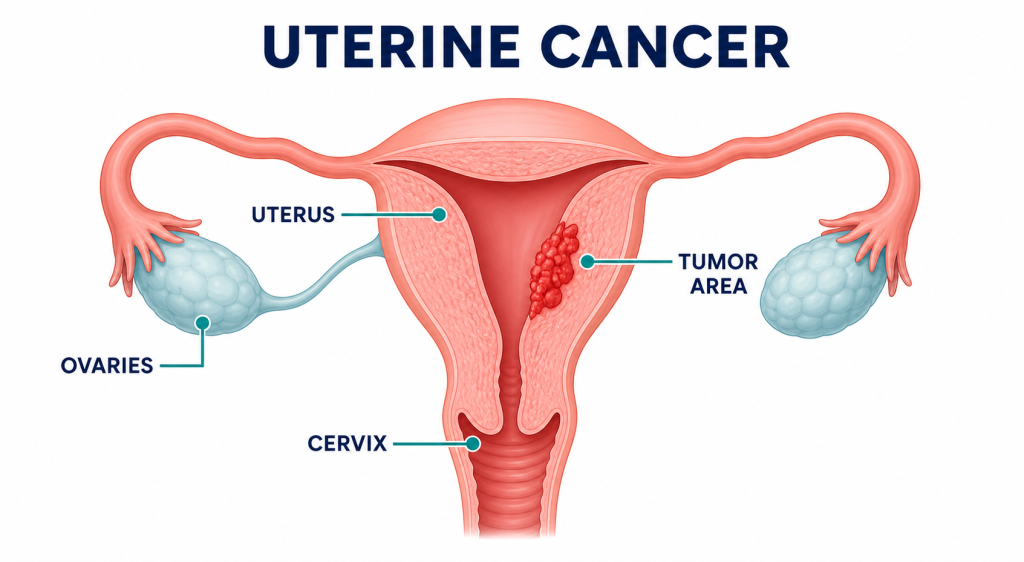
Common symptoms include:
- Abnormal vaginal bleeding or spotting, especially after menopause
- Unusually heavy or prolonged menstrual periods
- Pelvic pain or pressure
- Pain during intercourse
- Unexplained weight loss
How is Uterine Cancer Diagnosed?
Diagnosis typically involves:
- Medical history and physical exam, including pelvic exam
- Transvaginal ultrasound to evaluate the uterine lining
- Endometrial biopsy to collect tissue for examination
- Hysteroscopy – Direct visualization and biopsy of the uterine lining
- Imaging tests (CT, MRI) to check for spread
How is Uterine Cancer Treated?
Treatment depends on the stage and may include:
- Surgery – Removal of the uterus (hysterectomy), fallopian tubes, and ovaries
- Radiation therapy – External beam or internal radiation
- Hormone therapy – For cancers sensitive to hormones
- Chemotherapy – For advanced or recurrent cases
- Targeted therapy – Newer treatments for specific cancer types
Can Uterine Cancer Cause Complications?
Complications may include:
- Spread (metastasis) to other organs
- Side effects from treatment, such as fatigue, infection risk, or infertility
- Emotional and psychological impact
When Should You See a Doctor?
Seek prompt medical advice if you notice:
- Any abnormal vaginal bleeding or spotting
- Persistent pelvic pain or pressure
- Unexplained weight loss or fatigue
- Symptoms that concern you, especially after menopause
