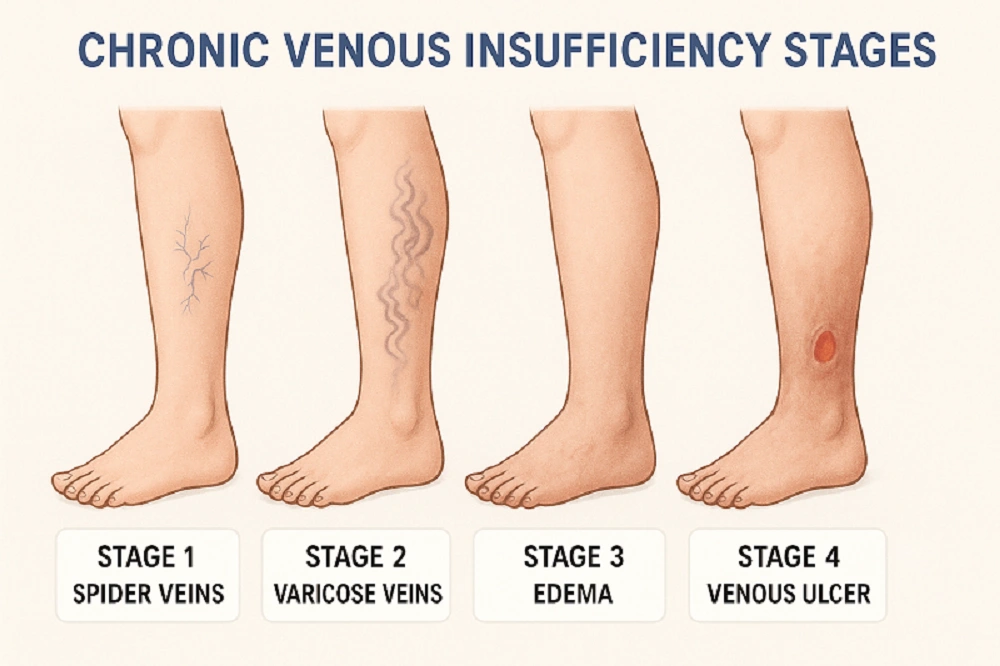
Chronic Venous Insufficiency, or CVI, is a condition that occurs when the veins in the legs are not able to efficiently return blood back to the heart. This happens when the valves inside the veins become damaged or weakened, causing blood to pool in the lower legs. Over time, this can lead to swelling, skin changes, and even open sores or ulcers.
What Causes Chronic Venous Insufficiency?
CVI usually develops due to problems in the leg veins. Common causes include:
- Damage to the valves in the veins (often from deep vein thrombosis or blood clots)
- Weak or stretched vein walls (often related to varicose veins)
- A history of leg injury or surgery
- Obesity
- Prolonged standing or sitting
- Pregnancy, due to increased pressure in the veins
What Are the Symptoms?
People with chronic venous insufficiency may experience:
- Swelling in the lower legs and ankles, especially after standing for long periods
- Aching, cramping, or a feeling of heaviness in the legs
- Itching or tingling sensations
- Thickened or discolored skin, especially near the ankles
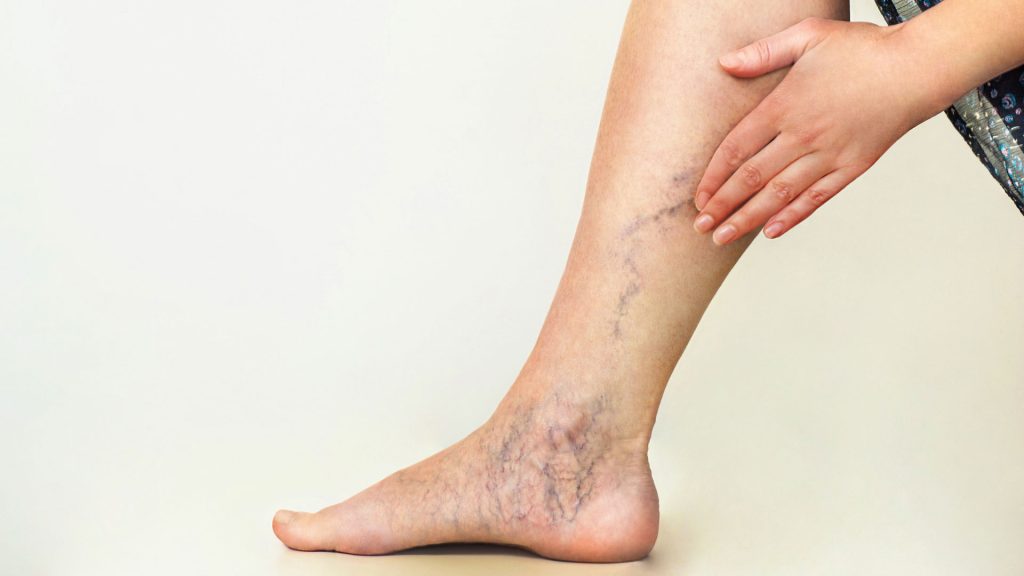
- Varicose veins (twisted or bulging veins)
- Skin ulcers or sores that are slow to heal
Who Is at Risk?
You may be at higher risk of developing CVI if you:
- Are over the age of 50
- Have a family history of vein problems
- Are overweight or obese
- Stand or sit for long hours without moving
- Have had previous blood clots or vein surgeries
- Are pregnant or have had multiple pregnancies
How Is Chronic Venous Insufficiency Diagnosed?
To diagnose CVI, a healthcare provider may:
- Perform a physical exam of your legs
- Ask about your symptoms and medical history
- Use an ultrasound test to check blood flow in the leg veins and look for valve problems or clots
How Is It Treated?
Treatment aims to improve blood flow, reduce symptoms, and prevent complications. Options include:
- Wearing compression stockings to help blood move upward
- Elevating the legs when resting
- Exercising regularly to strengthen leg muscles
- Avoiding long periods of standing or sitting
- Losing weight if needed
- Medications to reduce swelling or treat ulcers
- In some cases, procedures such as vein ablation, sclerotherapy, or vein surgery may be recommended
What Can I Do at Home to Manage It?
Self-care plays an important role in managing CVI. You can:
- Wear compression stockings daily
- Walk or do leg exercises regularly
- Keep your legs elevated when sitting or lying down
- Maintain a healthy weight
- Avoid tight clothing around the waist or legs
- Take breaks to move around if sitting or standing for long periods
What Complications Can Happen If Left Untreated?
If chronic venous insufficiency is not treated, it can lead to more serious problems such as:
- Painful leg ulcers that are slow to heal
- Skin infections
- Hardening and thickening of the skin
- Increased risk of deep vein thrombosis (DVT)
When Should I See a Doctor?
You should see a healthcare provider if you notice:
- Swelling in your legs that does not improve
- Pain, heaviness, or cramping in your legs
- Skin changes or open sores near your ankles
- Enlarged or twisted veins in the legs
Can Chronic Venous Insufficiency Be Cured?
CVI is a long-term condition, but it can be managed effectively. With early treatment and healthy habits, many people are able to reduce symptoms and avoid complications. In some cases, medical or surgical treatments can significantly improve quality of life.