


What is Bromodosis?
• A common condition where feet emit a strong, unpleasant odor
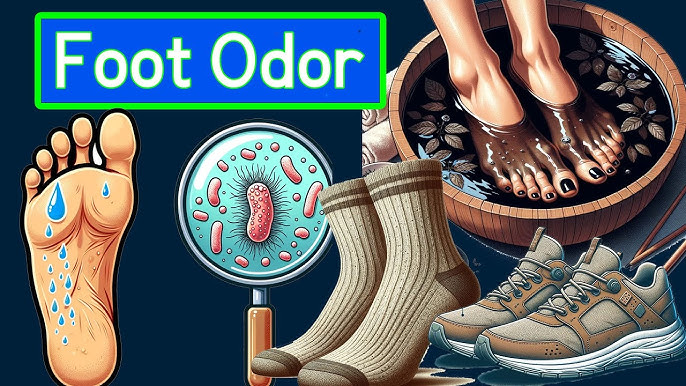
• Caused by the breakdown of sweat by bacteria on the skin
• Often linked to poor foot hygiene, excessive sweating, or wearing the same shoes frequently
What causes Bromodosis?
• Sweat accumulation on feet, especially in closed shoes
• Bacteria (particularly Brevibacterium) feeding on sweat and dead skin cells
• Fungal infections (like athlete’s foot)
• Wearing non-breathable shoes or socks
• Not changing socks or shoes regularly
• Poor foot hygiene
Who is at risk?
• People who sweat excessively (hyperhidrosis)
• Teenagers and children going through hormonal changes
• Individuals who wear the same shoes every day
• Athletes or people wearing tight shoes for long hours
• Those with existing fungal or bacterial infections on the feet
What are the symptoms?
• Strong, persistent odor from feet
• Moist, soggy skin between toes
• Peeling or scaling skin
• Itching or burning if there’s a fungal component
• Stained socks from bacterial buildup
How is Bromodosis diagnosed?
• Based on physical examination and smell
• Doctor may check for fungal infections or bacterial overgrowth
• In rare cases, swabs may be taken for lab testing if infection is suspected
What is the treatment?
• Washing feet daily with antibacterial soap
• Drying feet thoroughly, especially between toes
• Using foot powders, antiperspirants, or sprays
• Wearing moisture-wicking socks and changing them daily
• Alternating shoes every day to allow them to dry
• Using insoles designed to reduce odor
• Treating any fungal infections (e.g., with antifungal creams)

Home remedies for Bromodosis
• Soaking feet in a vinegar-water solution (1 part vinegar to 2 parts water)
• Epsom salt foot soaks to reduce bacteria and soften skin
• Baking soda foot powder to neutralize odor
• Tea tree oil (antibacterial and antifungal properties) – use with caution to avoid irritation
How to prevent Bromodosis?
• Practice good foot hygiene daily
• Keep feet dry – use talcum or foot powders
• Choose breathable shoes made from natural materials
• Let shoes air out after each use
• Avoid synthetic socks – choose cotton or wool instead
• Trim toenails and remove dead skin regularly
When to see a doctor?
• Persistent foot odor despite hygiene measures
• Signs of infection (redness, swelling, pain, or discharge)
• Itching, burning, or cracking skin
• Odor associated with other health issues