


What is Ventricular Outflow Obstruction?
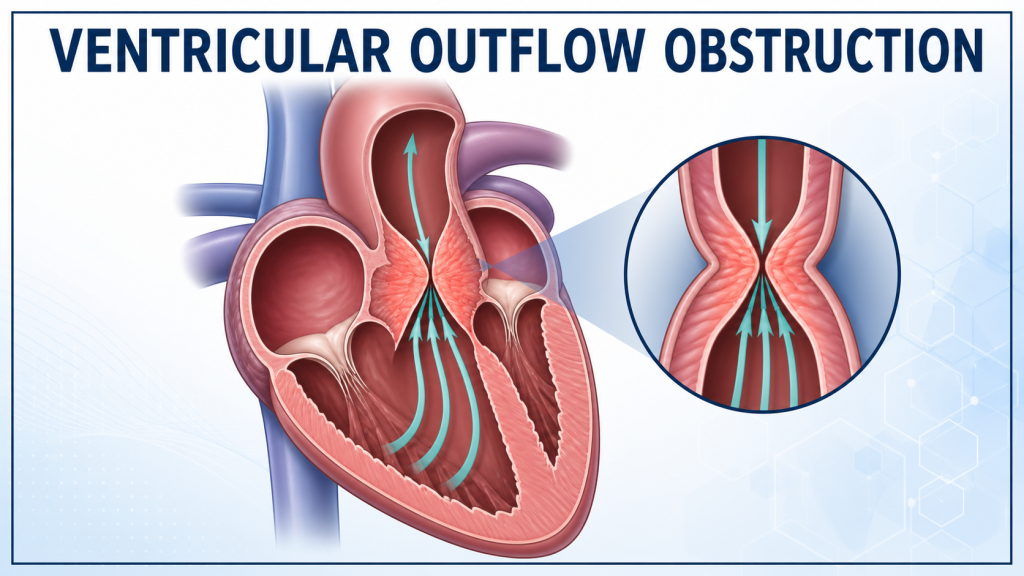
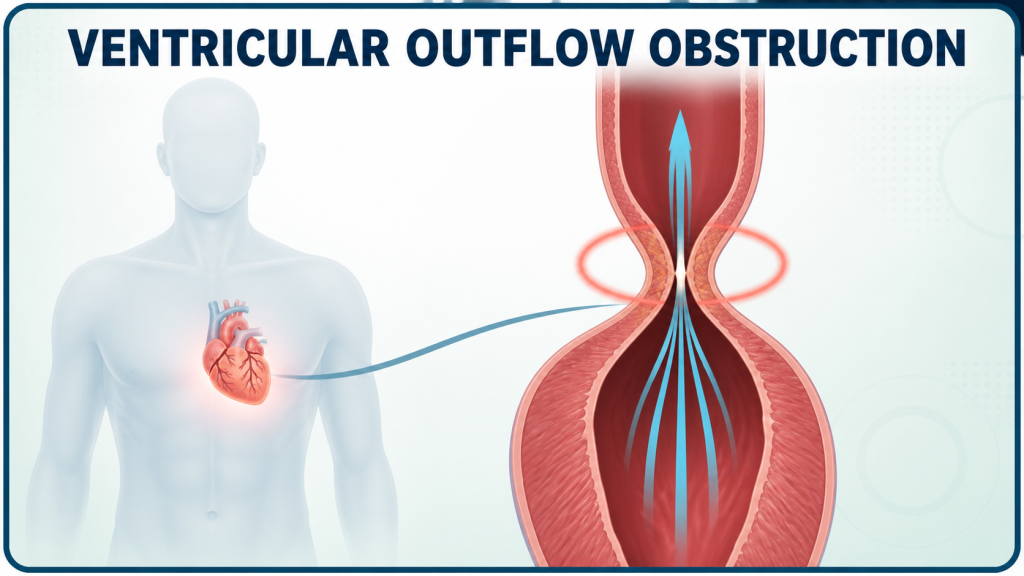
Ventricular outflow obstruction is a condition where the flow of blood out of the heart’s ventricles is partially or completely blocked. This obstruction can occur in the left ventricle (left ventricular outflow tract obstruction) or the right ventricle (right ventricular outflow tract obstruction), making it harder for the heart to pump blood effectively to the body or lungs.
What Are the Symptoms of Ventricular Outflow Obstruction?
Symptoms vary depending on the severity of the obstruction and may include:
- Shortness of breath, especially during exercise
- Chest pain or tightness
- Fatigue or weakness
- Palpitations or irregular heartbeats
- Dizziness or fainting (syncope)
- Swelling in the legs or abdomen (in some cases)
What Causes Ventricular Outflow Obstruction?
Common causes include:
- Hypertrophic cardiomyopathy, where thickened heart muscle blocks blood flow
- Congenital heart defects, such as pulmonary valve stenosis or aortic valve stenosis
- Subvalvular or supravalvular stenosis (narrowing below or above heart valves)
- Tumors or masses inside the heart
- Scar tissue from previous heart damage or surgery
How is Ventricular Outflow Obstruction Diagnosed?
Doctors use various tests to diagnose this condition:
- Echocardiogram (ultrasound of the heart) to visualize obstruction and measure blood flow
- Electrocardiogram (ECG) to detect heart rhythm abnormalities
- Cardiac MRI or CT scan for detailed imaging of heart structures
- Cardiac catheterization to measure pressures inside the heart chambers
- Stress testing to assess symptoms during exercise
How is Ventricular Outflow Obstruction Treated?
- Medications
- Beta-blockers or calcium channel blockers to reduce heart workload and improve symptoms
- Antiarrhythmic drugs if arrhythmias are present
- Interventional Procedures and Surgery
- Balloon valvuloplasty to open narrowed valves
- Surgical removal of obstructive tissue (myectomy) in hypertrophic cardiomyopathy
- Valve repair or replacement if valve disease is the cause
- Implantation of pacemakers or defibrillators in certain cases
- Lifestyle Management
- Avoid intense physical activity without medical clearance
- Regular follow-up with a cardiologist
- Control of risk factors like hypertension and obesity
Complications of Untreated Ventricular Outflow Obstruction
- Heart failure due to increased pressure load
- Arrhythmias and sudden cardiac death
- Stroke from related complications
- Progressive worsening of symptoms and quality of life
