What is Thalassemia?
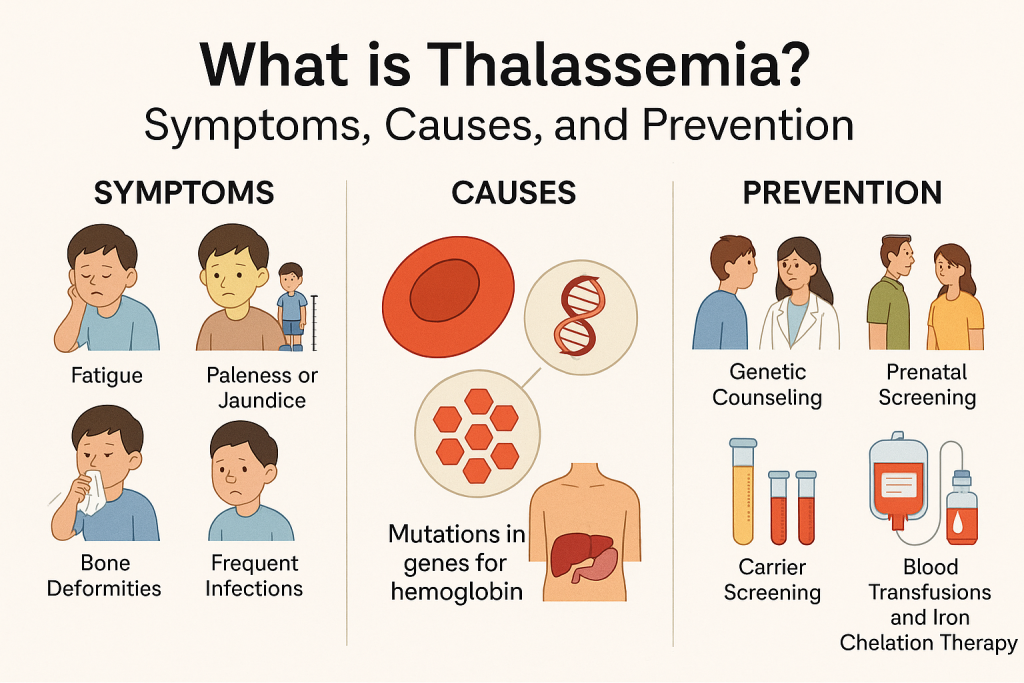
Thalassemia is an inherited blood disorder that affects the body’s ability to produce hemoglobin, the protein in red blood cells that carries oxygen. In people with thalassemia, abnormal hemoglobin production leads to anemia, causing fatigue and other health problems.
There are different types of thalassemia depending on which part of the hemoglobin molecule is affected. The two main types are alpha-thalassemia and beta-thalassemia.
What Are the Symptoms of Thalassemia?
Symptoms vary depending on the type and severity of thalassemia.

Common Symptoms Include:
- Fatigue and weakness
- Pale or yellowish skin (jaundice)
- Slow growth and delayed puberty in children
- Bone deformities, especially in the face and skull
- Enlarged spleen and liver
- Dark urine
- Shortness of breath
Severe forms of thalassemia may require regular blood transfusions.
What Causes Thalassemia?
Thalassemia is caused by mutations in the genes responsible for hemoglobin production. It is inherited from parents, meaning it runs in families.
Risk Factors:
- Having parents who carry thalassemia genes
- Being of Mediterranean, Middle Eastern, South Asian, or African descent
Thalassemia is not contagious.
How is Thalassemia Diagnosed?
Doctors diagnose thalassemia through blood tests that measure hemoglobin levels and examine red blood cells.
Common Diagnostic Tests:
- Complete blood count (CBC)
- Hemoglobin electrophoresis to identify abnormal hemoglobin types
- Genetic testing to detect gene mutations
Early diagnosis helps manage symptoms and prevent complications.
How is Thalassemia Treated?
Treatment depends on the type and severity of thalassemia.
Treatment Options:
- Regular blood transfusions to maintain healthy hemoglobin levels
- Iron chelation therapy to remove excess iron from transfusions
- Folic acid supplements to support red blood cell production
- Bone marrow or stem cell transplant in severe cases, which may cure thalassemia
- Supportive care to manage complications
Managing thalassemia requires regular medical follow-up.
Complications of Thalassemia?
Without proper treatment, thalassemia can lead to serious health issues.
Possible Complications:
- Severe anemia requiring frequent transfusions
- Iron overload damaging the heart, liver, and other organs
- Bone deformities and osteoporosis
- Delayed growth and development
- Increased risk of infections
Proper treatment reduces these risks significantly.
Living with Thalassemia?
People with thalassemia can live healthy lives with appropriate care and monitoring.
Tips for Living Well:
- Follow treatment plans carefully
- Attend regular medical check-ups
- Maintain a balanced diet and avoid iron-rich foods unless advised
- Seek support from healthcare providers and support groups