


What is Zinc-Associated Delayed Growth?
Zinc-associated delayed growth refers to slower than normal physical development in children and adolescents due to insufficient zinc levels. Zinc is vital for cell growth, immune function, and overall development.
What Causes Zinc-Associated Delayed Growth?
- Zinc Deficiency – Inadequate dietary intake, poor absorption, or increased zinc loss can lead to deficiency.
- Malnutrition – Poor overall nutrition often accompanies zinc deficiency.
- Chronic Illness – Conditions like gastrointestinal diseases can impair zinc absorption.
- Increased Requirements – Periods of rapid growth or illness may increase zinc needs.
What Are the Symptoms of Zinc-Associated Delayed Growth?
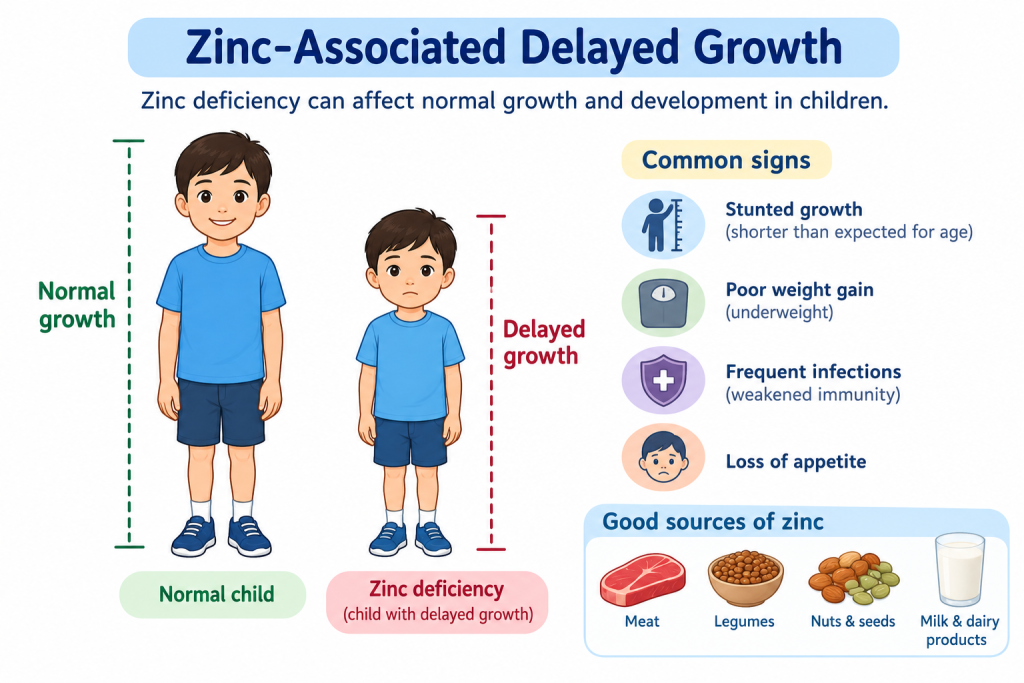
- Stunted height or slow growth rate compared to peers
- Delayed sexual maturation
- Weakened immune system leading to frequent infections
- Poor appetite
- Skin problems such as rashes or dryness
- Delayed wound healing
How is Zinc-Associated Delayed Growth Diagnosed?
- Growth Monitoring – Tracking height and weight against standardized growth charts.
- Blood Tests – Measuring serum zinc levels and other nutritional markers.
- Dietary Assessment – Evaluating zinc intake and nutritional status.
- Medical Evaluation – To rule out other causes of growth delay.
How is Zinc-Associated Delayed Growth Treated?
- Zinc Supplementation – Providing zinc supplements to correct deficiency.
- Nutritional Support – Improving overall diet quality to support growth.
- Treating Underlying Conditions – Managing diseases that affect zinc absorption.
- Regular Monitoring – Tracking growth progress and zinc levels over time.
Prognosis of Zinc-Associated Delayed Growth
With timely treatment, growth often improves and catches up. Prolonged deficiency may cause lasting developmental delays.
Can Zinc-Associated Delayed Growth Be Prevented?
- Ensuring adequate dietary zinc intake from foods like meat, seafood, nuts, and legumes
- Monitoring growth regularly in children and adolescents
- Addressing nutritional needs during illness or increased growth phases
- Early intervention if zinc deficiency is suspected
