What is Uptake Syndrome Type 25?
Uptake Syndrome Type 25 is a rare inherited metabolic disorder that affects the body’s ability to absorb or transport essential substances, such as nutrients or biochemical compounds, into cells. This impairment occurs due to mutations in genes responsible for cellular transport proteins. As a result, vital substances may fail to reach the cells that need them, leading to growth, neurological, and metabolic complications.
What Causes Uptake Syndrome Type 25?
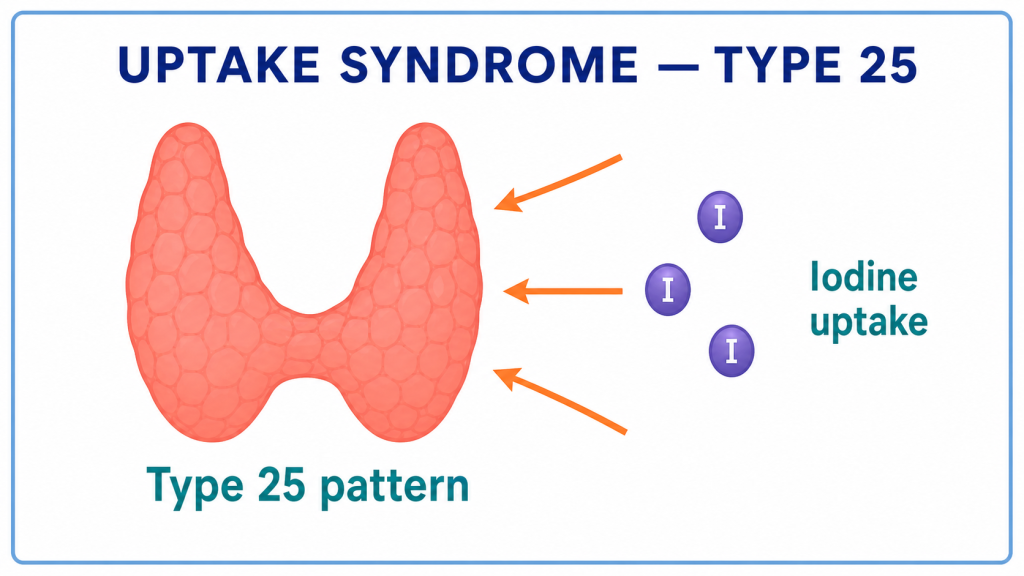
- Genetic mutation in a transporter gene disrupts the function of protein channels or carriers on cell membranes.
- Usually inherited in an autosomal recessive pattern, meaning both parents must carry a copy of the mutated gene.
- This results in inefficient or blocked uptake of a crucial molecule, such as an amino acid, sugar, or ion.
- The exact molecular target in Type 25 may vary but leads to similar downstream effects—cellular deficiency and systemic dysfunction.
Symptoms of Uptake Syndrome Type 25
Symptoms typically develop in infancy or early childhood and may include:
- Delayed growth or failure to thrive.
- Developmental delays or learning difficulties.
- Muscle weakness, hypotonia (low muscle tone), or fatigue.
- Neurological issues such as seizures or coordination problems.
- Feeding problems and frequent vomiting.
- Metabolic disturbances like low blood sugar, acidosis, or electrolyte imbalances.
How is Uptake Syndrome Type 25 Diagnosed?
A combination of clinical and laboratory investigations is used:
- Detailed medical history and physical examination.
- Blood and urine tests to detect metabolic abnormalities or nutrient deficiencies.
- Genetic testing to identify the responsible gene mutation.
- Functional studies to assess uptake efficiency in cultured cells.
- Neuroimaging (MRI) if there are signs of brain involvement.
- Family screening if a diagnosis is confirmed in one member.
How is Uptake Syndrome Type 25 Treated?
Treatment is tailored based on the nutrient or molecule affected:
- Nutritional support, such as oral or IV supplements of the deficient compound.
- Medications to manage seizures or metabolic imbalances.
- Specialized diets that reduce stress on the impaired transport pathway.
- Developmental therapy (speech, physical, and occupational) to support cognitive and motor function.
- Regular monitoring for metabolic levels, growth, and developmental progress.
- Genetic counseling for family planning.
Prognosis of Uptake Syndrome Type 25

- The prognosis depends on the severity of symptoms and the timing of diagnosis and treatment.
- Children diagnosed early and managed appropriately may show improved outcomes.
- Some may have lifelong health needs or developmental limitations depending on organ involvement.
Can Uptake Syndrome Type 25 Be Prevented?
While the condition itself can’t be prevented, steps can be taken to reduce the risk or detect it early:
- Carrier testing in parents with a family history.
- Genetic counseling for couples planning a pregnancy.
- Prenatal genetic testing if a mutation is known in the family.
When Should You See a Doctor?
Seek medical advice if:
- A child shows signs of poor growth or developmental delays.
- There are recurrent or unexplained seizures or metabolic crises.
- Feeding difficulties and unexplained vomiting occur frequently.
- There’s a known family history of rare metabolic or transporter disorders.
- Symptoms continue without a clear diagnosis.