


What is Venom Allergy?
Venom allergy is an allergic reaction to the venom injected by stinging insects such as bees, wasps, hornets, or fire ants. In some people, exposure to venom can cause mild local reactions, while in others, it can trigger severe, potentially life-threatening systemic allergic responses called anaphylaxis.
What Are the Symptoms of Venom Allergy?
Symptoms can range from mild to severe.
Mild Symptoms
Redness, swelling, and pain at the sting site
Itching or hives around the sting area
Severe Symptoms (Anaphylaxis)
Difficulty breathing or wheezing
Swelling of the face, lips, tongue, or throat
Rapid heartbeat
Dizziness or fainting
Nausea, vomiting, or diarrhea
Loss of consciousness
What Causes Venom Allergy?
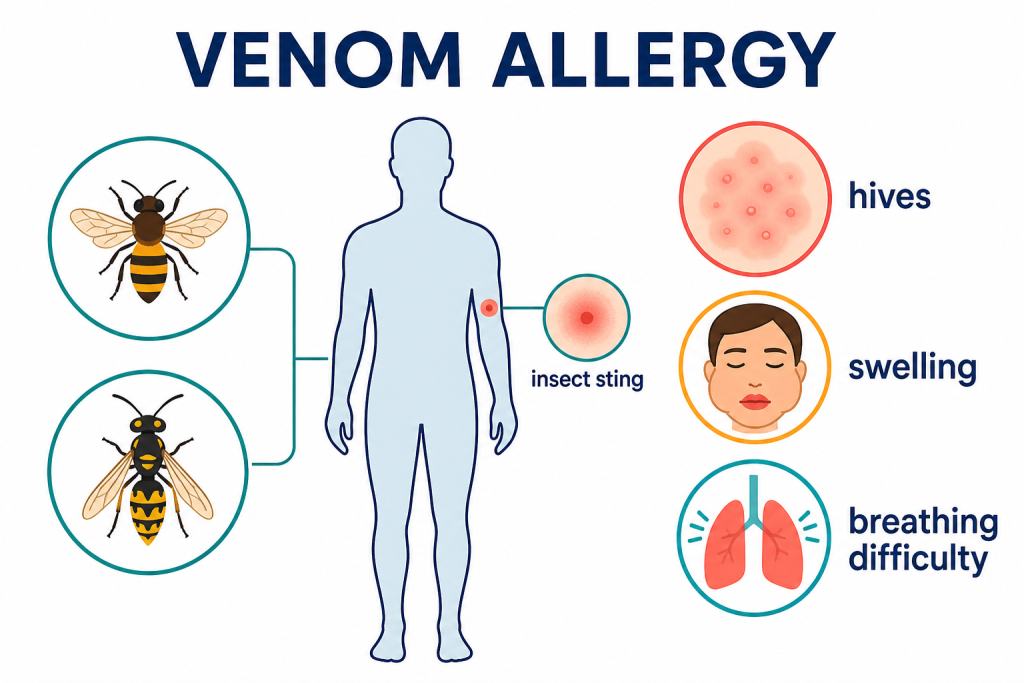
Venom allergy occurs when the immune system mistakenly identifies insect venom as harmful and overreacts. Common triggers include stings from
Bees
Wasps
Hornets
Yellow jackets
Fire ants
People with previous severe reactions or certain genetic factors are at higher risk.
How is Venom Allergy Diagnosed?
Diagnosis involves
Reviewing the patient’s history of reactions to insect stings
Skin prick or intradermal testing with venom extracts
Blood tests to measure specific IgE antibodies to insect venom
How is Venom Allergy Treated?
Treatment depends on the severity of the reaction.
For Mild Reactions
Cold compresses and pain relievers to reduce swelling and discomfort
Antihistamines to relieve itching and hives
For Severe Reactions
Immediate injection of epinephrine (adrenaline) using an auto-injector
Emergency medical attention
Allergen immunotherapy (venom desensitization) to reduce future reactions
Oral medications like antihistamines and corticosteroids may be prescribed
What Are the Complications of Untreated Venom Allergy?
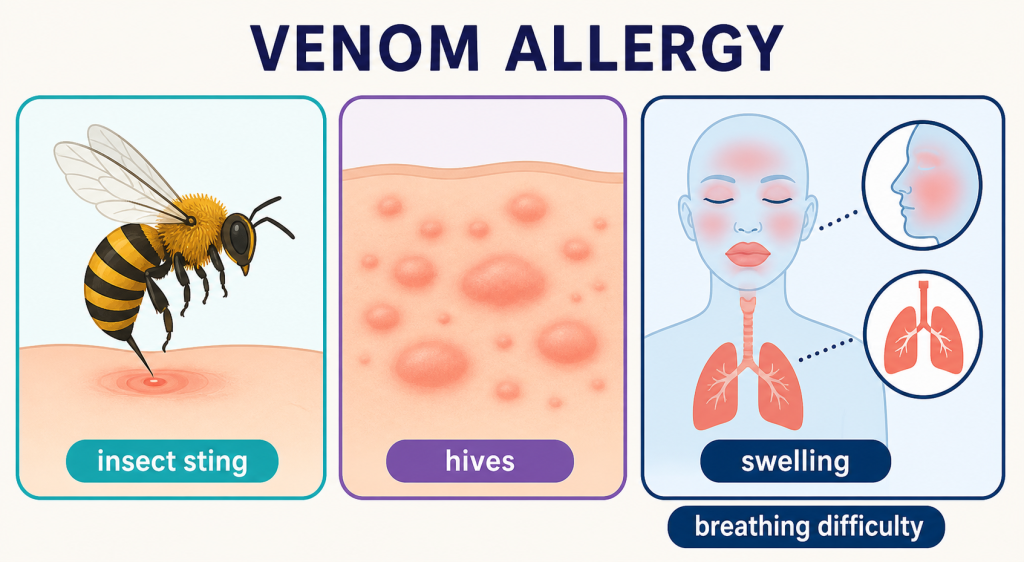
Without proper treatment, venom allergy can cause
Severe anaphylaxis leading to breathing difficulties, shock, or death
Repeated allergic reactions with increasing severity
Living with Venom Allergy
To manage venom allergy effectively
Avoid areas with high insect activity
Wear protective clothing outdoors
Carry an epinephrine auto-injector if prescribed
Seek immediate medical help if stung and severe symptoms develop
Consider venom immunotherapy under specialist care
Prompt treatment and prevention can help lead a normal life despite venom allergy.
