What is Yoshimura-Takeshita Syndrome?
Yoshimura-Takeshita Syndrome is an extremely rare genetic disorder characterized by a combination of craniofacial abnormalities, developmental delays, and skeletal deformities. It was first identified in a small number of patients and remains poorly understood due to its rarity.
What Causes Yoshimura-Takeshita Syndrome?
- Genetic Mutation – The syndrome is presumed to be caused by a mutation in an unknown gene or chromosomal region, likely affecting early development.
- Inheritance Pattern – The exact inheritance pattern is uncertain, but it may be autosomal recessive or sporadic.
Symptoms of Yoshimura-Takeshita Syndrome
Symptoms may vary among individuals but commonly include:
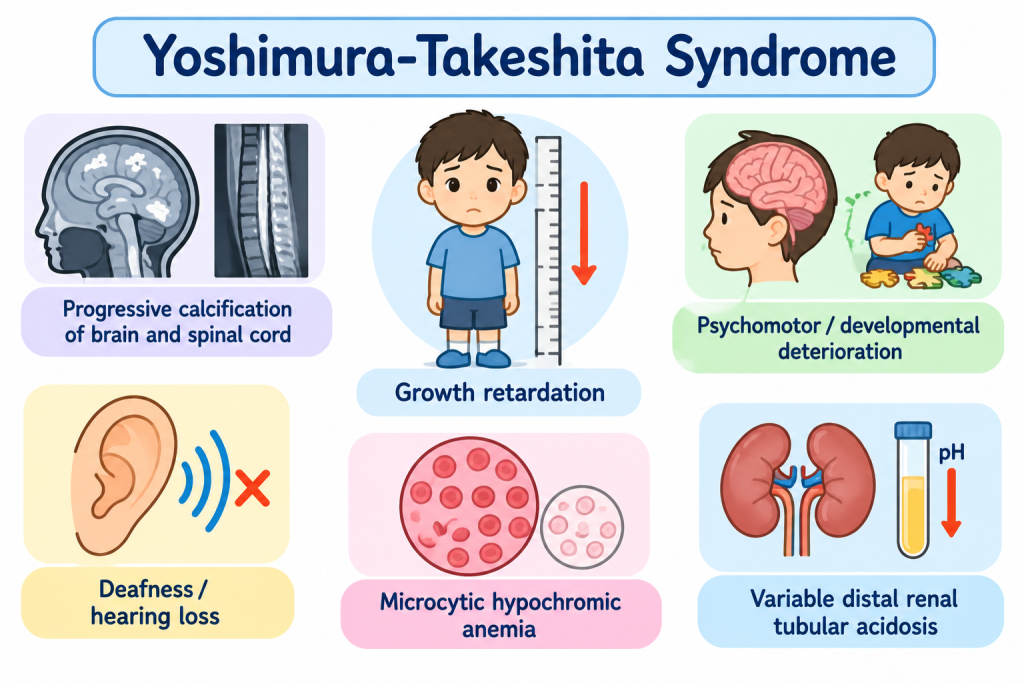
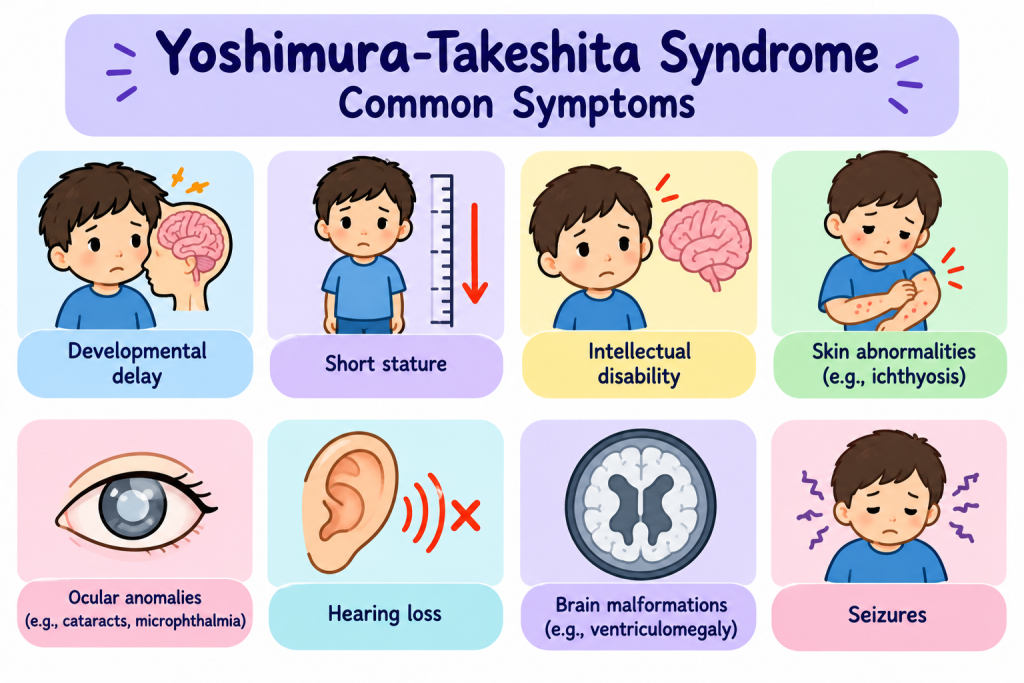
- Craniofacial Abnormalities – Such as a flat facial profile, small jaw (micrognathia), and wide-set eyes (hypertelorism)
- Developmental Delay – Including intellectual disability and delayed milestones
- Skeletal Anomalies – Such as joint contractures, scoliosis, or other bone abnormalities
- Growth Retardation – Poor growth before and after birth
- Possible Organ Involvement – Some patients may show abnormalities in internal organs
How is Yoshimura-Takeshita Syndrome Diagnosed?
Diagnosis is based on:
- Clinical Evaluation – Identification of distinctive physical features and developmental concerns
- Genetic Testing – May help rule out other syndromes; research testing may identify mutations if known
- Imaging Studies – To assess skeletal or organ involvement
- Developmental Assessment – To evaluate cognitive and motor function
How is Yoshimura-Takeshita Syndrome Treated?
There is no cure, and treatment focuses on supportive and symptomatic care:
- Developmental Therapies – Including speech, occupational, and physical therapy
- Orthopedic Support – For skeletal deformities or mobility challenges
- Educational Support – Special education and individualized learning plans
- Regular Monitoring – To manage and detect any complications early
Prognosis of Yoshimura-Takeshita Syndrome
Prognosis depends on the severity of symptoms. While developmental challenges are typically lifelong, supportive care can greatly improve quality of life and functional ability.
Can Yoshimura-Takeshita Syndrome Be Prevented?
As a genetic condition, it cannot be prevented. Genetic counseling is recommended for families with a history of rare congenital disorders.