What is Zinc Deficiency-Induced Anosmia?
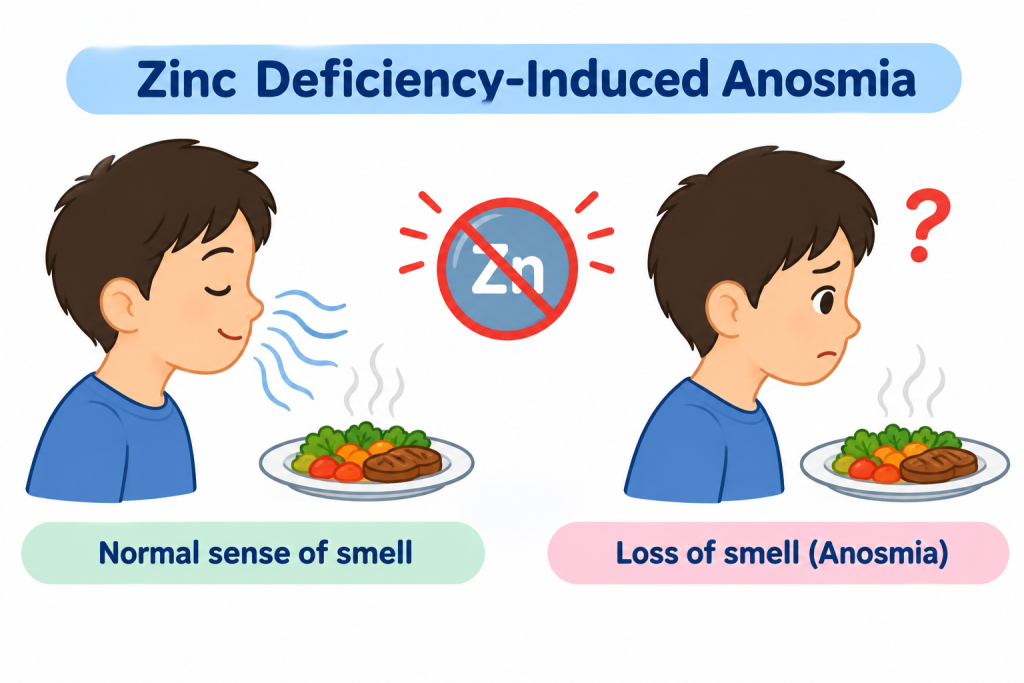
Zinc deficiency-induced anosmia is the loss or impairment of the sense of smell caused by insufficient zinc levels in the body, affecting the function of olfactory receptors.
What Causes Zinc Deficiency-Induced Anosmia?
- Inadequate Dietary Zinc Intake – Poor nutrition or malabsorption.
- Chronic Illnesses – Affecting zinc absorption or metabolism.
- Increased Zinc Requirements – During illness, pregnancy, or growth.
- Certain Medications – That interfere with zinc levels.
- Aging – Which may reduce zinc absorption and olfactory function.
What Are the Symptoms of Zinc Deficiency-Induced Anosmia?
- Partial or complete loss of smell
- Reduced ability to taste flavors
- Difficulty detecting odors in the environment
- Possible accompanying taste disturbances
- Impact on appetite and nutrition
How is Zinc Deficiency-Induced Anosmia Diagnosed?
- Clinical Evaluation – Assessment of smell and taste function.
- Blood Tests – Measuring serum zinc levels.
- Olfactory Testing – Using smell identification or threshold tests.
- Medical and Dietary History – To identify risk factors for zinc deficiency.
How is Zinc Deficiency-Induced Anosmia Treated?
- Zinc Supplementation – To restore normal zinc levels.
- Nutritional Support – Improving overall diet.
- Treatment of Underlying Conditions – That contribute to zinc deficiency.
- Monitoring – Regular follow-up to assess recovery of smell function.
Prognosis of Zinc Deficiency-Induced Anosmia
Recovery of smell is possible with timely zinc supplementation. Prolonged deficiency may cause permanent damage.
Can Zinc Deficiency-Induced Anosmia Be Prevented?
- Adequate Dietary Zinc Intake
- Early Identification and Treatment of Zinc Deficiency
- Regular Monitoring in At-Risk Populations
- Managing Underlying Health Issues Affecting Zinc Absorption