


Ophthalmosynkinesis is a rare neurological condition characterized by involuntary movement of one eye in response to voluntary movement of another part of the body, most commonly the jaw or facial muscles. It is a type of synkinetic movement, where abnormal nerve signaling causes linked, unintentional actions. This condition may be congenital (present at birth) or acquired after nerve injury or surgery.
What Is Ophthalmosynkinesis?
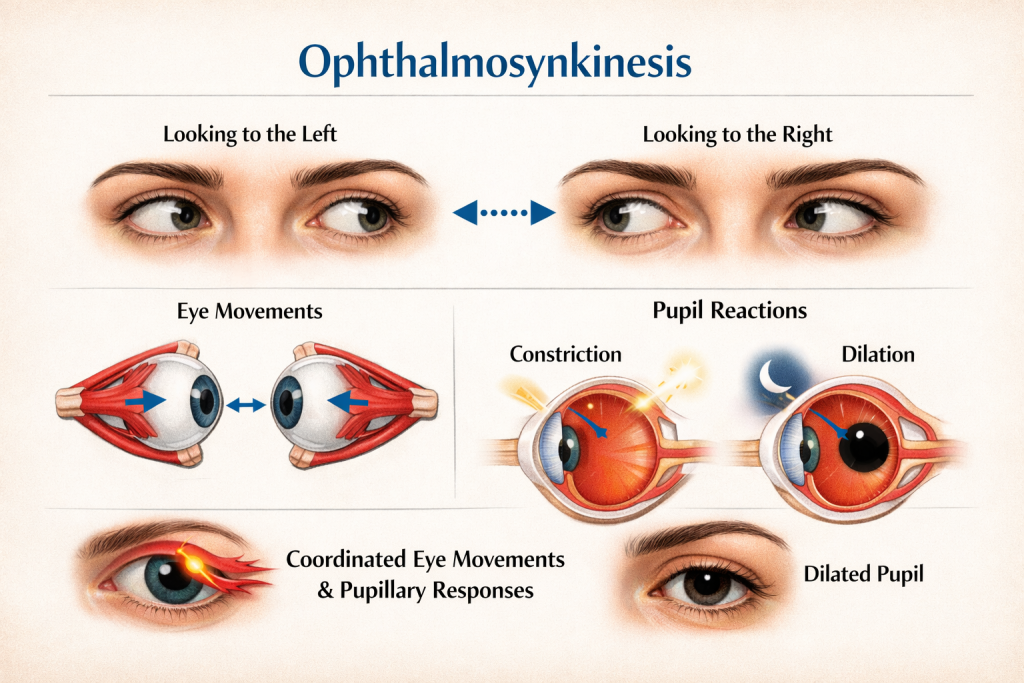
Ophthalmosynkinesis refers to involuntary eye movements that are triggered when a person performs a different voluntary movement, such as chewing, speaking, or moving the jaw. For example, when someone opens their mouth or moves their jaw to the side, the eye may move upward, inward, or twitch involuntarily. This unusual coordination results from abnormal nerve connections and is considered a form of miswiring of cranial nerves.
It is most often observed in individuals who have experienced facial nerve injuries or undergone reconstructive nerve surgery, although some cases are congenital.
What Causes Ophthalmosynkinesis?
The main cause of ophthalmosynkinesis is abnormal regeneration or rewiring of cranial nerves, especially after injury. It may result from:
- Facial nerve palsy or trauma
- Surgical repair involving the cranial nerves
- Congenital cranial nerve anomalies
- Neurological disorders involving the brainstem or cranial nerves
- Aberrant nerve regeneration, where nerve fibers mistakenly grow into neighboring nerve pathways
The condition most often involves the trigeminal nerve (cranial nerve V) and the oculomotor or abducens nerves (cranial nerves III and VI), which control jaw and eye movements respectively.
What Are the Symptoms of Ophthalmosynkinesis?
Symptoms may vary depending on the individual but commonly include:
- Involuntary eye movement when moving the jaw or mouth
- Eye twitching during chewing, talking, or yawning
- Uncontrolled eye deviation upward or inward
- Occasional double vision
- No voluntary control over the abnormal eye movement
The symptoms are usually not painful, but they can be socially embarrassing or visually distracting for some individuals.
How Is Ophthalmosynkinesis Diagnosed?
Diagnosis is typically based on clinical observation. The healthcare provider may:
- Review the patient’s history, especially previous nerve injuries or facial palsy
- Observe eye movements during specific jaw or facial movements
- Conduct a neurological exam
- Perform imaging tests (like MRI or CT scan) to rule out other causes of involuntary eye movement
In some cases, electromyography (EMG) or nerve conduction studies may help assess nerve function.
How Can Ophthalmosynkinesis Be Treated?
There is no specific cure, but treatment focuses on symptom relief and management. Options may include:
- Botulinum toxin (Botox) injections: To relax overactive muscles and reduce involuntary movements
- Physical therapy or facial retraining exercises
- Surgical correction in rare or severe cases
- Protective eyewear if the involuntary movements cause visual strain
In many cases, if symptoms are mild and not bothersome, no active treatment may be necessary.
What Is the Prognosis for Ophthalmosynkinesis?
The prognosis depends on the underlying cause and severity. In some individuals, symptoms improve over time, especially if related to nerve healing after surgery or injury. Others may have persistent symptoms that require ongoing management.
The condition is not life-threatening and typically does not affect vision permanently. However, it may be cosmetically or socially distressing, especially when noticeable during speech or eating.
When Should You Seek Medical Help?
You should seek medical advice if:
- You notice involuntary eye movements during jaw or facial movement
- You have a history of facial nerve injury or surgery
- The symptoms interfere with daily function or cause distress
- You experience new or worsening neurological symptoms
Early evaluation can help rule out other neurological conditions and guide appropriate care.
How Can You Manage Ophthalmosynkinesis?
Although the condition is rare, management strategies may help minimize discomfort or awkwardness:
- Jaw relaxation techniques during talking or eating
- Speech therapy if facial movement affects communication
- Wearing tinted glasses or eye protection to reduce visual distraction
- Psychological support or counseling, if the condition causes emotional stress
- Consistent monitoring with an eye specialist or neurologist
