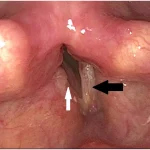
What is Laryngeal Web?
Laryngeal web is a rare condition in which there is an abnormal membrane or tissue that grows across the vocal cords (larynx), partially or completely obstructing the airway. This webbing can cause breathing and voice problems, depending on the size and location of the membrane. Laryngeal webs can either be congenital (present at birth) or acquired (develop later in life due to trauma or injury).
Types of Laryngeal Web?
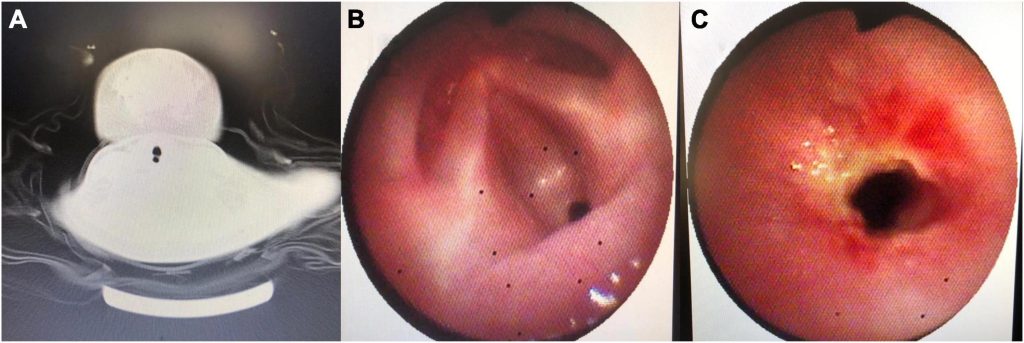
Laryngeal webs are generally classified based on their location and the degree of obstruction:
- Anterior laryngeal web: This is the most common type, where the web forms at the front part of the vocal cords.
- Posterior laryngeal web: This type occurs in the back part of the vocal cords but is much rarer than the anterior form.
- Congenital laryngeal web: These webs are present at birth and may be the result of incomplete development of the laryngeal tissue during fetal development.
- Acquired laryngeal web: These webs form later in life, often due to trauma, surgery, or prolonged intubation (placement of a breathing tube) that causes scarring and tissue formation across the vocal cords.
Causes of Laryngeal Web?
The primary causes of laryngeal web are:
- Congenital: In many cases, laryngeal webs form during fetal development when the larynx does not fully separate into distinct structures. This abnormal tissue formation can result in a web that obstructs the vocal cords.
- Trauma or injury: Injury to the larynx from an accident, surgery (especially intubation or tracheostomy), or inhalation of caustic substances can lead to scarring and the development of a laryngeal web.
- Prolonged intubation: Prolonged placement of a breathing tube (intubation) can cause mechanical irritation or injury to the vocal cords, leading to scar tissue formation and the development of a web.
- Infections: Severe infections of the larynx, such as viral or bacterial laryngitis, may sometimes contribute to the formation of scar tissue or a web.
- Genetic conditions: Certain genetic syndromes, such as van der Woude syndrome, may increase the risk of developing congenital laryngeal webs.
Symptoms of Laryngeal Web?
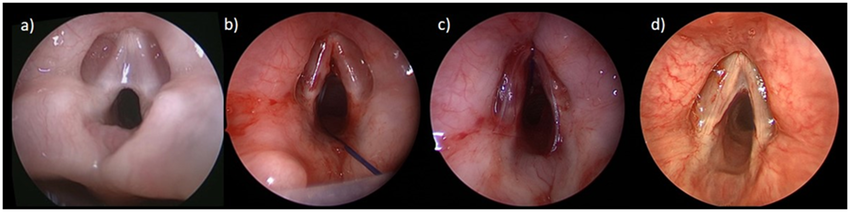
The symptoms of laryngeal web depend on the severity of the web and how much it obstructs the airway. Common symptoms include:
- Hoarseness: A common sign, as the web affects the normal vibration of the vocal cords.
- Stridor: A high-pitched, noisy breathing sound due to partial obstruction of the airway.
- Breathing difficulties: Shortness of breath, especially during physical exertion or when lying down, due to the limited airflow.
- Difficulty swallowing: In severe cases, the web can also interfere with swallowing, causing discomfort or aspiration.
- Weak voice: A breathy or weak voice, as the vocal cords cannot fully meet to produce a strong sound.
Diagnosis of Laryngeal Web?
Diagnosis of laryngeal web typically involves:
- Laryngoscopy: A flexible scope with a camera (laryngoscope) is inserted through the nose or mouth to directly visualize the vocal cords and the presence of a web.
- Endoscopy: In some cases, a detailed examination of the larynx may be performed using rigid or flexible endoscopy to assess the extent of the web.
- Imaging tests: A CT scan or MRI may be used to examine the larynx in more detail and check for any underlying structural abnormalities or related issues.
Treatment and Management of Laryngeal Web?
The treatment for laryngeal web depends on the size of the web and the degree of airway obstruction:
- Observation: Mild cases where the web does not cause significant symptoms may be monitored without intervention.
- Surgical removal: In more severe cases, surgery may be necessary to remove the web and restore normal function to the vocal cords. This is typically done through a procedure called microlaryngoscopy.
- Laser surgery: A laser may be used to precisely remove the web tissue, minimizing damage to surrounding tissues.
- Voice therapy: After surgery, voice therapy with a speech-language pathologist may be recommended to help improve vocal function and ensure proper healing.
- Tracheostomy: In rare cases of severe airway obstruction, a tracheostomy (a surgical opening in the windpipe) may be required to help the patient breathe.
Possible Complications of Laryngeal Web?
If left untreated, laryngeal webs can lead to several complications:
- Respiratory distress: Severe airway obstruction can lead to significant breathing difficulties, especially in children or those with bilateral webs.
- Voice changes: Persistent hoarseness or voice weakness, even after treatment, may occur.
- Recurrent infections: Ongoing difficulty swallowing or aspiration may lead to frequent respiratory infections, including pneumonia.
- Tracheostomy dependence: In very severe cases, long-term dependence on a tracheostomy tube for breathing may be necessary.
Prevention of Laryngeal Web?
Since congenital laryngeal webs are present at birth due to incomplete development, they cannot be prevented. However, acquired laryngeal webs may be prevented by:
- Minimizing trauma: Careful handling during surgeries involving the neck and airway, especially intubation, can reduce the risk of laryngeal injury and subsequent web formation.
- Limiting prolonged intubation: Avoiding unnecessary or prolonged use of a breathing tube during surgeries or medical treatments can help reduce the risk of scarring and web formation.
- Early detection and management of infections: Proper treatment of laryngeal infections may help prevent the formation of scar tissue and webs.
When to See a Doctor?
You should consult a healthcare provider if you experience:
- Hoarseness or voice changes that persist for more than a couple of weeks.
- Breathing difficulties, especially during physical activity or while lying down.
- Stridor or noisy breathing.
- Difficulty swallowing or choking while eating or drinking.
- Persistent cough or throat clearing.