


What is Vaginal Irritation?
Vaginal irritation refers to discomfort, itching, redness, or inflammation of the vaginal area. It can be caused by infections, allergic reactions, chemical exposure, or physical irritation. Vaginal irritation is a common condition that can affect women of all ages.
The irritation may be temporary or persistent, depending on the cause, and can significantly affect daily comfort and quality of life.
What Are the Symptoms of Vaginal Irritation?
Symptoms vary but typically include sensations and signs affecting the vaginal and vulvar area.
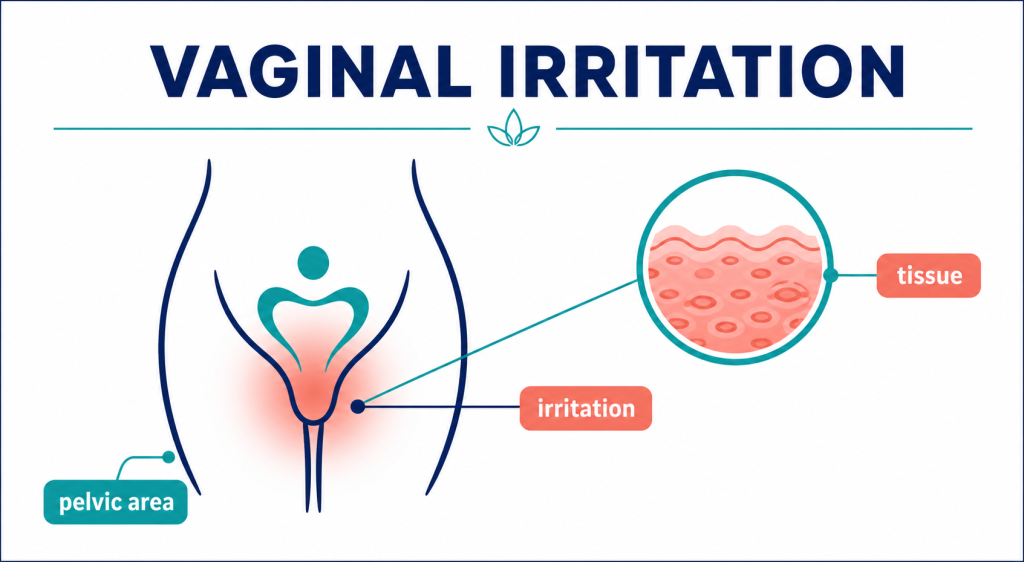
Common Symptoms of Vaginal Irritation
Itching → Persistent or intermittent itching of the vaginal skin
Redness and Swelling → Visible inflammation or soreness around the vaginal opening
Burning Sensation → Especially during urination or sexual intercourse
Discomfort or Pain → General irritation or localized pain
Increased Vaginal Discharge → May be clear, white, or colored depending on cause
Dryness → Vaginal tissues may feel dry or rough
Soreness or Tenderness → Sensitivity to touch or pressure
What Causes Vaginal Irritation?
Multiple factors can cause vaginal irritation, including infections, allergies, and environmental factors.
Common Causes of Vaginal Irritation
Infections
- Yeast Infection (Candidiasis) → Overgrowth of Candida fungus causing itching and discharge
- Bacterial Vaginosis → Imbalance of vaginal bacteria leading to irritation and discharge
- Sexually Transmitted Infections (STIs) → Such as herpes, chlamydia, or trichomoniasis
Allergic Reactions - Soaps, Detergents, or Scented Products → Chemicals irritating sensitive skin
- Latex or Lubricants → Allergy to condoms or sexual products
Physical Irritants - Tight Clothing or Synthetic Fabrics → Trapping moisture and causing friction
- Frequent Washing or Douching → Disrupting natural vaginal balance
Hormonal Changes - Menopause or Breastfeeding → Decreased estrogen can cause dryness and irritation
Other Causes - Skin Conditions → Such as eczema or psoriasis
- Trauma or Injury → From sexual activity or medical procedures
How is Vaginal Irritation Diagnosed?
Diagnosis involves clinical examination and tests to identify the underlying cause.
Diagnostic Tests for Vaginal Irritation
Physical Examination → Visual inspection of vaginal and vulvar tissues
Microscopic Examination → Vaginal swab to detect infections or abnormal cells
Culture Tests → To identify bacterial or fungal infections
Allergy Testing → If an allergic cause is suspected
pH Testing → Vaginal pH changes can indicate infection or imbalance
How is Vaginal Irritation Treated?

Treatment depends on the cause and severity of irritation.
- Avoid Irritants
Stop using scented soaps, douches, or irritating products
Wear breathable cotton underwear and avoid tight clothing - Medications
Antifungal Creams or Oral Medications → For yeast infections
Antibiotics → For bacterial infections or STIs
Topical Steroids or Soothing Creams → For inflammation or skin conditions
Moisturizers or Vaginal Estrogen → For dryness related to hormonal changes - Lifestyle and Home Remedies
Practice good hygiene but avoid excessive washing
Use mild, unscented products for cleaning
Apply cold compresses to reduce itching and swelling - Medical Follow-Up
See a healthcare provider if symptoms persist, worsen, or recur frequently
Complications of Untreated Vaginal Irritation
If left untreated, vaginal irritation can lead to:
Chronic Discomfort or Pain
Secondary Infections → From scratching or untreated causes
Sexual Dysfunction → Due to pain or sensitivity
Spread of Infection → Particularly with untreated STIs
Living with Vaginal Irritation: Tips for Relief
Avoid known irritants and allergens
Maintain good genital hygiene without over-washing
Use lubricants during sexual activity if dryness is present
Wear loose, breathable clothing
Seek medical advice early for persistent or severe symptoms
