


What is Acid Maltase Deficiency (Pompe Disease)?
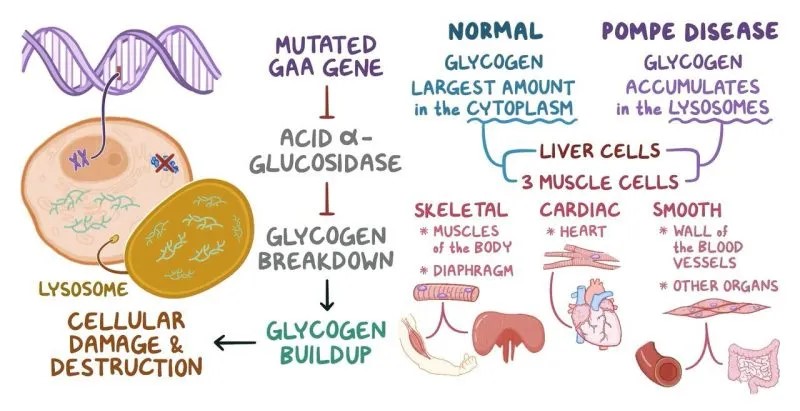
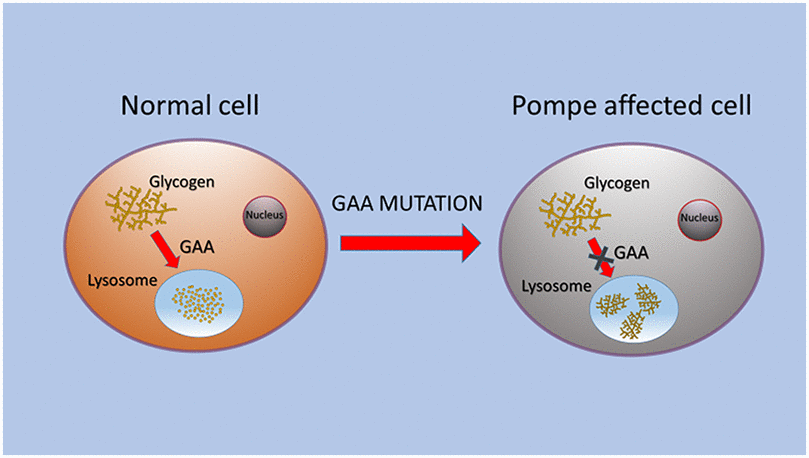
Acid Maltase Deficiency, also known as Pompe Disease, is a rare genetic disorder caused by a deficiency of the acid alpha-glucosidase (GAA) enzyme. This enzyme is responsible for breaking down glycogen (a stored form of sugar) in cells. When the enzyme is deficient or absent, glycogen builds up in muscles and other organs, leading to progressive muscle weakness and organ damage.
Pompe Disease affects people of all ages and has different forms, including infantile-onset, late-onset, and juvenile forms.
What Causes Pompe Disease?
Pompe Disease is caused by mutations in the GAA gene, which provides instructions for producing the acid alpha-glucosidase enzyme. The disease follows an autosomal recessive inheritance pattern, meaning a child must inherit two mutated copies of the gene (one from each parent) to develop the condition.
What Are the Symptoms of Pompe Disease?
Symptoms vary depending on the age of onset and severity of the enzyme deficiency.
1. Infantile-Onset Pompe Disease (Severe Form)
This form appears within the first few months of life and is the most severe. Symptoms include:
- Severe muscle weakness (hypotonia) – “Floppy baby syndrome”
- Enlarged heart (cardiomegaly) – Can lead to heart failure
- Feeding difficulties – Poor weight gain and difficulty sucking/swallowing
- Breathing problems – Respiratory failure is common
- Delayed motor development – Inability to sit, crawl, or walk
Without treatment, infants with this form of Pompe Disease often do not survive beyond 1-2 years due to heart and lung failure.
2. Late-Onset Pompe Disease (Juvenile & Adult Forms)
This form appears later in childhood or adulthood and progresses more slowly. Symptoms include:
- Progressive muscle weakness – Especially in the legs, hips, and respiratory muscles
- Difficulty walking or climbing stairs – Increased risk of falls
- Breathing problems – Shortness of breath, respiratory infections, and sleep apnea
- Fatigue and exercise intolerance – Due to muscle breakdown
- Spinal deformities (scoliosis, kyphosis) – In children with late-onset forms
Unlike the infantile form, late-onset Pompe Disease does not typically affect the heart but can still cause severe respiratory complications over time.
How Is Pompe Disease Diagnosed?
Diagnosis involves a combination of clinical evaluation, enzyme tests, and genetic testing:
- Blood test (GAA enzyme activity test) – Measures acid alpha-glucosidase enzyme levels
- Genetic testing – Confirms mutations in the GAA gene
- Muscle biopsy – Identifies glycogen buildup in muscle cells
- Electromyography (EMG) – Assesses muscle function
- Echocardiogram (heart ultrasound) – Checks for an enlarged heart in infantile cases
What Are the Treatment Options for Pompe Disease?
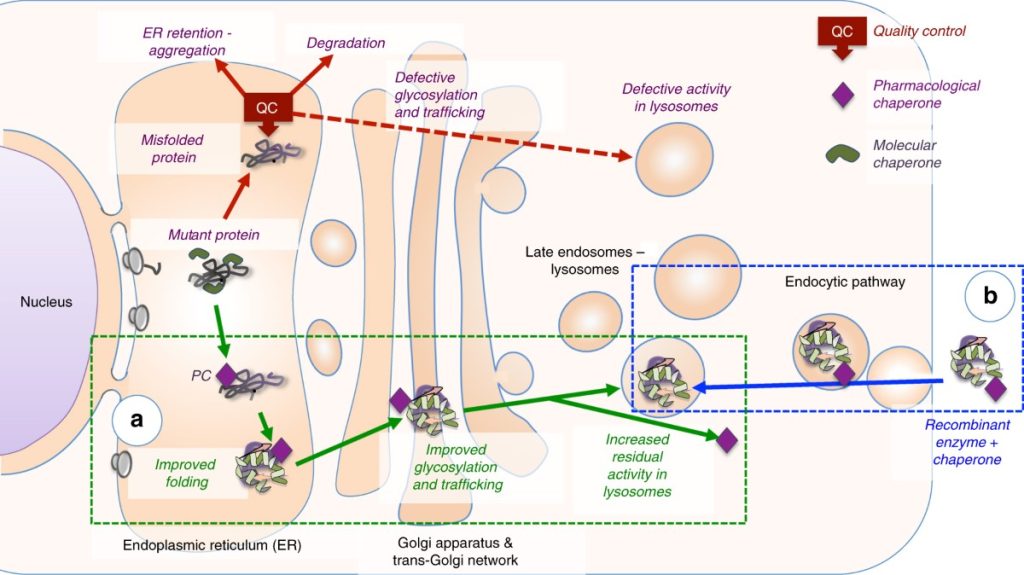
While there is no cure, treatments can improve symptoms and prolong life expectancy.
1. Enzyme Replacement Therapy (ERT)
- Alglucosidase alfa (Myozyme, Lumizyme) – A synthetic form of the missing enzyme, given through intravenous infusions
- Most effective in infantile-onset cases – Can help prolong life and improve muscle function
- Requires lifelong treatment
2. Supportive Therapies
- Physical therapy – Helps maintain muscle strength and mobility
- Respiratory support (CPAP, BiPAP, ventilators) – For breathing difficulties
- Nutritional support (feeding tubes in severe cases) – Helps prevent malnutrition
- Orthopedic care – Manages spinal deformities and mobility issues
Can Pompe Disease Cause Complications?
If untreated, Pompe Disease can lead to:
- Progressive muscle weakness – Leading to wheelchair dependence
- Respiratory failure – A major cause of mortality in late-onset cases
- Heart failure (in infantile-onset cases)
