


What is Holt-Oram Syndrome?
Holt-Oram Syndrome (HOS) is a rare genetic disorder that primarily affects the bones of the upper limbs (arms and hands) and the heart. It is also known as the “heart-hand syndrome” because of its dual impact on skeletal and cardiac development.
People with Holt-Oram Syndrome often have abnormalities in the bones of the wrists, forearms, or thumbs, and many also have congenital heart defects or abnormalities in the heart’s electrical conduction system.

What causes Holt-Oram Syndrome?
Holt-Oram Syndrome is caused by mutations in the TBX5 gene, which plays a crucial role in the development of the heart and upper limbs during early fetal growth.
It is inherited in an autosomal dominant pattern, meaning only one copy of the altered gene is enough to cause the disorder. However, in many cases, the mutation occurs spontaneously (de novo) without a family history.
Who is at risk?
- Individuals with a family history of Holt-Oram Syndrome
- Children of a parent with the condition (50% chance of inheritance)
- Both males and females are equally affected
What are the symptoms of Holt-Oram Syndrome?
The symptoms of Holt-Oram Syndrome can vary widely from person to person, even within the same family. Common features include:
Limb abnormalities:
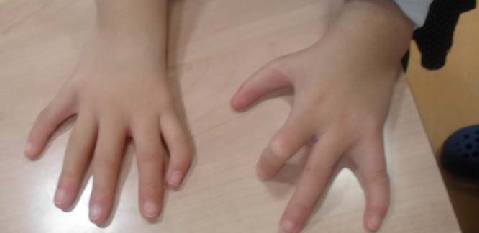
- Missing or underdeveloped thumbs
- Long thumbs that resemble fingers (triphalangeal thumbs)
- Shortened forearms
- Partial or complete absence of bones in the wrist or arm
- Asymmetry between the two arms
- Limited range of motion in the upper limbs
Heart problems:
- Atrial septal defect (ASD) – a hole between the upper chambers of the heart
- Ventricular septal defect (VSD) – a hole between the lower chambers of the heart
- Arrhythmias or conduction defects (abnormal heart rhythms)
Heart defects can lead to fatigue, shortness of breath, poor growth in infants, or heart failure if untreated.
How is Holt-Oram Syndrome diagnosed?
Diagnosis is based on:
- Physical examination: Especially of the upper limbs
- X-rays or CT scans to assess bone abnormalities
- Echocardiogram: To detect structural heart defects
- Electrocardiogram (ECG): To check for rhythm disturbances
- Genetic testing to confirm TBX5 mutations
Early diagnosis is important for managing both limb and cardiac issues.
How is Holt-Oram Syndrome treated?
There is no cure for Holt-Oram Syndrome, but treatment focuses on managing the skeletal and cardiac symptoms.
Treatment options may include:
For limb abnormalities:
- Physical therapy to improve strength and flexibility
- Occupational therapy for hand function
- Surgical correction for severe deformities or to create functional thumbs
For heart problems:
- Medications to manage arrhythmias or heart failure
- Surgical repair of heart defects like ASD or VSD
- Pacemaker implantation for significant conduction issues
Regular monitoring of heart health is essential throughout life.
What are the complications of Holt-Oram Syndrome?
- Difficulty with hand function, affecting daily activities
- Heart failure or arrhythmias if congenital defects go untreated
- Recurrent infections or fatigue due to poor circulation or oxygenation
- Psychosocial impacts, especially in children with visible limb differences
Timely intervention and multidisciplinary care can help manage symptoms and improve quality of life.
Can Holt-Oram Syndrome be prevented?
Holt-Oram Syndrome cannot be prevented once the genetic mutation is present. However:
- Genetic counseling is recommended for individuals with a family history
- Prenatal testing and ultrasound monitoring may detect limb or heart anomalies during pregnancy
- Early diagnosis and treatment can significantly improve outcomes