What is Vulvar Vestibulitis?
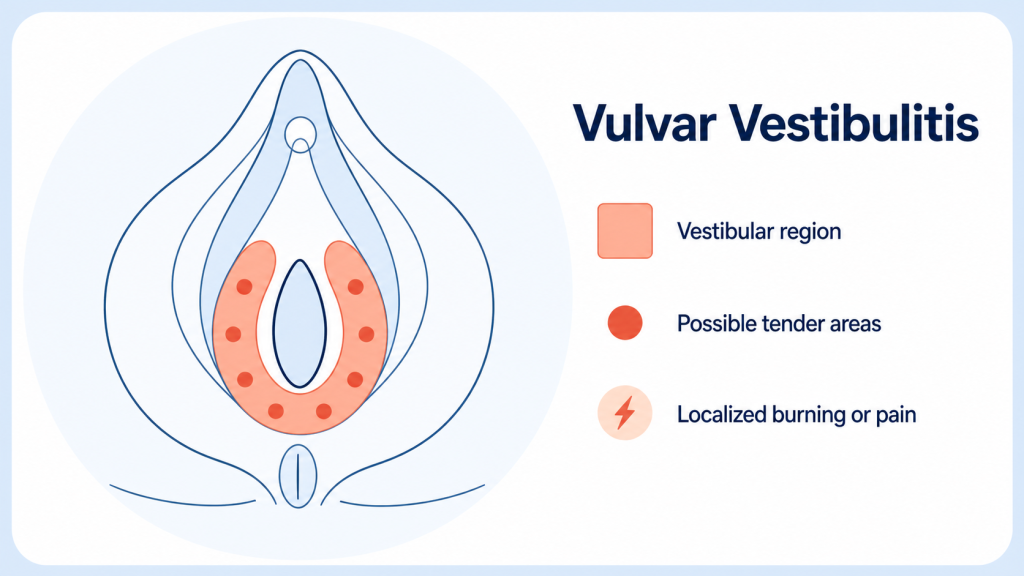
Vulvar vestibulitis is a condition characterized by inflammation and pain at the vestibule, the entrance area of the vagina. It causes discomfort during activities such as intercourse, tampon use, or sitting for long periods.
What Are the Symptoms of Vulvar Vestibulitis?
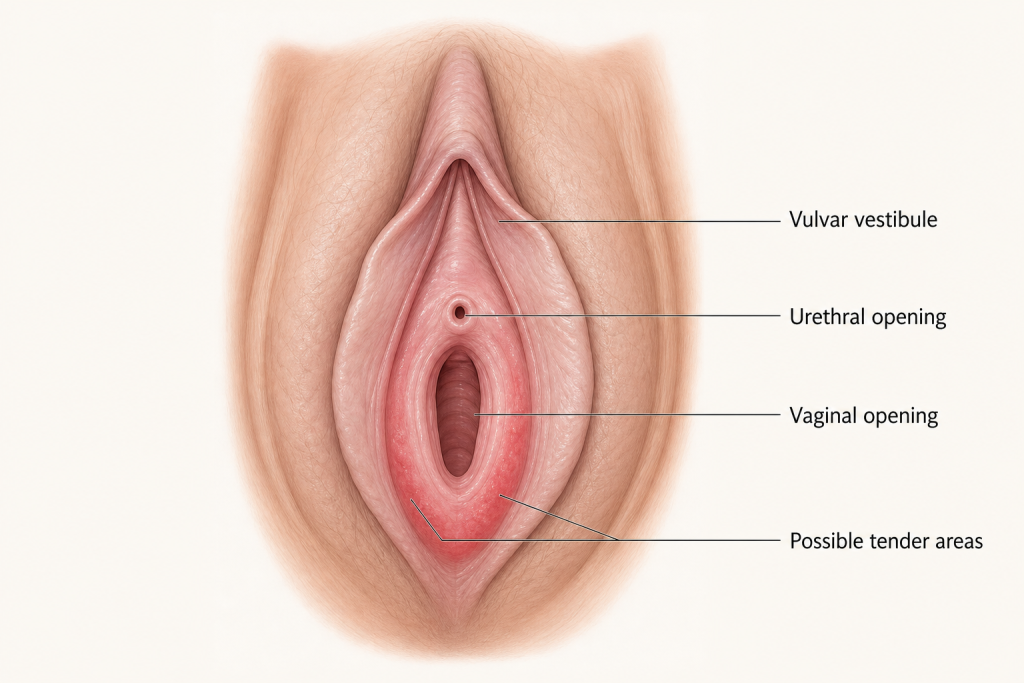
Common symptoms include
Burning or stinging pain at the vaginal opening
Pain during sexual intercourse (dyspareunia)
Tenderness when touching the vestibule
Redness and inflammation around the vaginal entrance
Discomfort while sitting or wearing tight clothing.
What Causes Vulvar Vestibulitis?
The exact cause is often unclear but may involve:
Chronic Inflammation
Possibly triggered by infections or irritants.
Nerve Fiber Irritation
Increased sensitivity of nerve endings in the vestibule.
Hormonal Factors
Low estrogen levels may contribute, especially after menopause.
Infections
Previous yeast or bacterial infections might play a role.
Allergic Reactions or Irritants
Exposure to soaps, detergents, or hygiene products.
How is Vulvar Vestibulitis Diagnosed?
Diagnosis is based on:
Medical History
Detailed symptom description and sexual history.
Physical Examination
Tenderness at the vestibule upon gentle pressure.
Exclusion of Other Conditions
Tests to rule out infections or skin diseases.
How is Vulvar Vestibulitis Treated?
Treatment focuses on symptom relief:
Avoid Irritants
Use mild, fragrance-free products and avoid tight clothing.
Medications
Topical corticosteroids or estrogen creams.
Pain relievers or nerve pain medications (e.g., gabapentin).
Antidepressants in low doses for pain management.
Physical Therapy
Pelvic floor muscle relaxation and biofeedback.
Counseling or Sexual Therapy
To address psychological impact and pain-related anxiety.
Surgery
In severe cases, surgical removal of affected tissue (vestibulectomy) may be considered.
What Are the Complications of Untreated Vulvar Vestibulitis?
Persistent pain can lead to:
Sexual dysfunction
Emotional distress or anxiety
Avoidance of intimacy and relationship difficulties.