


What Are Varicose Veins?
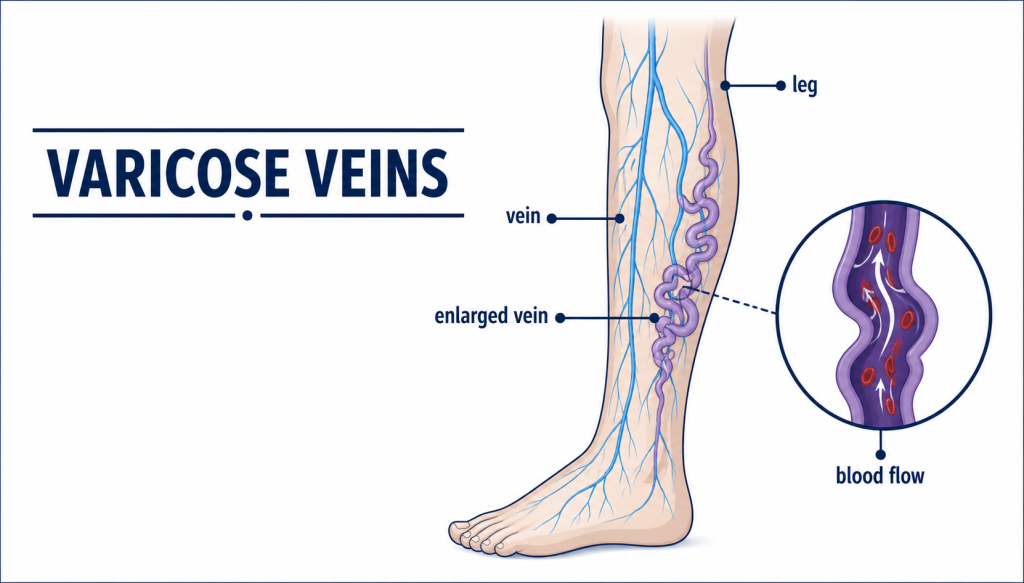
Varicose veins are enlarged, twisted veins that commonly appear on the legs and feet. They develop when the valves in the veins become weak or damaged, causing blood to pool and the veins to bulge. Varicose veins are often blue or dark purple and may be raised above the surface of the skin.
They can be a cosmetic concern for some people but may also lead to discomfort, swelling, and more serious complications if left untreated.
What Are the Symptoms of Varicose Veins?
Not everyone with varicose veins experiences symptoms, but for many, they can be painful or uncomfortable.
Common Symptoms of Varicose Veins:
Leg Pain → Aching or throbbing sensation, especially after standing or sitting for long periods.
Swelling → Particularly around the ankles and lower legs.
Heaviness → Legs may feel heavy or tired.
Itching → Especially around the affected veins.
Skin Discoloration → Skin near the veins may become discolored or develop a rash.
Cramping → Muscle cramps, especially at night.
Visible Bulging Veins → Twisted or rope-like veins that are clearly visible under the skin.
What Causes Varicose Veins?
Varicose veins occur when the valves in the veins that help blood return to the heart become weak or fail. This causes blood to flow backward and pool in the veins.
Common Causes and Risk Factors Include:
Age → Vein valves weaken with age.
Gender → Women are more likely to develop varicose veins due to hormonal changes.
Pregnancy → Increases blood volume and pressure on leg veins.
Obesity → Extra weight increases pressure on leg veins.
Standing or Sitting for Long Periods → Affects circulation in the legs.
Family History → A genetic predisposition to weak vein valves.
Previous Blood Clots or Vein Injuries → May damage valves and impair blood flow.
How Are Varicose Veins Diagnosed?
A physical exam is often enough to diagnose varicose veins. Additional tests may be used to evaluate blood flow and check for complications.
Diagnostic Methods Include:
Physical Examination → Checking for visible signs of varicose veins.
Duplex Ultrasound → Uses sound waves to assess blood flow and check for blood clots.
Venogram (rarely used) → An X-ray test with contrast dye to view vein structure.
How Are Varicose Veins Treated?
Treatment depends on the severity of the condition and symptoms. Mild cases may be managed with lifestyle changes, while severe cases may require medical procedures.

1. Lifestyle and Self-Care Measures
Exercise regularly to improve circulation.
Elevate legs to reduce pressure in veins.
Avoid standing or sitting for long periods.
Wear compression stockings to support blood flow.
Maintain a healthy weight to ease pressure on veins.
2. Medical Treatments
Sclerotherapy → A solution is injected into the vein to close it.
Laser Therapy → Light energy is used to close off smaller veins.
Radiofrequency Ablation → Heat is used to seal off larger veins.
Endovenous Laser Treatment (EVLT) → A laser fiber is inserted into the vein to close it.
Vein Stripping → Surgical removal of large varicose veins.
Ambulatory Phlebectomy → Small incisions are used to remove surface veins.
Complications of Untreated Varicose Veins
Chronic pain or discomfort
Skin ulcers or sores
Blood clots (superficial thrombophlebitis)
Bleeding from burst veins
Chronic venous insufficiency (impaired blood return)
Living with Varicose Veins: Tips for Daily Management
Stay active and avoid long periods of inactivity.
Wear compression stockings as directed.
Elevate your legs during rest.
Choose comfortable shoes and avoid high heels.
Consult your doctor if symptoms worsen or if skin changes occur.
