


What are Vascular Tumors?
Vascular tumors are abnormal growths that arise from blood vessels or lymphatic vessels. They can be benign (non-cancerous) or malignant (cancerous). These tumors result from the uncontrolled proliferation of endothelial cells, which line the inside of blood and lymph vessels.
Common types include hemangiomas (benign) and angiosarcomas (malignant). Vascular tumors can occur anywhere in the body but are most often found in the skin, liver, and soft tissues.
What Are the Symptoms of Vascular Tumors?
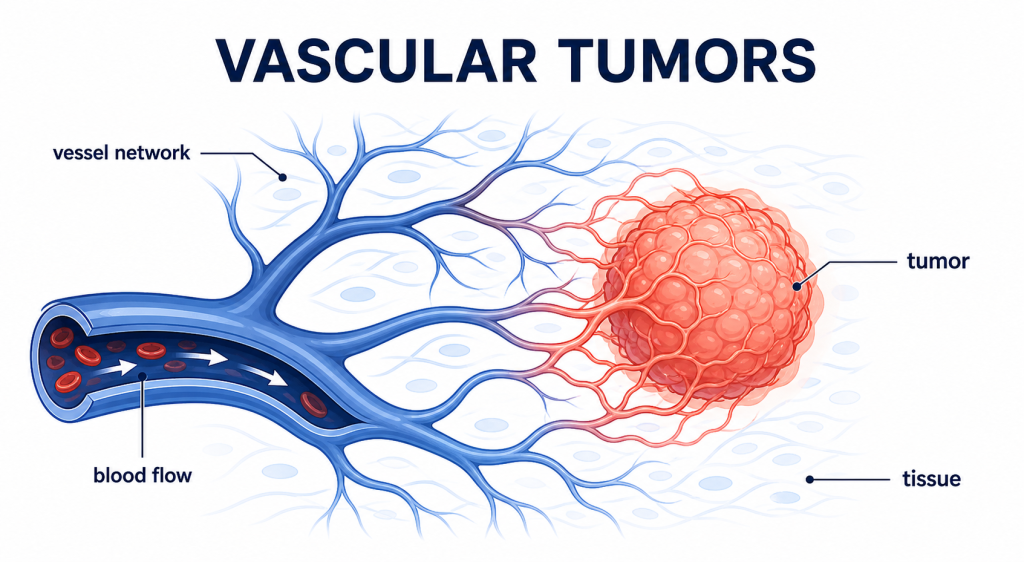
Symptoms vary based on the tumor’s size, location, and type. Some vascular tumors cause no symptoms and are found incidentally, while others can cause noticeable signs:
- Visible lumps or masses under the skin
- Red, purple, or blue discoloration of the skin
- Pain or tenderness at the tumor site
- Swelling or bleeding
- Functional impairment if the tumor presses on nerves or organs
- In malignant tumors, rapid growth and systemic symptoms like weight loss or fatigue
What Causes Vascular Tumors?
The exact cause is often unknown but may include:
- Genetic mutations affecting cell growth
- Exposure to radiation or certain chemicals
- Chronic lymphedema (swelling due to lymphatic obstruction)
- Some congenital conditions and syndromes
How are Vascular Tumors Diagnosed?
Diagnosis involves:
- Physical examination
- Imaging tests such as ultrasound, MRI, or CT scans to determine size and extent
- Biopsy to examine tissue and confirm the tumor type
- Blood tests in some cases
How are Vascular Tumors Treated?

Treatment depends on whether the tumor is benign or malignant, its size, location, and symptoms:
- Observation
Small, asymptomatic benign tumors may be monitored without immediate treatment. - Medications
- Corticosteroids or beta-blockers (e.g., propranolol) for some hemangiomas.
- Surgical Removal
- Excision of the tumor if it causes symptoms or cosmetic concerns.
- Laser Therapy
- To reduce the appearance of superficial vascular lesions.
- Radiation or Chemotherapy
- Used in malignant vascular tumors such as angiosarcoma.
- Targeted Therapy
- Newer treatments targeting specific genetic mutations.
What Are the Complications of Vascular Tumors?
- Bleeding or ulceration of the tumor
- Infection if skin integrity is compromised
- Functional problems depending on tumor location
- Malignant transformation in rare cases
- Recurrence after treatment
