Adrenal Gland Disorders: Causes, Symptoms, Diagnosis, and Treatment
What Are Adrenal Gland Disorders?
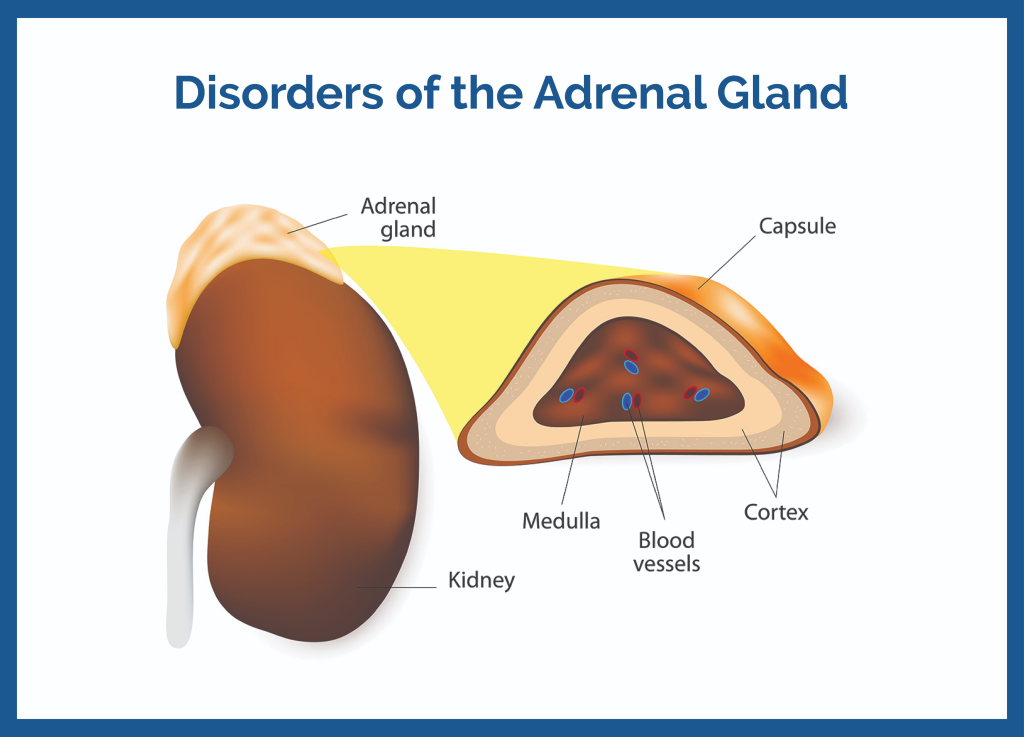
Adrenal gland disorders refer to a group of conditions that affect the adrenal glands, which are small, triangular-shaped glands located on top of each kidney. These glands are responsible for producing essential hormones, including cortisol, aldosterone, adrenaline, and sex hormones, which help regulate metabolism, blood pressure, immune response, and stress management.
Adrenal gland disorders occur when these glands produce too much or too little of certain hormones, leading to a variety of health problems. The disorders can be caused by genetic factors, autoimmune diseases, tumors, or infections.
Types of Adrenal Gland Disorders
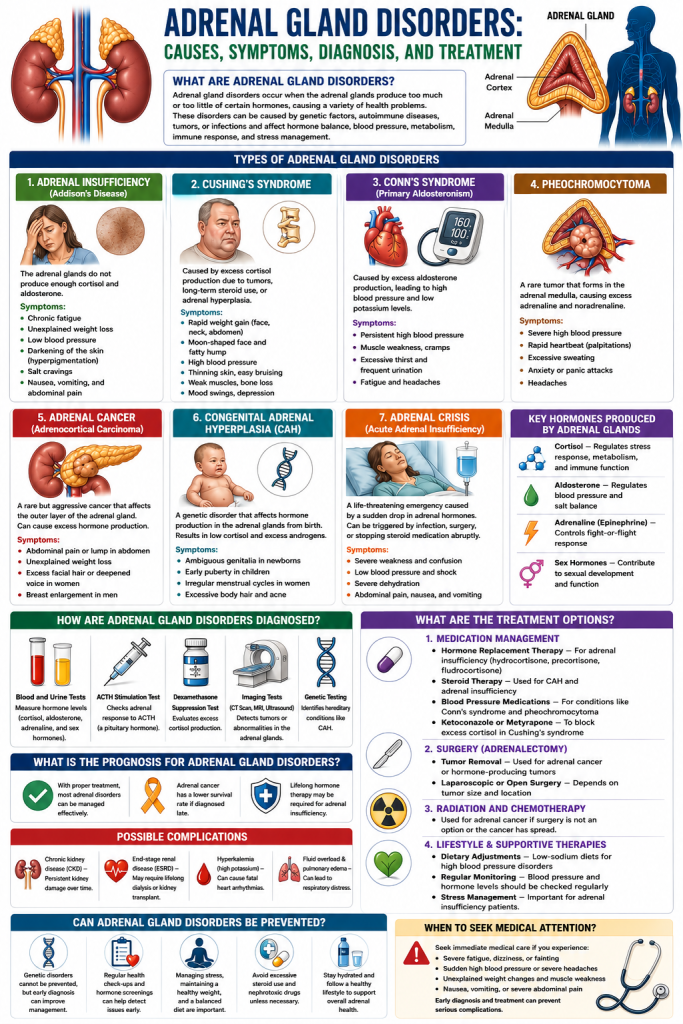
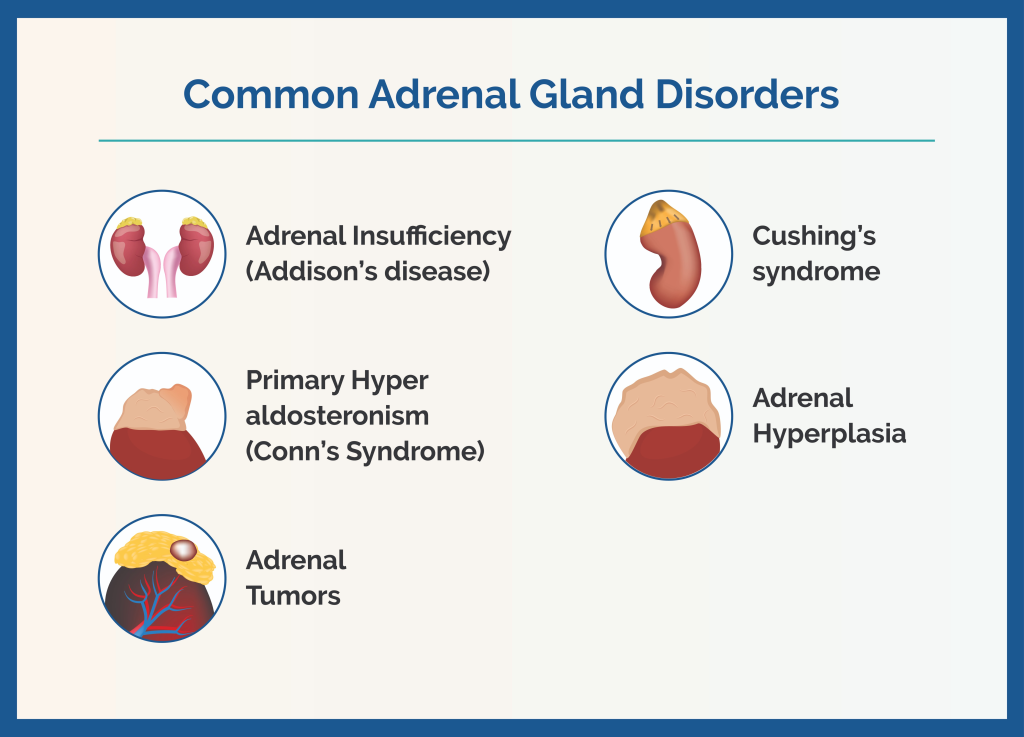
1. Adrenal Insufficiency (Addison’s Disease)
✔ The adrenal glands do not produce enough cortisol and aldosterone.
✔ Can be caused by autoimmune diseases, infections, or pituitary disorders.
Symptoms:
• Chronic fatigue
• Unexplained weight loss
• Low blood pressure
• Darkening of the skin (hyperpigmentation)
• Salt cravings
• Nausea, vomiting, and abdominal pain
2. Cushing’s Syndrome
✔ Caused by excess cortisol production due to tumors, long-term steroid use, or adrenal hyperplasia.
Symptoms:
• Rapid weight gain (especially in the face, neck, and abdomen)
• Moon-shaped face and fatty hump between the shoulders
• High blood pressure
• Thinning skin with easy bruising
• Weak muscles and bone loss
• Mood swings and depression
3. Conn’s Syndrome (Primary Aldosteronism)
✔ Caused by excess aldosterone production, leading to high blood pressure and low potassium levels.
✔ Can result from an adrenal tumor or hyperplasia of the adrenal glands.
Symptoms:
• Persistent high blood pressure
• Muscle weakness and cramps
• Excessive thirst and frequent urination
• Fatigue and headaches
4. Pheochromocytoma
✔ A rare tumor that forms in the adrenal medulla, leading to excessive production of adrenaline and noradrenaline.
Symptoms:
• Severe high blood pressure
• Rapid heartbeat (palpitations)
• Excessive sweating
• Anxiety or panic attacks
• Headaches
5. Adrenal Cancer (Adrenocortical Carcinoma)
✔ A rare but aggressive cancer that affects the outer layer of the adrenal gland.
✔ Can cause excess hormone production, leading to symptoms similar to Cushing’s syndrome or excessive androgens/estrogens.
Symptoms:
• Abdominal pain or a lump in the abdomen
• Unexplained weight loss
• Excess facial hair or deepened voice in women
• Breast enlargement in men
6. Congenital Adrenal Hyperplasia (CAH)
✔ A genetic disorder that affects hormone production in the adrenal glands from birth.
✔ Results in low cortisol levels and excess androgens (male hormones).
Symptoms:
• Ambiguous genitalia in newborns
• Early puberty in children
• Irregular menstrual cycles in women
• Excessive body hair and acne
7. Adrenal Crisis (Acute Adrenal Insufficiency)
✔ A life-threatening emergency caused by a sudden drop in adrenal hormones.
✔ Can be triggered by infection, surgery, or stopping steroid medication abruptly.
Symptoms:
• Severe weakness and confusion
• Low blood pressure and shock
• Severe dehydration
• Abdominal pain, nausea, and vomiting
How Are Adrenal Gland Disorders Diagnosed?
✔ Blood and Urine Tests – Measure hormone levels (cortisol, aldosterone, adrenaline, and sex hormones).
✔ ACTH Stimulation Test – Checks adrenal response to ACTH (a hormone from the pituitary gland).
✔ Dexamethasone Suppression Test – Evaluates excess cortisol production.
✔ Imaging Tests (CT Scan, MRI, Ultrasound) – Detects tumors or abnormalities in the adrenal glands.
✔ Genetic Testing – Identifies hereditary conditions like CAH.
What Are the Treatment Options for Adrenal Gland Disorders?
Treatment depends on the specific disorder and whether the adrenal glands are overactive or underactive.
1. Medication Management
✔ Hormone Replacement Therapy – For adrenal insufficiency (e.g., hydrocortisone, prednisone, fludrocortisone).
✔ Steroid Therapy – Used for CAH and adrenal insufficiency.
✔ Blood Pressure Medications – For conditions like Conn’s syndrome and pheochromocytoma.
✔ Ketoconazole or Metyrapone – To block excess cortisol in Cushing’s syndrome.
2. Surgery (Adrenalectomy)
✔ Tumor Removal – Used for adrenal cancer or hormone-producing tumors.
✔ Laparoscopic or Open Surgery – Depends on tumor size and location.
3. Radiation and Chemotherapy
✔ Used for adrenal cancer if surgery is not an option or the cancer has spread.
4. Lifestyle and Supportive Therapies
✔ Dietary Adjustments – Low-sodium diets for high blood pressure disorders.
✔ Regular Monitoring – Blood pressure and hormone levels should be checked regularly.
✔ Stress Management – Important for adrenal insufficiency patients.
What is the Prognosis for Adrenal Gland Disorders?
✔ With proper treatment, most adrenal disorders can be managed effectively.
✔ Adrenal cancer has a lower survival rate if diagnosed late.
✔ Lifelong hormone therapy may be required for adrenal insufficiency.
Can Adrenal Gland Disorders Be Prevented?
✔ Genetic disorders cannot be prevented, but early diagnosis can improve management.
✔ Regular health check-ups and hormone screenings can help detect issues early.
✔ Managing stress, maintaining a healthy weight, and avoiding excessive steroid use can help reduce risk.