


What is Vulvar Squamous Cell Carcinoma?
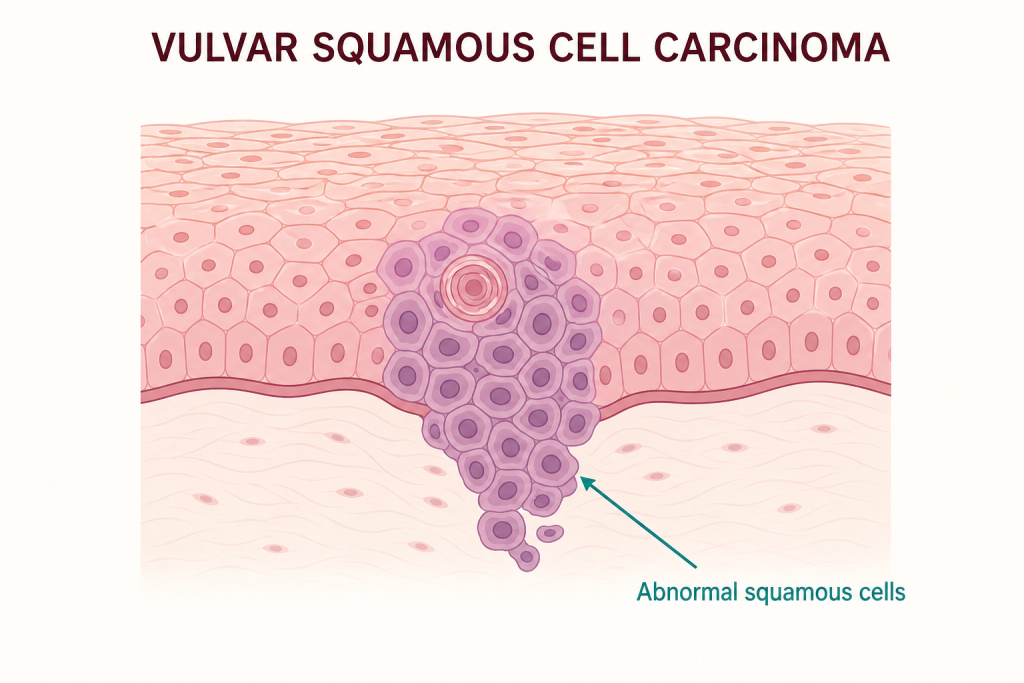
Vulvar squamous cell carcinoma (SCC) is a type of cancer that originates from the squamous cells lining the surface of the vulva. It is the most common form of vulvar cancer and usually affects women over 60 years old, though it can occur at any age.
What Are the Symptoms of Vulvar Squamous Cell Carcinoma?

Symptoms may develop gradually and include:
- Persistent itching or irritation of the vulva
- A visible lump, thickening, or sore on the vulva that does not heal
- Pain or tenderness in the vulvar area
- Bleeding or discharge from the vulva
- Changes in vulvar skin color or texture
What Causes Vulvar Squamous Cell Carcinoma?
Several factors increase the risk of developing vulvar SCC:
- Human papillomavirus (HPV) infection, especially high-risk types
- Chronic vulvar inflammation or skin conditions like lichen sclerosus
- Smoking
- Weakened immune system
- Older age
How is Vulvar Squamous Cell Carcinoma Diagnosed?
Diagnosis involves:
- Physical examination of the vulva by a healthcare provider
- Biopsy of suspicious lesions to confirm cancer
- Imaging tests (e.g., MRI, CT scan) to assess spread
- Lymph node evaluation to check for metastasis
How is Vulvar Squamous Cell Carcinoma Treated?
Treatment depends on the stage and extent of cancer:
- Surgery
- Removal of the tumor with clear margins
- Possible lymph node removal if cancer has spread
- Radiation Therapy
- May be used before or after surgery to reduce tumor size or kill remaining cancer cells
- Chemotherapy
- Used in advanced cases or when cancer has spread
- Targeted Therapy or Immunotherapy
- In select cases based on tumor characteristics
Complications of Untreated Vulvar Squamous Cell Carcinoma
- Local tissue destruction and ulceration
- Spread (metastasis) to nearby lymph nodes and other organs
- Significant pain and bleeding
- Reduced quality of life and potentially fatal outcomes
