


What is Idiopathic Pulmonary Fibrosis?
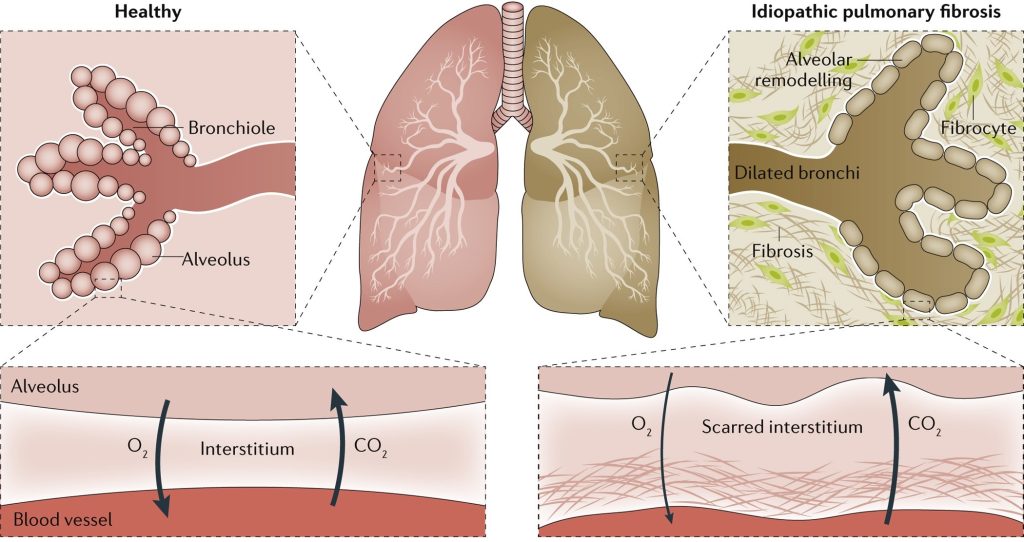
Idiopathic Pulmonary Fibrosis (IPF) is a chronic and progressive lung disease that causes scarring (fibrosis) of the lung tissue. “Idiopathic” means the cause is unknown, and “pulmonary fibrosis” refers to scarring in the lungs. Over time, this scarring makes it increasingly difficult to breathe and for oxygen to pass into the bloodstream.
Who Is at Risk for IPF?
Idiopathic Pulmonary Fibrosis usually affects:
- People aged 50 and older
- Men more than women
- Smokers or former smokers
- Individuals with a family history of IPF
- People exposed to harmful environmental substances (e.g., metal dust, wood dust)
What Causes IPF?
The exact cause of IPF is unknown. However, it may be linked to:
- Genetic factors
- Environmental exposures (e.g., pollutants, occupational dusts)
- Chronic viral infections
- Abnormal wound-healing response in the lungs
- Smoking or long-term exposure to secondhand smoke
It is not contagious and not caused by infection.
What Are the Symptoms of IPF?
IPF symptoms usually develop gradually and worsen over time. Common signs include:
- Persistent dry cough
- Shortness of breath, especially during physical activity
- Fatigue and weakness
- Chest discomfort
- Loss of appetite and weight loss
- Clubbing (widening and rounding of the tips of the fingers or toes)

How Is IPF Diagnosed?
Diagnosing IPF can be challenging and involves several steps:
- Detailed medical history and physical exam
- Lung function tests – to measure how well the lungs are working
- High-resolution CT (HRCT) scan – to look for patterns of lung scarring
- Blood tests – to rule out other causes of interstitial lung disease
- Lung biopsy (in some cases) – to confirm the diagnosis if imaging is unclear
How Is IPF Treated?
There is no cure for IPF, but treatment can help slow the progression and manage symptoms:
- Antifibrotic medications:
- Pirfenidone and Nintedanib can slow lung scarring
- Oxygen therapy – helps improve breathing and energy levels
- Pulmonary rehabilitation – guided exercise and education for lung health
- Vaccinations – such as flu and pneumonia vaccines to prevent complications
- Lung transplant – may be considered in severe or advanced cases
Can Lifestyle Changes Help?
Yes, lifestyle adjustments play a key role in managing IPF:
- Quit smoking
- Stay physically active with guidance from a doctor or rehab program
- Eat a balanced diet to maintain strength
- Avoid exposure to pollutants or airborne irritants
- Join support groups for emotional and psychological well-being
What Is the Outlook for People with IPF?
IPF is a progressive disease, meaning it worsens over time. However, with newer medications and early intervention, many people are able to live better and longer than in the past. Regular monitoring and adjustments in care are essential.
When Should You See a Doctor?
Consult your doctor if you have:
- Unexplained shortness of breath
- A chronic, dry cough that doesn’t go away
- Noticeable fatigue or weight loss
- Worsening breathing problems over time
Early diagnosis offers the best chance for slowing the disease.