


What Is Retroperitoneal Hemorrhage?
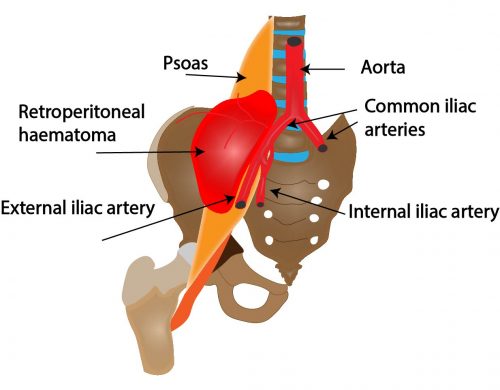
Retroperitoneal Hemorrhage (RPH) refers to bleeding into the retroperitoneal space—the area located behind the peritoneum of the abdominal cavity. This condition can be life-threatening due to the potential for significant blood accumulation in a concealed space, often without immediate external signs. RPH can result from trauma, medical procedures, or occur spontaneously, and its subtle presentation can delay diagnosis and treatment.
What Causes Retroperitoneal Hemorrhage?
RPH can arise from various causes, broadly categorized into traumatic and non-traumatic origins:NCBI
- Traumatic Causes:
- Blunt Trauma: Injuries from motor vehicle accidents or falls can damage retroperitoneal organs or vessels.
- Penetrating Trauma: Stab wounds or gunshot injuries may directly injure retroperitoneal structures.
- Iatrogenic Causes:
- Medical Procedures: Complications from interventions like femoral artery catheterization can lead to bleeding.
- Surgical Complications: Operations involving retroperitoneal organs may inadvertently cause hemorrhage.
- Spontaneous Causes:
- Anticoagulation Therapy: Patients on blood thinners may experience spontaneous bleeding.
- Vascular Abnormalities: Conditions like aneurysms or arteriovenous malformations can rupture.
- Neoplastic Diseases: Tumors in retroperitoneal organs may erode into blood vessels.
What Are the Symptoms of Retroperitoneal Hemorrhage?
Symptoms of RPH are often nonspecific and may include:
- Abdominal or Flank Pain: Persistent or sudden onset of pain in the abdomen or sides.
- Lower Back Pain: Discomfort that may radiate to the groin or thighs.
- Abdominal Distension: Swelling due to internal bleeding.
- Hypotension: Low blood pressure indicating significant blood loss.
- Tachycardia: Elevated heart rate as a compensatory response.
- Pallor and Weakness: Signs of anemia from blood loss.
- Neurological Symptoms: In cases where hematoma compresses nerves, symptoms like numbness or weakness in the lower limbs may occur.
How Is Retroperitoneal Hemorrhage Diagnosed?
Diagnosis involves a combination of clinical assessment and imaging studies:
- Physical Examination: May reveal abdominal tenderness, distension, or signs of shock.
- Laboratory Tests:
- Complete Blood Count (CBC): To assess hemoglobin and hematocrit levels.
- Coagulation Profile: To evaluate blood clotting status.
- Renal Function Tests: To check for kidney involvement.
- Imaging Studies:
- Ultrasound: Initial assessment tool to detect fluid accumulation.
- Computed Tomography (CT) Scan: Provides detailed images to identify the source and extent of bleeding.
- Magnetic Resonance Imaging (MRI): May be used in specific cases for further evaluation.
What Are the Treatment Options for Retroperitoneal Hemorrhage?
Treatment depends on the severity of bleeding and the patient’s stability:
- Conservative Management:
- Monitoring: For stable patients with minor bleeding.
- Blood Transfusions: To manage anemia and maintain hemodynamic stability.
- Reversal of Anticoagulation: If bleeding is due to blood thinners.
- Interventional Procedures:
- Angiographic Embolization: Minimally invasive technique to control bleeding vessels.
- Surgical Intervention:
- Exploratory Laparotomy: In cases of uncontrolled bleeding or when the source is unidentified.

Can Retroperitoneal Hemorrhage Cause Complications?
Yes, potential complications include:
- Hypovolemic Shock: Due to significant blood loss.
- Organ Dysfunction: Compression of retroperitoneal organs may impair their function.
- Compartment Syndrome: Increased pressure within the retroperitoneal space can compromise blood flow.
- Infection: Hematoma may become infected, leading to abscess formation.
