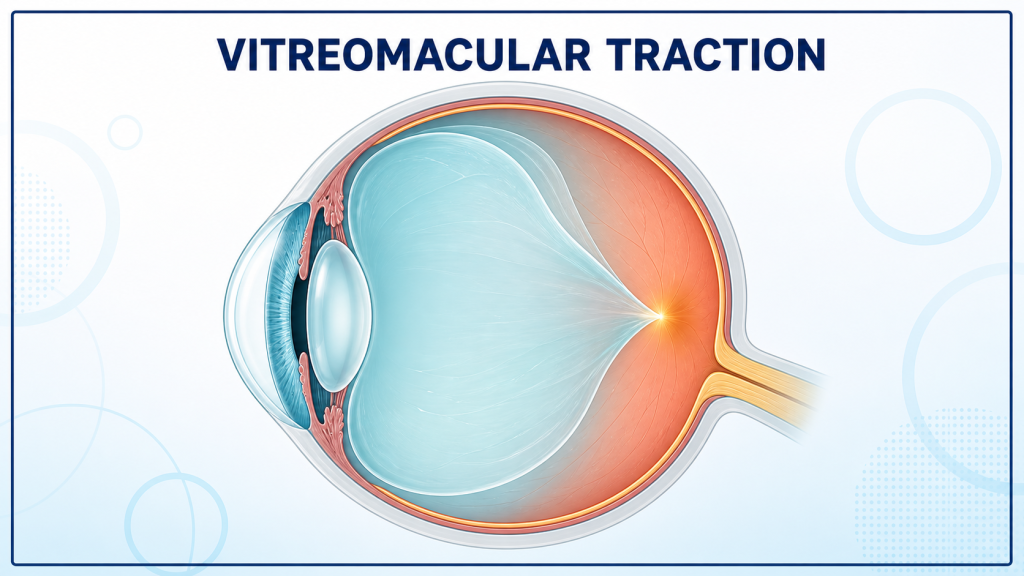
What is Vitreomacular Traction?
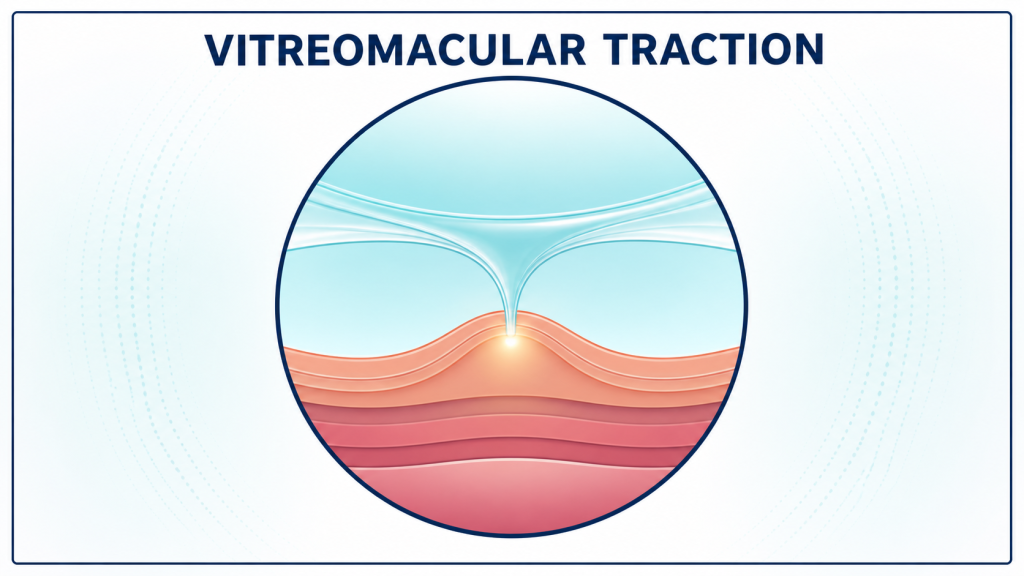
Vitreomacular traction (VMT) is an eye condition where the vitreous gel inside the eye partially detaches but remains stuck to the macula, the central part of the retina responsible for sharp, detailed vision. This pulling can distort or damage the macula, leading to vision problems.
What Are the Symptoms of Vitreomacular Traction?
Symptoms can vary depending on the severity and may include:
- Blurred or distorted central vision
- Straight lines appearing wavy or bent (metamorphopsia)
- Difficulty reading or seeing fine details
- A dark or gray spot in central vision
- Decreased visual acuity
What Causes Vitreomacular Traction?
VMT is caused by abnormal adhesion between the vitreous gel and the macula during the natural process of vitreous detachment, which typically occurs with aging. Factors contributing include:
- Age-related changes in the vitreous gel
- Eye trauma or injury
- Inflammation inside the eye
- Prior eye surgery or laser treatments
How is Vitreomacular Traction Diagnosed?
Diagnosis involves a detailed eye examination, including:
- Optical Coherence Tomography (OCT) — a key imaging test that provides cross-sectional images of the retina and vitreous to identify traction
- Fundus examination using a slit lamp or ophthalmoscope
- Visual acuity test to assess the impact on vision
How is Vitreomacular Traction Treated?
Treatment depends on symptoms and severity:
- Observation
- Mild cases without significant vision loss may be monitored closely as some resolve naturally
- Medications
- Enzymatic vitreolysis (e.g., ocriplasmin) may be used to dissolve vitreous adhesions in select cases
- Surgery
- Vitrectomy: a surgical procedure to remove the vitreous gel and relieve traction when vision is significantly affected
Complications of Untreated Vitreomacular Traction
If left untreated, VMT can lead to:
- Macular hole formation
- Permanent vision loss or distortion
- Retinal detachment in rare cases
Living with Vitreomacular Traction: Tips for Eye Health
- Attend regular eye exams to monitor changes
- Report new or worsening vision symptoms immediately
- Protect eyes from trauma and avoid eye strain
- Follow your ophthalmologist’s advice on treatment and follow-up