What Is Porokeratosis?
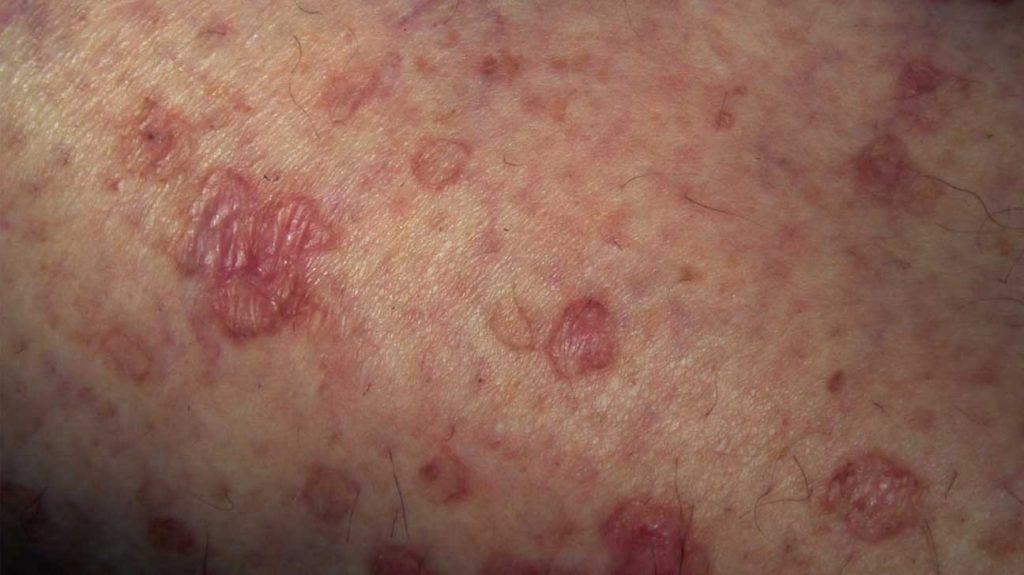
Porokeratosis is a group of rare skin disorders characterized by abnormal keratinization, leading to the development of lesions with a distinctive raised border known as a cornoid lamella. These lesions often appear as small, discolored patches that may enlarge over time. While generally benign, some forms carry a risk of malignant transformation.
What Are the Types of Porokeratosis?
Porokeratosis encompasses several clinical variants, each with unique features:
- Porokeratosis of Mibelli (PM): Typically arises in childhood or adolescence, presenting as annular plaques with elevated borders, often on the limbs or trunk. There is a risk of progression to squamous cell carcinoma.
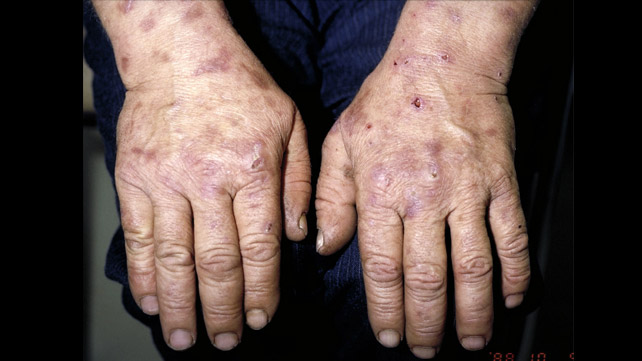
- Disseminated Superficial Actinic Porokeratosis (DSAP): The most common form, usually affecting adults with fair skin. Lesions appear on sun-exposed areas and may be itchy or asymptomatic.
- Linear Porokeratosis: Lesions follow a linear distribution, often along Blaschko’s lines. This type carries a higher risk of malignant transformation.
- Punctate Porokeratosis: Characterized by multiple small, seed-like lesions, primarily on the palms and soles.
- Porokeratosis Palmaris et Plantaris Disseminata: Involves widespread lesions on the palms and soles, which may extend to other body areas.
- Porokeratotic Eccrine Ostial and Dermal Duct Nevus (PEODDN): A congenital variant presenting as linear keratotic papules, often along Blaschko’s lines.
What Causes Porokeratosis?
The exact cause of porokeratosis remains unclear, but several factors have been implicated:
- Genetic predisposition: Some forms are inherited in an autosomal dominant pattern.
- Sun exposure: Ultraviolet (UV) radiation is a known trigger, especially for DSAP.
- Immunosuppression: Individuals with weakened immune systems, such as organ transplant recipients, are at increased risk.
- Trauma or skin injury: Physical injury to the skin may precipitate lesion development.
What Are the Symptoms of Porokeratosis?
Symptoms vary depending on the type but commonly include:
- Lesions with a raised, ridge-like border (cornoid lamella)
- Central area that may be atrophic, scaly, or discolored
- Itching or irritation, particularly in sun-exposed areas
- Lesions that slowly enlarge over time
In some cases, lesions may become painful or ulcerated, especially if malignant transformation occurs.
How Is Porokeratosis Diagnosed?
Diagnosis is primarily clinical, based on the characteristic appearance of lesions. Additional diagnostic methods include:
- Dermoscopy: Reveals specific patterns aiding in diagnosis.
- Skin biopsy: Confirms diagnosis by identifying the cornoid lamella, a histological hallmark.
- Genetic testing: May be considered in familial cases.
What Treatments Are Available for Porokeratosis?
Treatment aims to alleviate symptoms and reduce the risk of malignancy:
- Topical therapies: 5-fluorouracil, imiquimod, retinoids, or diclofenac may be applied to lesions.
- Cryotherapy: Freezing lesions with liquid nitrogen.
- Laser therapy: Ablative lasers can remove lesions.
- Photodynamic therapy: Involves applying a photosensitizing agent followed by light exposure.
- Surgical excision: Reserved for lesions with suspected malignancy.
Regular follow-up with a dermatologist is essential to monitor for changes suggestive of cancerous transformation.
What Is the Prognosis for Porokeratosis?
The prognosis varies:
- Benign forms: Often persist without significant progression.
- Risk of malignancy: Certain types, like linear porokeratosis and porokeratosis of Mibelli, have a higher risk of developing into squamous cell carcinoma.
Early detection and management are crucial to prevent complications.
When Should One Seek Medical Attention for Porokeratosis?
Consult a healthcare provider if you notice:
- New or changing skin lesions with raised borders
- Lesions that itch, bleed, or become painful
- Rapidly enlarging lesions