


What is a Lower Motor Neuron Lesion?
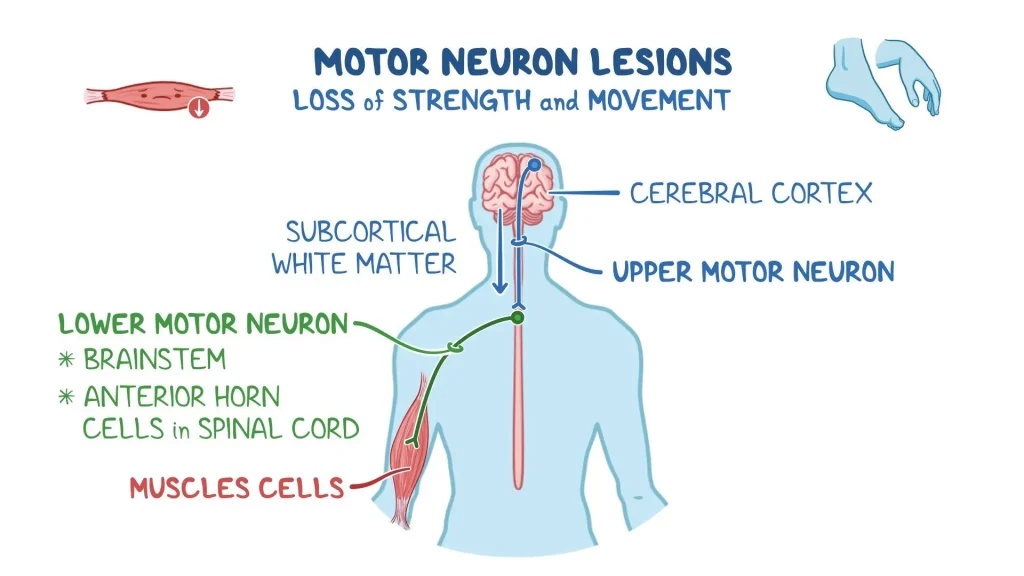
A lower motor neuron (LMN) lesion refers to damage or injury to the motor neurons located in the spinal cord or brainstem. These neurons are responsible for transmitting signals from the brain and spinal cord to the muscles, allowing movement. When these neurons are affected, it leads to muscle weakness or paralysis and other motor-related symptoms.
The lesion can occur at any point along the motor pathway, from the spinal cord to the neuromuscular junction and the muscles themselves. LMN lesions are typically associated with disorders that affect the anterior horn cells, spinal nerves, or cranial nerves.
Causes of Lower Motor Neuron Lesion?
There are several conditions that can lead to lower motor neuron lesions, including:
1. Spinal Cord Injury?
Damage to the spinal cord, such as from an accident or trauma, can disrupt the signals traveling from the brain to the muscles. Depending on the level and extent of the injury, a lower motor neuron lesion can result in paralysis or muscle weakness below the site of injury.
2. Amyotrophic Lateral Sclerosis (ALS)?
ALS, also known as Lou Gehrig’s disease, is a progressive neurodegenerative condition that affects both the upper and lower motor neurons. In ALS, the lower motor neurons in the spinal cord degenerate, leading to muscle weakness, atrophy, and eventual paralysis.
3. Poliomyelitis (Polio)?
Polio is a viral infection that can damage the lower motor neurons, leading to muscle weakness, atrophy, and paralysis. Though largely eradicated in many parts of the world, polio was a significant cause of LMN lesions in the past.
4. Guillain-Barré Syndrome (GBS)?
GBS is an autoimmune disorder where the immune system attacks the peripheral nervous system, including the lower motor neurons. This results in muscle weakness, paralysis, and loss of reflexes. It often follows an infection, such as a viral illness.
5. Peripheral Neuropathy?
Conditions such as diabetes and autoimmune disorders can lead to peripheral neuropathy, where the peripheral nerves that carry signals from the spinal cord to the muscles become damaged. This can result in LMN lesions.
6. Radiculopathy?
Radiculopathy occurs when a nerve root is compressed or irritated, often due to a herniated disc or spinal stenosis. Compression of the nerve roots can lead to LMN signs, including muscle weakness, numbness, and pain along the affected nerve distribution.
7. Muscular Dystrophy?
Muscular dystrophies are a group of genetic disorders that cause progressive muscle weakness and degeneration. In certain types, such as Duchenne muscular dystrophy, there is damage to the motor neurons, resulting in LMN dysfunction.
8. Trauma or Injury to the Nerve?
Physical trauma, such as fractures, dislocations, or penetrating injuries, can lead to direct damage to the motor neurons, resulting in LMN lesions. These injuries disrupt the transmission of nerve signals to the muscles, leading to muscle weakness or paralysis.
9. Infections?
Certain infections, such as herpes zoster (shingles) and cytomegalovirus (CMV), can affect the lower motor neurons, leading to conditions like post-polio syndrome or neuropathy, causing muscle weakness and atrophy.
10. Tumors?
Tumors or lesions that compress or invade the spinal cord or the nerves can lead to LMN lesions. Tumors located along the spinal column or in the brainstem may directly damage motor neurons and interfere with normal muscle function.
11. Vitamin Deficiencies?
Certain vitamin deficiencies, particularly those involving vitamin B12 or vitamin E, can result in damage to the peripheral nerves, leading to LMN signs. These deficiencies can disrupt the transmission of nerve impulses, causing weakness and numbness in the limbs.
Symptoms of Lower Motor Neuron Lesion?
The symptoms of a lower motor neuron lesion depend on the location and severity of the injury, but common signs include:
1. Muscle Weakness?
Damage to the lower motor neurons leads to muscle weakness, which may be localized or generalized, depending on the area affected. The weakness is typically flaccid, meaning the muscles are loose and lack tone.
2. Muscle Atrophy?
As the motor neurons degenerate, the affected muscles can begin to shrink or waste away. This process is known as muscle atrophy, and it is often progressive, worsening over time if the underlying condition is not treated.
3. Hyporeflexia?
A common feature of lower motor neuron lesions is hyporeflexia, or the loss of deep tendon reflexes. For example, the knee jerk reflex may be diminished or absent when tested with a reflex hammer.
4. Fasciculations?
Fasciculations are involuntary muscle twitches or contractions that occur in the affected muscles. These are often visible under the skin and are a hallmark of lower motor neuron involvement.
5. Flaccid Paralysis?
In severe cases, the muscles controlled by the damaged lower motor neurons can become paralyzed. This leads to flaccid paralysis, which results in the inability to move the affected body part voluntarily.
6. Muscle Cramps?
People with lower motor neuron lesions may experience painful muscle cramps, especially in the affected limbs.
7. Decreased Muscle Tone?
The muscles may feel soft or floppy due to the lack of normal nerve stimulation. This is in contrast to upper motor neuron lesions, where the muscles may feel stiff or spastic.
8. Loss of Coordination?
In cases where the lower motor neurons control important movements, individuals may experience a loss of coordination or difficulty performing everyday tasks.
Diagnosis of Lower Motor Neuron Lesion?
The diagnosis of a lower motor neuron lesion typically involves a thorough evaluation, including:
1. Medical History?
A healthcare provider will begin by reviewing the patient’s medical history, including any previous injuries, infections, or family history of neurological disorders. Symptoms such as weakness, atrophy, or fasciculations will be noted.
2. Physical and Neurological Examination?
A neurological exam is crucial for assessing motor strength, reflexes, and coordination. The physician will test for hyporeflexia, muscle weakness, and other LMN signs.
3. Electromyography (EMG)?
An EMG is a test that measures the electrical activity of muscles. It can help assess the function of the motor neurons and detect abnormalities in nerve transmission.
4. Nerve Conduction Studies (NCS)?
Nerve conduction studies measure how well and how fast electrical signals travel through the nerves. They can help pinpoint the location and extent of the damage to the lower motor neurons.
5. MRI or CT Scan?
If a spinal cord injury, tumor, or other anatomical abnormality is suspected, an MRI or CT scan may be performed. These imaging tests can reveal structural issues that may be affecting the motor neurons.
6. Blood Tests?
Blood tests may be conducted to check for conditions that could be contributing to the nerve damage, such as diabetes, vitamin deficiencies, or autoimmune disorders.
7. Genetic Testing?
If a genetic disorder like muscular dystrophy or ALS is suspected, genetic testing may be recommended to confirm the diagnosis.
Treatment of Lower Motor Neuron Lesion?
Treatment for lower motor neuron lesions depends on the underlying cause, but general approaches include:
1. Medications?
- Pain relief: Non-steroidal anti-inflammatory drugs (NSAIDs) or other pain medications may be prescribed to manage discomfort from muscle cramps or spasms.
- Muscle relaxants: Drugs like baclofen or tizanidine may help manage spasticity or cramps, although they are more commonly used for upper motor neuron lesions.
- Immunotherapy: For autoimmune conditions like Guillain-Barré syndrome, treatments such as plasma exchange or immunoglobulin therapy may be used.
2. Physical Therapy?
- Physical therapy is essential for improving strength, coordination, and mobility. It can also help prevent muscle contractures and atrophy.
- Occupational therapy may also be recommended to assist with activities of daily living and improve quality of life.
3. Surgical Intervention?
If the lesion is caused by a compression (e.g., due to a herniated disc or tumor), surgery may be required to relieve the pressure on the spinal cord or nerves.
4. **Supportive Care?
Supportive Care is treatment that helps relieve symptoms, improve comfort, and maintain quality of life without directly curing the disease.
Example: Pain relief, hydration, nutrition support, oxygen therapy, and emotional support.
