


What is Zinc-Coated Medical Device Reaction?
Zinc-coated medical device reaction is an adverse response of the body to medical implants or devices coated with zinc, resulting in localized or systemic inflammation, allergic symptoms, or tissue irritation.
What Causes Zinc-Coated Medical Device Reaction?
- Allergic Sensitivity to Zinc – Immune system reaction to zinc exposure.
- Zinc Leaching from Devices – Releasing zinc ions into surrounding tissues.
- Pre-existing Metal Allergies – Increasing the risk of device-related reactions.
- Prolonged Contact with Zinc-Coated Surfaces – Leading to irritation or hypersensitivity.
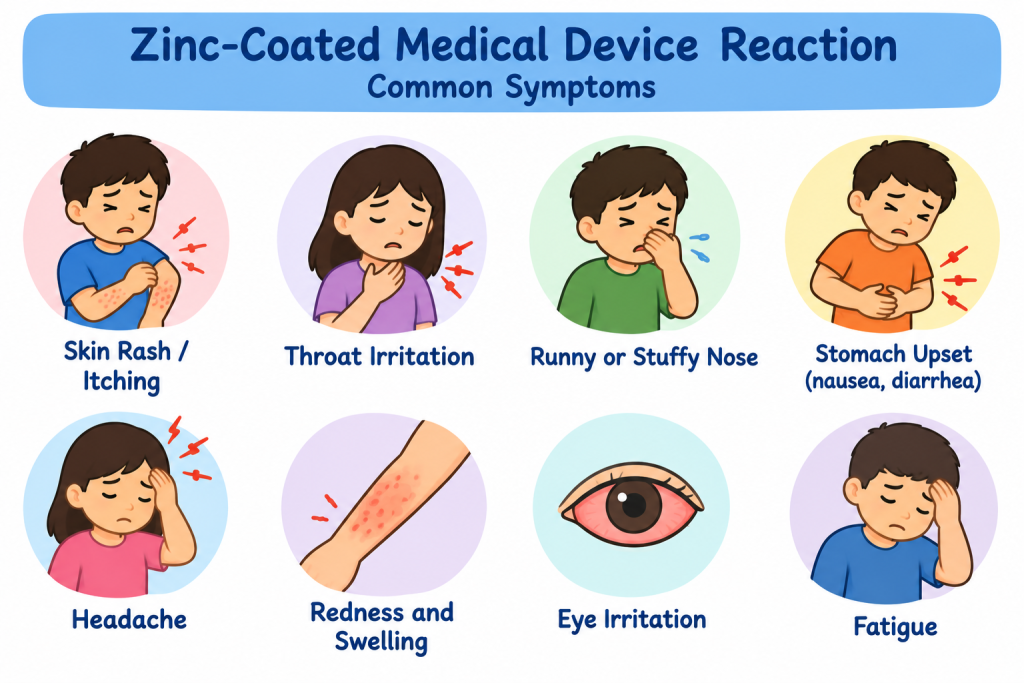
What Are the Symptoms of Zinc-Coated Medical Device Reaction?
- Local redness, swelling, or pain around the implant site
- Rash or itching
- Delayed wound healing
- Warmth or discomfort at the device location
- Systemic symptoms like fatigue or malaise in rare cases
How is Zinc-Coated Medical Device Reaction Diagnosed?
- Clinical Evaluation – Examining symptoms near the device site.
- Patch Testing – To assess zinc or metal hypersensitivity.
- Imaging Studies – To check for inflammation or tissue response.
- Histopathology – In cases requiring biopsy near the implant.
How is Zinc-Coated Medical Device Reaction Treated?
- Removal or Replacement of the Device – If reaction is severe.
- Topical or Systemic Steroids – To reduce inflammation.
- Antihistamines – For allergic symptoms.
- Wound Care and Monitoring – To ensure proper healing.
Prognosis of Zinc-Coated Medical Device Reaction
Mild reactions often resolve with treatment. Severe or persistent cases may require removal of the device for full recovery.
Can Zinc-Coated Medical Device Reaction Be Prevented?
- Pre-Procedure Allergy Testing
- Use of Alternative Materials in Sensitive Individuals
- Monitoring After Implantation
- Informing Healthcare Providers of Known Metal Allergies
