


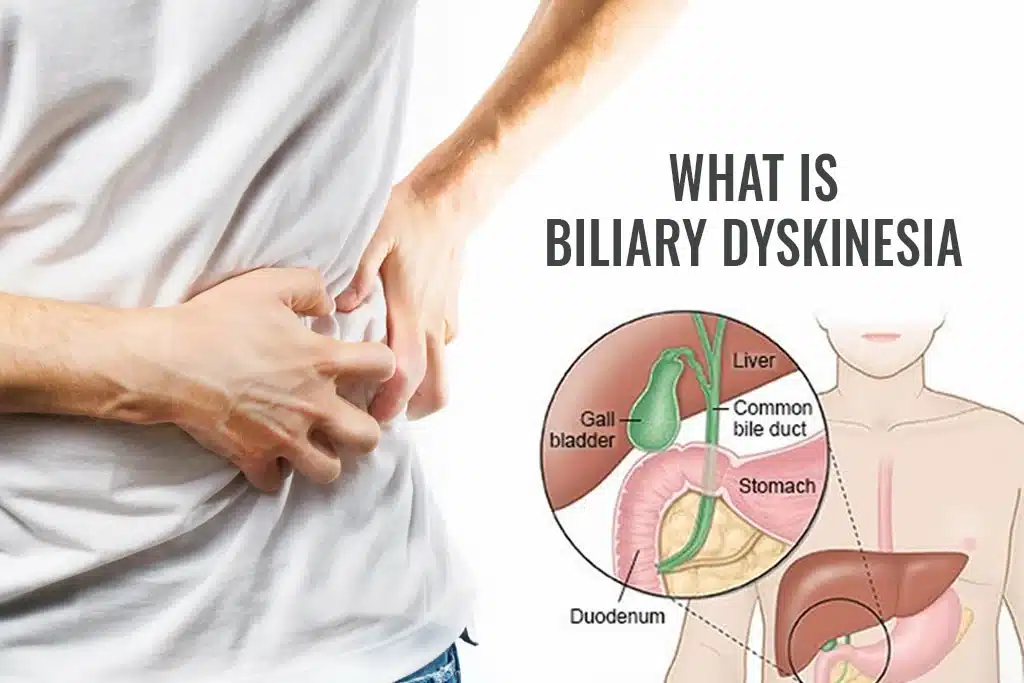
What Is Biliary Dyskinesia?
• A disorder affecting the normal movement (motility) of the gallbladder
• Gallbladder doesn’t empty properly, leading to pain and digestion issues
• No gallstones are present
• Considered a functional gallbladder disorder
What Causes It?
• Abnormal gallbladder muscle contractions
• Hormonal imbalances
• Nerve dysfunction affecting bile flow
• Unknown in many cases
What Are the Symptoms?
• Upper right abdominal pain (especially after eating fatty foods)
• Nausea or vomiting
• Bloating
• Indigestion
• Pain that comes and goes, may last for hours
• No visible stones on imaging
How Is It Diagnosed?
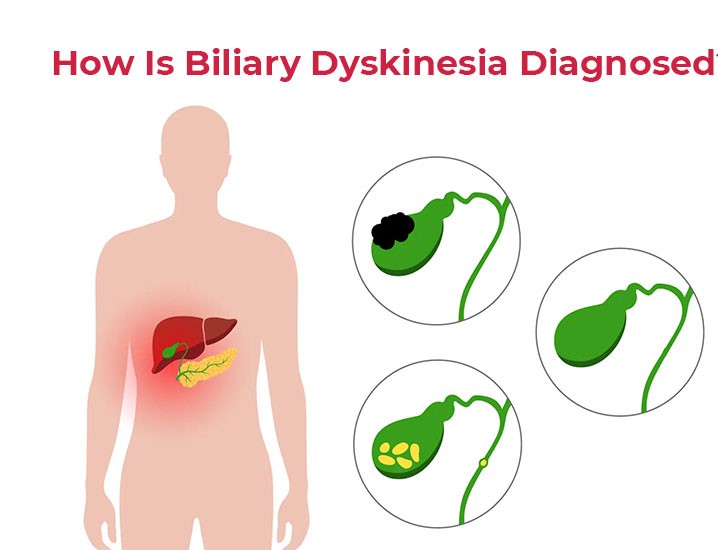
• Ultrasound to rule out gallstones
• HIDA scan (Hepatobiliary Iminodiacetic Acid scan) to check gallbladder function
• Ejection fraction below 35% on HIDA scan may indicate biliary dyskinesia
• Blood tests to rule out liver or pancreatic issues
What Is the Treatment?
• Low-fat diet
• Pain management
• Medications to improve gallbladder motility (in some cases)
• Cholecystectomy – surgical removal of the gallbladder if symptoms are severe or persistent
What Are the Risk Factors?
• Female gender
• Age 20–50
• Obesity
• Family history of gallbladder disease
• History of rapid weight loss
Can It Be Prevented?
• Eating a healthy, balanced diet
• Avoiding rapid weight loss
• Managing cholesterol and fat intake
• Regular physical activity
When to See a Doctor?
• Persistent or recurring upper abdominal pain
• Nausea and vomiting after meals
• Pain with no clear cause and normal imaging
• Symptoms interfere with daily life or eating
