


What are Urinary Calculi?
Urinary calculi, also known as urinary stones or urolithiasis, are hard, crystalline mineral deposits that form in the urinary tract. These stones can develop in the kidneys, ureters, bladder, or urethra, and they can vary in size from tiny grains to large masses. While some stones pass without issues, others can cause severe pain, blockages, or infections.
What Causes Urinary Calculi?
Stones form when minerals in the urine become concentrated and crystallize. Possible causes include:
- Dehydration – Not drinking enough water leads to concentrated urine.
- High Mineral Intake – Diets high in calcium, oxalate, or uric acid can increase risk.
- Urinary Tract Infections (UTIs) – Certain bacteria can promote stone formation.
- Metabolic Disorders – Conditions like hyperparathyroidism or gout.
- Family History – Genetic predisposition can play a role.
- Obstruction – Structural abnormalities in the urinary tract can promote stone formation.
- Medications – Some drugs may increase the risk of stones.
Types of Urinary Calculi
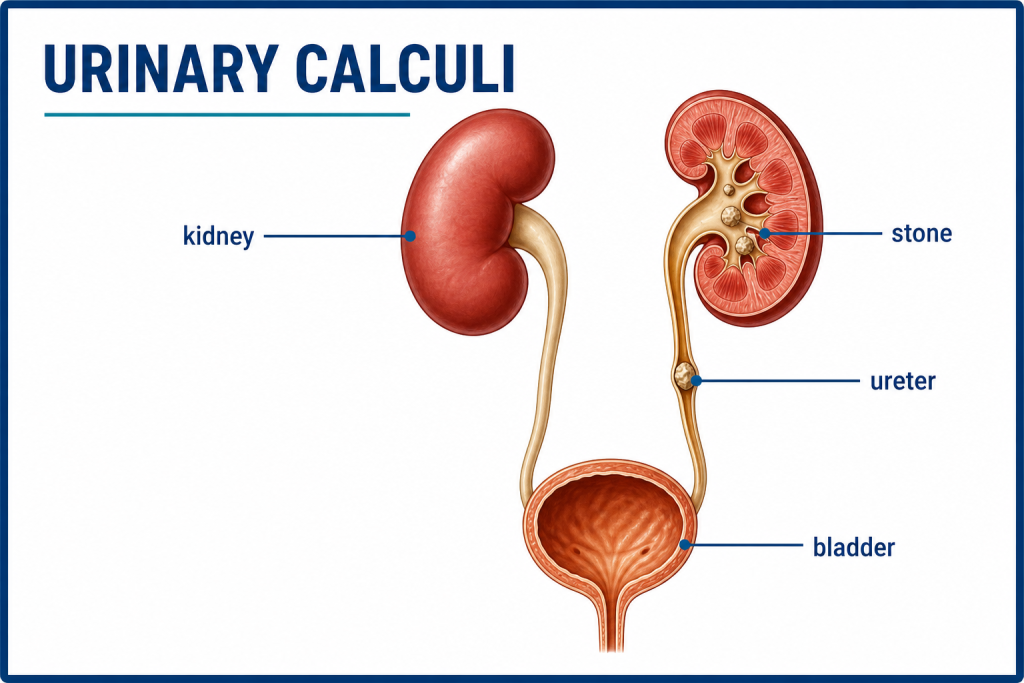
The main types of urinary stones include:
- Calcium Oxalate Stones – Most common; formed when calcium combines with oxalate.
- Calcium Phosphate Stones – Associated with certain metabolic conditions.
- Uric Acid Stones – More common in people with gout or high-purine diets.
- Struvite Stones – Often caused by UTIs, more common in women.
- Cystine Stones – Rare and related to a hereditary condition called cystinuria.
Symptoms of Urinary Calculi
Symptoms may vary depending on the stone’s size and location:
- Sudden, severe pain in the back, side, abdomen, or groin (renal colic)
- Painful or burning urination
- Blood in the urine (hematuria)
- Frequent or urgent need to urinate
- Nausea and vomiting
- Fever and chills (if an infection is present)
- Difficulty passing urine if the stone blocks the flow
How are Urinary Calculi Diagnosed?
Diagnosis usually involves:
- Medical History and Physical Exam – Helps identify symptoms and risk factors.
- Urinalysis – Detects blood, crystals, or infection.
- Blood Tests – Check for kidney function and mineral levels.
- Imaging Tests – Ultrasound, X-ray, or CT scan can locate and size the stone.
- Stone Analysis – If the stone is passed, it may be tested to determine its type.
How are Urinary Calculi Treated?
Treatment depends on the size, type, and location of the stone:
For Small Stones:
- Increased fluid intake to help flush out the stone
- Pain relievers (NSAIDs or prescription medication)
- Alpha-blockers to relax the ureters and aid stone passage
For Larger or Problematic Stones:
- Extracorporeal Shock Wave Lithotripsy (ESWL) – Breaks stones into smaller pieces using sound waves
- Ureteroscopy – A scope inserted through the urethra to remove or break up the stone
- Percutaneous Nephrolithotomy – Surgery to remove large stones through a small incision in the back
- Open Surgery – Rarely needed, used in complex cases
Infection-Related Stones:
- May require antibiotics and surgical removal
Prognosis of Urinary Calculi
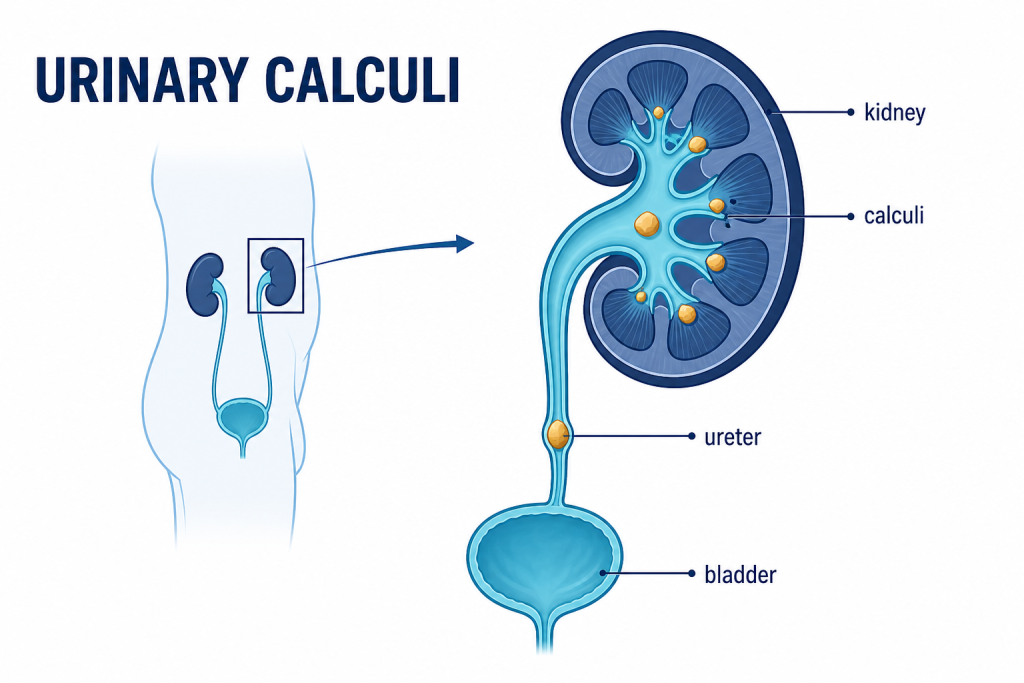
- Most stones pass on their own with proper hydration.
- Recurrence is common, especially without preventive measures.
- With appropriate treatment, long-term outcomes are generally good.
- Large or untreated stones can lead to complications like kidney damage or infections.
Can Urinary Calculi Be Prevented?
Yes, many stones can be prevented with lifestyle changes:
- Stay Hydrated – Drink plenty of water throughout the day.
- Dietary Adjustments – Limit salt, reduce oxalate-rich foods (like spinach), and avoid excessive protein.
- Medications – For those with recurrent stones, specific medications may help prevent new ones.
- Regular Monitoring – Especially if you have a history of stones.
When Should You See a Doctor?
Seek medical attention if you experience:
- Severe or persistent abdominal, side, or back pain
- Blood in your urine
- Painful urination
- Fever or chills
- Nausea or vomiting with pain
- Inability to urinate or pass a stone
