


What is Obliterative Vasculopathy?
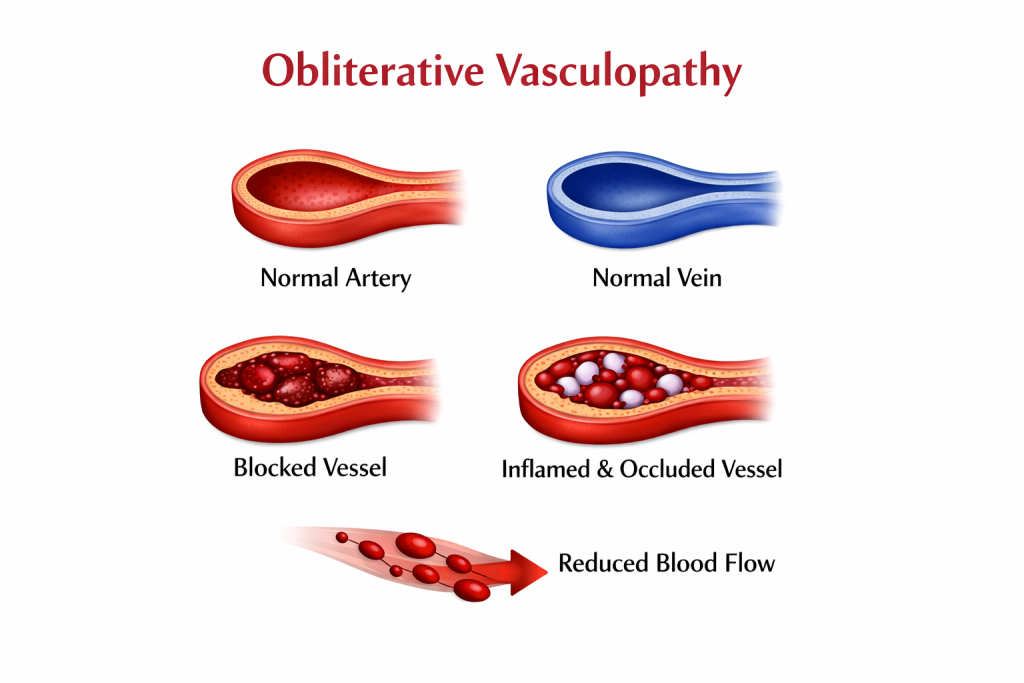
Obliterative vasculopathy is a condition where small to medium-sized blood vessels become inflamed and narrowed or completely blocked, often due to immune system activity or chronic injury. This blockage can reduce or cut off blood supply to tissues, leading to tissue damage, ulcers, or organ dysfunction. It may be seen in autoimmune diseases, chronic transplant rejection, infections, or radiation injury.
What causes obliterative vasculopathy to develop in blood vessels?
This condition results from persistent inflammation or immune-related injury to the blood vessels, leading to thickening of the vessel walls, fibrosis, and eventual narrowing or occlusion.
Causes of Obliterative Vasculopathy?
Obliterative vasculopathy can be triggered by several underlying conditions or exposures, including:
- Autoimmune Diseases – Conditions like systemic lupus erythematosus (SLE), systemic sclerosis, or vasculitis can cause immune attacks on blood vessels.
- Chronic Organ Transplant Rejection – Especially in heart and kidney transplants, immune-mediated damage may gradually close blood vessels in the graft.
- Infections – Certain chronic or severe infections (e.g., cytomegalovirus) can damage vascular walls and lead to vessel closure.
- Radiation Therapy – Radiation used in cancer treatment may damage vessels over time.
- Drug Reactions or Toxins – Certain drugs or toxic exposures may result in chronic vessel injury.
Can autoimmune conditions directly lead to obliterative vasculopathy?
Yes, autoimmune diseases are among the most common causes of this condition due to chronic inflammation and immune system targeting of vessels.
Who is at Risk?
The risk of developing obliterative vasculopathy increases in individuals with:
- Autoimmune or connective tissue diseases
- Organ transplant recipients (especially long-term)
- History of receiving radiation therapy
- Chronic or recurring viral infections
- Long-term exposure to vessel-toxic medications
- Genetic or vascular disorders
Are transplant patients more prone to this condition?
Yes, especially in chronic rejection, transplant recipients may develop obliterative vasculopathy in the graft’s blood vessels.
Symptoms of Obliterative Vasculopathy?

Symptoms depend on which organs or tissues are affected by reduced blood flow. Common signs include:
- Skin Ulcers or Discoloration – Especially in fingers, toes, or lower limbs
- Cold or Numb Extremities – Due to poor circulation
- Organ Dysfunction – Kidney, lung, or heart issues if internal organs are involved
- Pain or Cramping – Particularly during activity (claudication)
- Delayed Wound Healing – Persistent sores due to poor tissue perfusion
How can you recognize early symptoms of vascular blockage in this condition?
Skin changes, cold extremities, and non-healing sores may be early warning signs, especially in at-risk individuals.
Health Risks and Complications?
If untreated, obliterative vasculopathy can cause:
- Tissue Necrosis – From prolonged lack of oxygen and nutrients
- Organ Failure – Due to damage in the heart, kidneys, lungs, or brain
- Chronic Ulcers – Especially in limbs, increasing risk of infection
- Amputation – In severe cases with tissue death
- Poor Graft Survival – In organ transplant patients
What complications can arise if the disease is not addressed early?
Permanent tissue or organ damage may occur, leading to disability or life-threatening outcomes.
Diagnosis of Obliterative Vasculopathy?
Diagnosing obliterative vasculopathy involves a combination of clinical evaluation and testing:
- Medical History and Physical Exam – To assess symptoms and identify risk factors
- Blood Tests – To check for inflammation or autoimmune activity
- Imaging Studies – Doppler ultrasound, CT angiography, or MRI to evaluate blood flow
- Biopsy – Tissue samples may be needed to confirm vessel narrowing or inflammation
- Organ Function Tests – Such as kidney, heart, or lung evaluations based on symptoms
Which diagnostic tools are most helpful in confirming obliterative vasculopathy?
Imaging combined with tissue biopsy is often key to diagnosis.
Treatment of Obliterative Vasculopathy?
Treatment depends on the underlying cause and the severity of vessel damage. Common approaches include:

Medications
- Immunosuppressive Drugs – Corticosteroids or other agents to reduce immune attack
- Antiplatelet or Anticoagulant Therapy – To prevent further vessel blockage
- Vasodilators – To help improve blood flow
- Antibiotics or Antivirals – If infection is involved
Lifestyle and Supportive Measures
- Wound Care – For ulcers or skin breakdown
- Smoking Cessation – To improve circulation
- Physical Therapy – If limb function is affected
Surgical Interventions
- Revascularization – Bypass or angioplasty to restore blood flow
- Amputation – In extreme cases with severe tissue death
What are the main goals of treatment in this condition?
To reduce immune damage, restore blood flow, and prevent tissue or organ loss.
Prevention of Obliterative Vasculopathy?
While not always preventable, certain steps can reduce risk:
- Manage Autoimmune Diseases Promptly – Early treatment reduces vessel damage
- Adhere to Transplant Follow-Up – To monitor and prevent graft vasculopathy
- Protect Against Infections – Especially in immunocompromised individuals
- Avoid Smoking and Toxins – These can worsen vascular health
- Monitor Vascular Health – Regular check-ups if at high risk
Can early intervention in autoimmune or transplant care help prevent this disease?
Yes, early and consistent management greatly reduces risk and severity.
When to See a Doctor?
Seek medical care if you notice:
- Persistent or worsening ulcers or wounds
- Numbness or coldness in fingers or toes
- Unexplained fatigue or organ dysfunction
- Symptoms of chronic graft rejection
- Skin color changes, especially with pain
Why is timely evaluation important in suspected vasculopathy?
Because delayed treatment can lead to irreversible tissue or organ damage.
