What is Pyoderma Gangrenosum?
Pyoderma gangrenosum (PG) is a rare, inflammatory skin condition characterized by painful, rapidly progressing ulcers with irregular, undermined borders. It is not caused by infection despite the name “pyoderma” and is considered an autoimmune or autoinflammatory disorder. PG often occurs alongside systemic diseases like inflammatory bowel disease, arthritis, or blood disorders.
What Causes Pyoderma Gangrenosum?
The exact cause of PG is unknown, but it involves an abnormal immune system response leading to excessive inflammation and skin tissue destruction. Common associated conditions include:
- Inflammatory bowel diseases (Crohn’s disease, ulcerative colitis)
- Rheumatoid arthritis and other autoimmune diseases
- Blood disorders such as leukemia
- Sometimes triggered by skin trauma or surgery (pathergy phenomenon)
What Are the Symptoms of Pyoderma Gangrenosum?
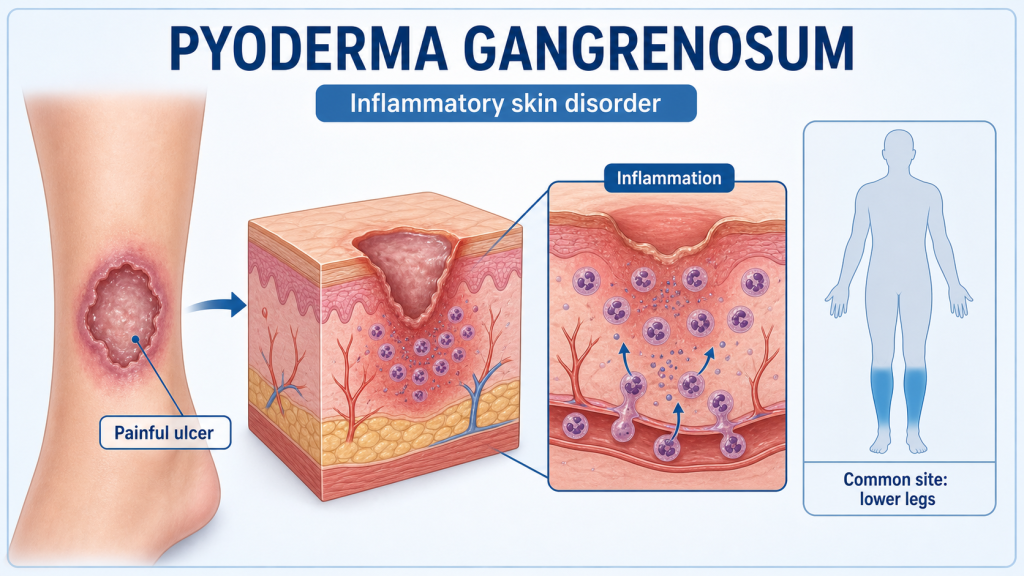
Symptoms typically start as small red bumps or pustules that rapidly break down to form painful ulcers. Other features include:
- Painful ulcers with purple or blue edges
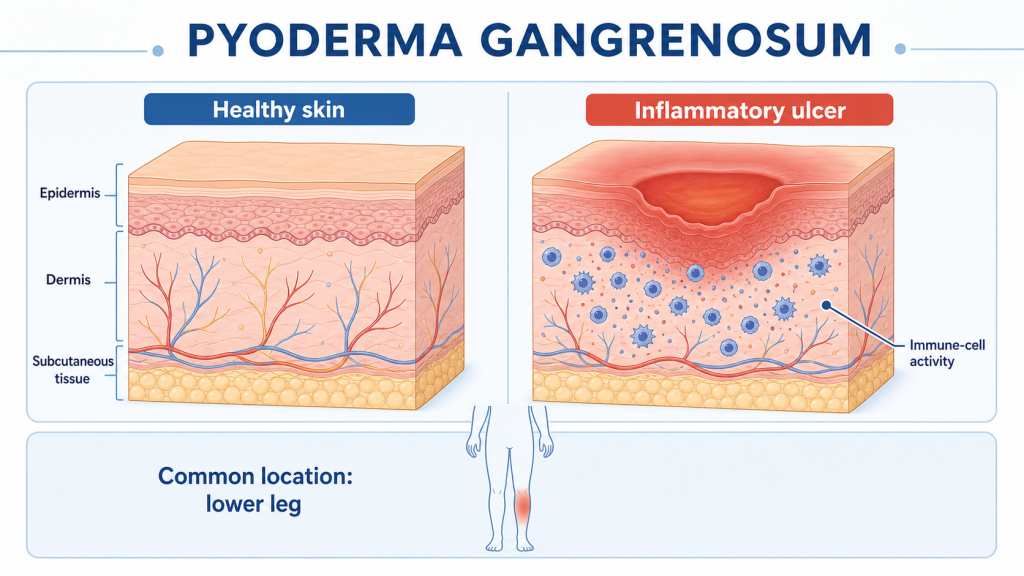
- Ulcers commonly appear on the legs but can affect any skin area
- Swelling and redness around the ulcers
- Fever and malaise in severe cases
- New ulcers may develop at sites of minor skin injury
How Is Pyoderma Gangrenosum Diagnosed?
Diagnosis is clinical and involves:
- Detailed medical history and physical exam
- Exclusion of infections, vascular diseases, and other causes of ulcers
- Skin biopsy to rule out other conditions (shows neutrophilic inflammation but no infection)
- Blood tests to check for underlying systemic diseases
- Imaging or specialist referrals as needed based on associated conditions
What Are the Treatment Options for Pyoderma Gangrenosum?
Treatment focuses on controlling inflammation and managing symptoms:
- Medications:
- Corticosteroids (topical, oral, or injectable) to reduce inflammation
- Immunosuppressive drugs such as cyclosporine, tacrolimus, or mycophenolate
- Biologic therapies (e.g., TNF inhibitors) for severe or resistant cases
- Wound care:
- Gentle cleaning and dressings to protect ulcers without causing trauma
- Pain management
- Treating underlying conditions:
- Managing associated diseases like inflammatory bowel disease or arthritis improves PG outcomes
What Is the Prognosis for Pyoderma Gangrenosum?
PG can be chronic and recurrent but often responds well to treatment. Early diagnosis and proper management reduce complications such as infection and scarring. Some cases may require long-term therapy or specialist care.
How Can Pyoderma Gangrenosum Be Managed Long-Term?
- Regular follow-up with dermatologists and specialists managing associated diseases
- Avoiding skin trauma to prevent new ulcers
- Prompt treatment of new lesions
- Supportive care for wound healing and pain relief
When Should I See a Doctor?
Seek medical advice if you notice:
- Rapidly worsening painful skin ulcers
- New ulcers appearing after minor injuries
- Signs of infection like increased redness, swelling, or fever
- Existing autoimmune or systemic diseases with new skin problems