


What is an Aortic Aneurysm?
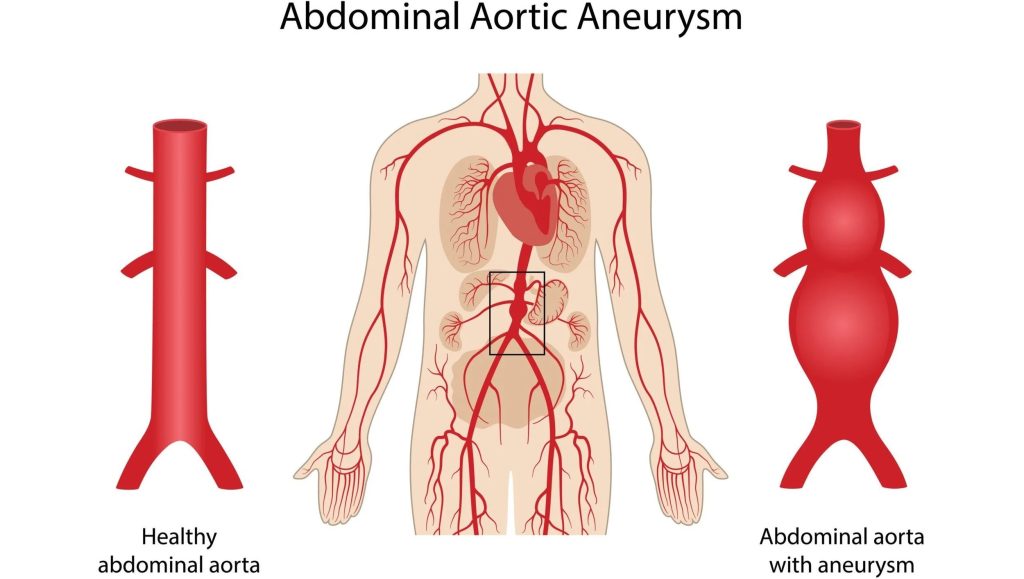
An aortic aneurysm is an abnormal bulging or dilation in the wall of the aorta, the largest blood vessel in the body. The aorta carries blood from the heart to the rest of the body, and an aneurysm in this vessel can be life-threatening if it ruptures. The condition is typically categorized based on its location: thoracic aortic aneurysm (occurs in the chest) and abdominal aortic aneurysm (occurs in the abdomen). Both types can be dangerous, but abdominal aortic aneurysms are more common.
Aortic aneurysms often develop slowly over time and may not present symptoms until they are large or rupture, making regular screening important for individuals at risk.

What Causes Aortic Aneurysm?
1. High Blood Pressure (Hypertension)
- High blood pressure can put strain on the aorta, causing it to weaken and eventually form an aneurysm. Over time, the wall of the aorta may stretch and bulge under the pressure.
2. Atherosclerosis
- Atherosclerosis, or the buildup of plaque (cholesterol, fat, and other substances) in the arteries, is another leading cause of aortic aneurysms. Plaque buildup can damage the aortic wall, making it more likely to form an aneurysm.
3. Genetic Factors
- Certain genetic conditions, such as Marfan syndrome, Ehlers-Danlos syndrome, and Loeys-Dietz syndrome, can weaken the connective tissue in the aorta, increasing the risk of developing an aneurysm.
4. Family History
- Having a close family member who has had an aortic aneurysm increases the likelihood of developing one. Family history is a key risk factor for aneurysms.
5. Age and Gender
- Aortic aneurysms are more common in older adults, particularly those aged 65 and older. Men are at a higher risk than women, especially for abdominal aortic aneurysms.
6. Smoking
- Smoking is a major risk factor for the development of aortic aneurysms. The chemicals in tobacco can damage blood vessels and increase the risk of aneurysm formation, especially in the abdominal aorta.
7. Trauma or Injury
- Physical trauma or injury to the chest or abdomen can damage the aorta and increase the likelihood of an aneurysm.
8. Infections
- In rare cases, an aortic aneurysm can develop as a result of infection (infectious aneurysm). Certain infections, like syphilis or endocarditis, can weaken the aortic wall and cause it to form an aneurysm.
9. Connective Tissue Disorders
- Disorders that affect connective tissue, like Marfan syndrome or Ehlers-Danlos syndrome, can make the walls of the aorta more fragile and prone to bulging.

Types of Aortic Aneurysm
- Thoracic Aortic Aneurysm (TAA):
- Occurs in the portion of the aorta located in the chest.
- Less common than abdominal aortic aneurysms.
- May be asymptomatic for a long time, but larger aneurysms may cause chest pain, back pain, or difficulty breathing.
- Abdominal Aortic Aneurysm (AAA):
- Occurs in the portion of the aorta that runs through the abdomen.
- More common than thoracic aortic aneurysms.
- Often found incidentally during tests for other conditions, but large aneurysms may cause pain or a pulsing sensation in the abdomen.
- Thoracoabdominal Aortic Aneurysm:
- A rare condition that involves both the thoracic and abdominal sections of the aorta.
Symptoms of Aortic Aneurysm
In many cases, aortic aneurysms may not present symptoms until they become large or rupture. When symptoms do appear, they may vary depending on the location of the aneurysm:
1. Thoracic Aortic Aneurysm (TAA) Symptoms:
- Chest pain: A sudden, sharp, or deep pain in the chest.
- Back pain: Discomfort in the upper or middle back.
- Shortness of breath: Difficulty breathing or a feeling of pressure in the chest.
- Coughing or hoarseness: Difficulty breathing due to pressure on the windpipe.
- Difficulty swallowing: When the aneurysm presses on the esophagus.
- Fainting or dizziness: If the aneurysm causes blood flow changes in the brain.
2. Abdominal Aortic Aneurysm (AAA) Symptoms:
- Abdominal pain: A deep, constant pain in the abdomen or lower back.
- Pulsating sensation: Feeling a pulsing in the abdomen, which may be noticed when touching the area.
- Pain in the back or sides: Especially if the aneurysm is large or has ruptured.
- Shock: In case of rupture, symptoms like low blood pressure, rapid heart rate, and weak pulse may occur.
3. Ruptured Aneurysm Symptoms:
- Sudden severe pain: The pain may be sharp and intense, typically in the chest, abdomen, or back.
- Loss of consciousness: Due to a sudden drop in blood pressure.
- Nausea and vomiting: Often occurring with a rupture.
- Cold, clammy skin: Due to shock.

How is Aortic Aneurysm Diagnosed?
Early detection of an aortic aneurysm is crucial to prevent rupture. Diagnosis typically involves:
1. Medical History and Physical Exam
- Your doctor will ask about your medical history, risk factors, and symptoms. A physical exam may also reveal a pulsating mass in the abdomen (in case of an abdominal aneurysm).
2. Imaging Tests
Imaging tests are the most effective way to diagnose an aortic aneurysm and monitor its size and growth:
- Ultrasound: The most common test used for abdominal aortic aneurysms. It is non-invasive and can measure the size of the aneurysm.
- CT Scan: A computed tomography (CT) scan with contrast dye can provide detailed images of the aorta and is often used to assess the size of the aneurysm and plan for surgery.
- MRI: Magnetic resonance imaging (MRI) may also be used to obtain detailed images of the aorta, especially for thoracic aortic aneurysms.
- X-ray: An X-ray may show signs of an aneurysm, though it is not as detailed as other imaging methods.
3. Echocardiogram
- If the aneurysm is located in the thoracic area near the heart, an echocardiogram may be used to check for dilation or other abnormalities of the aorta.
Treatment for Aortic Aneurysm
1. Monitoring
- Small aneurysms (less than 5 cm) may not require immediate treatment. Regular monitoring through imaging tests, usually every 6 to 12 months, is recommended to track the aneurysm’s growth.
2. Medications
- Blood pressure medications: Control of high blood pressure is crucial to slow the growth of the aneurysm and reduce the risk of rupture. Medications like beta-blockers and angiotensin-converting enzyme (ACE) inhibitors may be prescribed.
- Statins: Cholesterol-lowering medications may be prescribed to reduce the risk of atherosclerosis and further damage to the aorta.
3. Surgery
If the aneurysm is large or rapidly growing, or if it has ruptured, surgical intervention may be necessary:
- Open surgery: The aneurysm is surgically repaired by removing the damaged portion of the aorta and replacing it with a synthetic graft.
- Endovascular aneurysm repair (EVAR): A less invasive procedure where a stent graft is inserted through a small incision in the groin to reinforce the weakened aorta.
4. Lifestyle Changes
- Quit smoking: Smoking is a major risk factor for aortic aneurysms, and stopping can help reduce the risk of further complications.
- Dietary changes: A heart-healthy diet can help manage blood pressure and reduce cholesterol levels.
- Exercise: Regular physical activity can improve cardiovascular health, although strenuous activity should be avoided if the aneurysm is large or at risk of rupture.
What Are the Complications of Aortic Aneurysm?
Without prompt treatment, aortic aneurysms can cause severe complications:
1. Aneurysm Rupture
- The most dangerous complication of an aortic aneurysm is rupture. When the aneurysm ruptures, it causes internal bleeding, which can be fatal if not treated immediately.
2. Dissection
- An aortic dissection occurs when the layers of the aortic wall tear apart. This can cause severe pain and lead to a life-threatening situation if not treated.
3. Stroke
- Aneurysms in the thoracic aorta can sometimes lead to embolism, where blood clots travel to the brain, causing a stroke.
4. Heart Failure
- Aortic aneurysms can cause pressure on the heart, affecting its function and leading to heart failure.
Prevention of Aortic Aneurysm
While not all aortic aneurysms can be prevented, certain steps can reduce your risk:
- Control high blood pressure through medication, diet, and regular monitoring.
- Avoid smoking to prevent damage to the blood vessels.
- Cholesterol management: Keep cholesterol levels within a healthy range through diet, exercise, and medications if needed.
- Regular screening for those at high risk, such as individuals with a family history of aortic aneurysm, genetic disorders, or older age.