


What is Muscular Dystrophy?
Muscular Dystrophy (MD) is a group of genetic disorders characterized by progressive muscle weakness and degeneration. This condition affects the muscles that control voluntary movements, leading to difficulty with activities such as walking, lifting, and even breathing. Muscular dystrophy is caused by mutations in the genes responsible for the production of proteins needed for healthy muscle function. Over time, the muscle fibers break down, leading to a decline in strength and function.
Causes of Muscular Dystrophy?
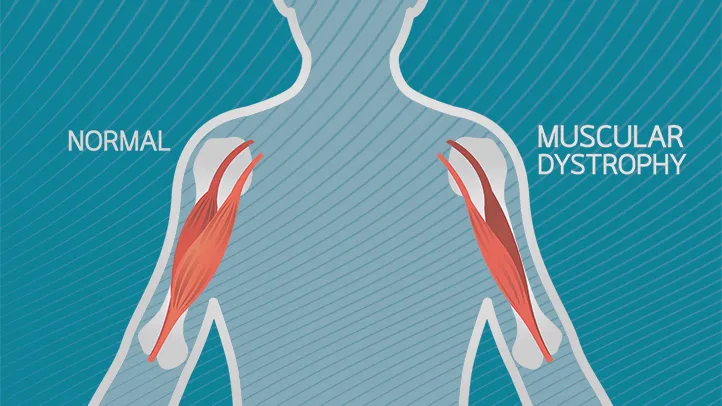
Muscular dystrophy is caused by genetic mutations that affect the production of proteins crucial for muscle function. These mutations are often inherited from parents, though some forms can develop spontaneously due to new genetic changes. There are different types of muscular dystrophy, and each type is associated with a specific gene mutation.
Common Causes Include:
- Genetic Mutations
The primary cause of MD is a mutation in one or more of the genes responsible for producing proteins that maintain the structure and function of muscle fibers. These mutations prevent the production of vital proteins like dystrophin, which is essential for muscle integrity. - Inheritance Patterns
Most types of muscular dystrophy are inherited in either an X-linked or autosomal recessive pattern. In X-linked inheritance, the mutated gene is located on the X chromosome, which is why MD is more common in males. Autosomal recessive inheritance means that both parents must carry a copy of the mutated gene for a child to inherit the condition. - Spontaneous Mutations
Some forms of muscular dystrophy may result from new mutations that occur without a family history of the condition. These spontaneous mutations can arise due to environmental factors or random genetic errors.
Types of Muscular Dystrophy?
There are many different types of muscular dystrophy, each with its own set of symptoms and severity. The most common types include:
1. Duchenne Muscular Dystrophy (DMD)
Duchenne MD is the most common and severe form, primarily affecting boys. It typically appears between ages 2 and 3 and causes rapid progression of muscle weakness. Children with DMD often lose the ability to walk by age 12 and may experience heart or respiratory complications by their late teens or early twenties.
2. Becker Muscular Dystrophy (BMD)
Similar to DMD, Becker MD also affects primarily boys but progresses more slowly. Symptoms may not appear until adolescence or early adulthood, and many individuals can maintain their ability to walk into their 30s or 40s.
3. Myotonic Dystrophy
This form of muscular dystrophy can affect both men and women and tends to begin in adulthood. It involves muscle weakness, but also other symptoms such as difficulty relaxing muscles (myotonia), cataracts, heart problems, and endocrine disturbances.
4. Facioscapulohumeral Muscular Dystrophy (FSHD)
FSHD typically starts with weakness in the muscles of the face, shoulders, and upper arms. It can affect both men and women and is usually diagnosed in the teenage years or early adulthood. The condition progresses slowly but may lead to significant disability over time.
5. Limb-Girdle Muscular Dystrophy (LGMD)
LGMD affects the muscles around the hips and shoulders and may begin in childhood or adulthood. The severity and progression of symptoms vary depending on the specific type, but it generally leads to difficulty with walking, running, and lifting objects.
6. Congenital Muscular Dystrophy (CMD)
This form of MD is present at birth and is characterized by muscle weakness that can affect both the skeletal and cardiac muscles. Children with CMD may experience delays in motor development, but the severity and progression vary widely.
7. Emery-Dreifuss Muscular Dystrophy (EDMD)
EDMD typically starts in childhood or adolescence with muscle weakness in the shoulders, upper arms, and lower legs. It can also cause joint contractures (limited range of motion) and heart problems such as arrhythmias.
Symptoms of Muscular Dystrophy?

The symptoms of muscular dystrophy vary depending on the type and severity of the condition. However, common symptoms include:
- Progressive Muscle Weakness
Muscle weakness is the hallmark symptom of MD and often starts in the legs or upper body muscles. The severity increases over time, leading to difficulties with walking, lifting, and other movements. - Muscle Wasting (Atrophy)
As the muscles break down, they become smaller and weaker. This can be particularly noticeable in the arms, legs, and shoulders. - Difficulty Walking or Standing
Muscle weakness in the lower limbs may make it hard to walk or stand, leading to frequent falls and difficulty with everyday activities. - Fatigue
People with muscular dystrophy often experience extreme tiredness due to the ongoing breakdown of muscle tissue. - Respiratory Problems
As the muscles that control breathing become affected, individuals may experience shortness of breath, especially during physical exertion or when lying flat. - Cardiac Issues
Heart muscles can be affected, leading to arrhythmias (irregular heartbeats) or heart failure in some types of MD. - Joint Contractures
In some forms of MD, joint stiffness or contractures can occur, limiting movement and causing deformities. - Difficulty Swallowing and Speaking
As the muscles used for swallowing and speaking weaken, individuals may develop trouble swallowing food or speaking clearly.
Diagnosis of Muscular Dystrophy?
Diagnosing muscular dystrophy involves a combination of clinical evaluation, medical history, and diagnostic tests. Common steps include:
- Physical Examination
A doctor will assess muscle strength, reflexes, and range of motion, looking for signs of muscle weakness and wasting. - Genetic Testing
Blood tests can be used to identify specific genetic mutations responsible for muscular dystrophy. This can confirm the diagnosis and determine the type of MD. - Muscle Biopsy
A small sample of muscle tissue may be taken for examination under a microscope to detect abnormalities in the muscle fibers. - Electromyography (EMG)
An EMG can measure electrical activity in muscles and help determine if the muscle damage is caused by MD or another condition. - Magnetic Resonance Imaging (MRI)
MRI scans can be used to assess the extent of muscle damage and help with diagnosis. - Cardiac Evaluation
Since some types of MD affect the heart, cardiac tests, such as an echocardiogram or ECG, may be performed.
Treatment for Muscular Dystrophy?
While there is no cure for muscular dystrophy, treatment focuses on managing symptoms and improving quality of life. A multidisciplinary approach is often used, including:
- Physical Therapy
Regular physical therapy helps maintain muscle strength, flexibility, and function. Specific exercises can prevent joint contractures and improve mobility. - Medications
- Corticosteroids may be prescribed to help slow muscle degeneration, particularly in Duchenne muscular dystrophy.
- Heart medications may be used to manage cardiac issues, such as arrhythmias or heart failure.
- Anticonvulsants or other medications may help manage muscle spasms in some cases.
- Assistive Devices
Devices like braces, wheelchairs, and mobility aids can help individuals maintain independence and improve daily function. - Surgical Intervention
Surgery may be required to address joint contractures, scoliosis (curvature of the spine), or other complications of muscular dystrophy. - Breathing Support
In advanced cases, individuals with respiratory problems may require assistance with breathing, such as a bi-level positive airway pressure (BiPAP) machine or even ventilatory support. - Gene Therapy and Experimental Treatments
Research into gene therapies and other experimental treatments is ongoing, and some promising therapies are showing potential for slowing or even reversing some types of muscular dystrophy.
Living with Muscular Dystrophy?

Living with muscular dystrophy can be challenging, but many individuals with MD lead fulfilling lives with the right support. Early diagnosis and intervention are crucial in managing the symptoms and improving outcomes. A strong support network, including family, friends, and healthcare providers, can make a significant difference in day-to-day life.
Prognosis?
The prognosis for muscular dystrophy varies depending on the type and severity of the condition. Some forms, like Duchenne muscular dystrophy, have a more severe prognosis, with life expectancy typically shortened due to complications like heart or respiratory failure. However, with modern treatments, many individuals with MD are living longer, healthier lives.
